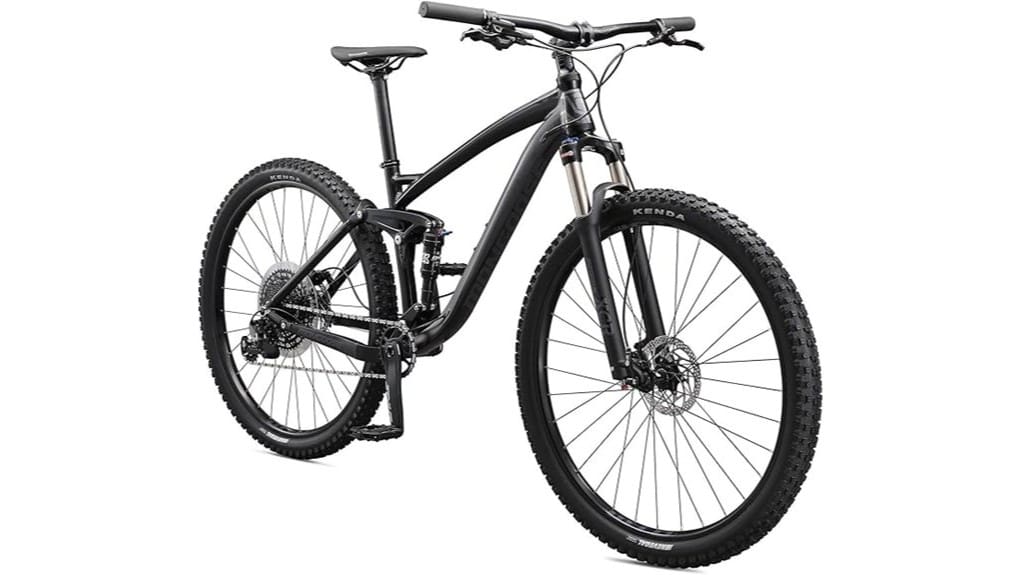
The Mongoose Salvo is a capable, budget-friendly 29er that’ll suit intermediate trail riders who want predictable, confidence-building performance. Its aluminum frame and tuned tube shaping give a stiff yet compliant platform sized for 63–67 inch riders, and the free-floating dual suspension reduces brake jack while offering plush small-bump compliance and mid-stroke support. You get a crisp 12-speed drivetrain, hydraulic brakes, and grippy 2.25″ tires, with limits on big hits — read on for setup and alternatives.
Some Key Takeaways
- Compact 29er aluminum frame fits riders about 63–67 inches, balancing lightness, durability, and predictable handling.
- Free Floating dual-suspension delivers planted mid-stroke support, reduced brake jack, and plush compliance over roots and rocks.
- 12-speed drivetrain with secure chain retention and broad gearing handles steep climbs and fast descents reliably.
- Hydraulic disc brakes and 2.25-inch knobby tires provide linear stopping, traction on loose dirt, and adequate mud clearance.
- Best for flowy singletrack, technical climbs, and all-day trail rides; not designed for big hits or enduro racing.
Frame, Fit, and Build: Who the Salvo 29er Fits and What the Frame Offers
Although it’s built from aluminum for lightness and durability, the Salvo’s frame packs thoughtful trail-oriented details that you’ll notice on every ride. You get a compact 29er designed for riders in a 63–67 inch fit range, so you can push trails without compromise. Tube shaping balances stiffness and compliance, yielding predictable handling and efficient power transfer. Internal cable routing keeps lines clean and reduces snag risk. Practical mounting points accept a dropper post, bottle cages, and modest racks for adventure. Color options are restrained but purposeful, letting you choose function-forward aesthetics that match your urge to explore. This review is part of our broader guide to choosing the perfect bike frame for your riding style, including how frame choice affects fit and performance bike frame selection.
Suspension and Ride Feel: How the Free Floating Dual-Suspension Performs on Trails
Because the Salvo uses a Free Floating dual-suspension layout, you’ll notice reduced brake jack and a more planted feel over chatter and medium hits. You get plush compliance around small roots and rocks, letting you pick lines confidently without getting bounced off course. The kinematics deliver predictable mid stroke support, so when you push into compressions the bike resists bottoming while still absorbing momentum-robbing impacts. Cornering feels composed; the rear tracks without wallowing, encouraging faster exits. For an intermediate rider chasing more freedom on trail, the suspension balances comfort and control, rewarding progressive input without masking trail feedback. This layout reflects principles from suspension fork design, emphasizing tuned kinematics for improved trail performance.
Drivetrain, Brakes, and Tires: Real-World Shifting, Stopping, and Traction Performance
Shift through the 12-speed drivetrain and you’ll notice crisp, consistent engagement—shifts are quick under light to moderate pedaling loads thanks to the precise trigger shifter and a well-indexed cassette. You get a broad gear range that handles steep climbs and fast descents without hunting; chain retention feels secure. Hydraulic disc brakes deliver linear modulation and short stopping distances, letting you place lines confidently. 2.25-inch knobby tires offer predictable bite and stability; traction improves on loose dirt and roots. Mud clearance is adequate for most conditions, though deep, sticky mud will slow you and require periodic cleaning. Designed with full suspension riders in mind, the Salvo’s geometry and component selection suit trail-focused full suspension mountain bike enthusiasts.
On-Trail Strengths and Limitations: Ideal Use Cases and Where the Salvo Falls Short
Dialed for progression, the Salvo excels on flowy singletrack and techy climbs where its Free Floating suspension and 29-inch wheels keep momentum and composure. You’ll sprint short climbs confidently, the 12-speed drivetrain and traction-focused 2.25-inch tires translating effort into forward motion. On technical descents the bike tracks predictably, the dual-suspension smoothing chatter while hydraulic discs modulate speed. Limits appear on steep, rowdy terrain and big hits: aluminum frame and mid-range components don’t inspire aggressive laps or enduro-style abuse. You’ll find freedom on day-long trail rides and skills progression, but avoid pushing it as a full-on gravity rig. For hardtail-focused riders looking to upgrade components or accessories, consult our hardtail gear guide for compatible options and setup tips.
Is the Mongoose Salvo Worth Buying? Price, Alternatives, and Final Recommendation
If you’re an intermediate rider focused on skills progression and all-day trail riding, the Salvo delivers a lot of relevant performance for the money. You’ll get a responsive dual-suspension 29er, stable geometry, and componentry that suits progressive riding without premium pricing. Consider resale value and long term durability: aluminum frame and standard parts help retain value and withstand years of trail use, though components will wear. Check user reviews for recurring issues and real-world setup tips. Compare alternatives with higher-end forks or lighter frames if budget allows. Factor maintenance costs into your buying decision; then decide. Gear Up for Epic Mountain Bike Adventures is a good place to find related accessories and advice for trail riders, including helmet and hydration pack recommendations for sustained rides and mountain bike gear.
Some Questions Answered
Does the Salvo Include a Warranty and What Does It Cover?
Yes — you get a limited warranty; you’ll want to confirm the exact warranty duration with the dealer or Mongoose. It covers frame defects and manufacturing faults, protecting core structural components under normal use. Coverage exclusions usually include wear items, crash damage, improper assembly or maintenance, and aftermarket modifications. You’ll act wisely by keeping receipts and registering the bike, so claims process smoothly and you keep trail freedom without unexpected repair bills.
Can I Mount a Rack or Fenders for Commuting and Light Touring?
Yes — you can mount a rear rack and mudguards mounting points are feasible with tweaks. The Salvo’s aluminum frame and internal routing limit bolt-on options, so you’ll install a rear rack using seat‑stay clamps or a rack with braze-on adapters; add clamp-on or stay‑mounted mudguards. You’ll want corrosion‑resistant hardware and check clearance with 2.25″ tires. That setup keeps your freedom to commute and light tour confidently.
Are Replacement Parts (Shock, Derailleur) Widely Available?
Yes — replacement shock and derailleur parts are generally available. You’ll find good aftermarket compatibility because the Salvo uses common mounting standards and a 12-speed drivetrain, so parts sourcing from mainstream brands is straightforward. Expect to order shocks by eyelet spacing and stroke, and match derailleurs to 12-speed specs. This gives you freedom to upgrade or repair quickly, though rare OEM-specific bits may take longer to source.
What Assembly and Maintenance Skills Are Required Out of the Box?
You’ll need basic assembly and routine maintenance skills out of the box. Expect minor tuning of derailleur and brakes, headset adjustment, and final cable routing checks. Bring basic tools: Allen keys, torque wrench, pedal wrench, cable cutters, and a shock pump for setup. You’ll adjust saddle height, align wheels, and bleed brakes occasionally. These tasks keep the bike reliable and let you explore freely without frequent shop visits.
Is This Bike Compatible With Dropper Post Installation?
Yes — you can install a dropper post if the seat tube diameter matches common sizes and there’s room for internal routing. You’ll evaluate insertion depth, seat tube internal diameter, and whether the frame’s internal cable path accepts a remote lever cable or hydraulic hose. You’ll likely need a compatible post and remote lever, plus careful routing to avoid interference with the top tube. Installation rewards you with on-trail adjustability and freedom.