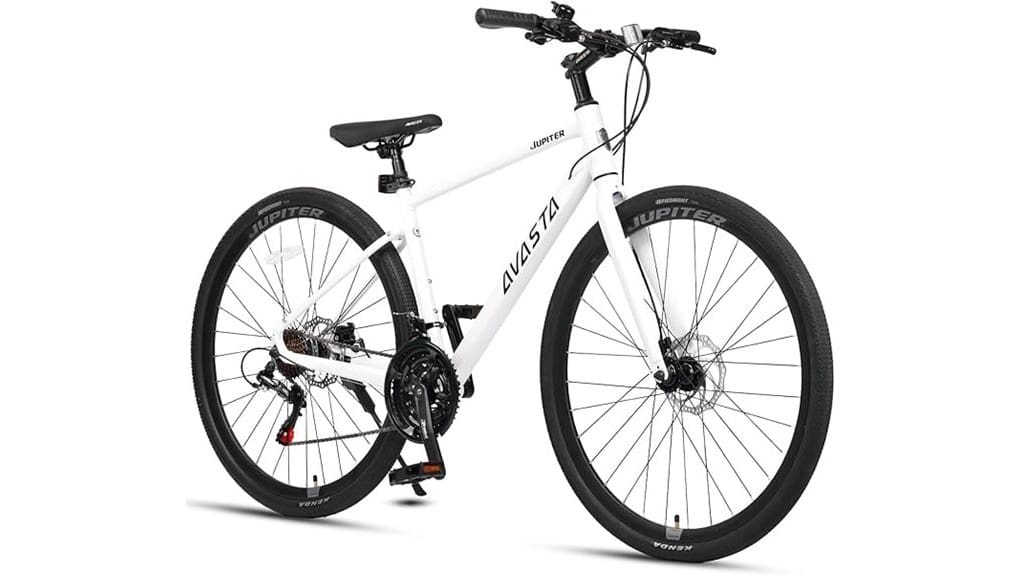
The AVASTA Jupiter 700C is a practical commuter you’ll ride daily: a lightweight 17″ aluminum frame, 700C wheels and 21-speed Shimano EF500 shifting give predictable, low-maintenance performance. Dual disc brakes stop consistently in mixed conditions, while adjustable saddle, bars and rack/bottle mounts boost comfort and utility. It’s tuned for stability and controlled responsiveness rather than racing agility, and arrives semi-assembled with basic tools—keep going to see detailed specs, fit tips and buying trade-offs.
Some Key Takeaways
- Lightweight 17″ aluminum frame and 700C wheels deliver stable, predictable handling for commuting and light touring.
- 21-speed Shimano EF500 drivetrain offers crisp, low-maintenance shifting when cadence is managed.
- Dual disc brakes provide reliable, consistent stopping power and good modulation in varied conditions.
- Adjustable cockpit, ergonomic saddle, and multiple mounting points support comfort and practical utility (racks, bottles).
- Semi-assembled delivery, competitive pricing; expect minor setup (15–30 minutes or shop labor) and check warranty details.
Quick Verdict: Who the AVASTA Jupiter 700C Is Best For
If you want a capable, everyday road/commute bike that balances performance and practicality, the AVASTA Jupiter 700C fits the bill — especially if you value a lightweight aluminum frame, 21-speed Shimano EF500 shifting, and reliable dual disc brakes for varied city and light touring use. You’ll find it commuter friendly and beginner focused: it’s predictable, low-maintenance, and lets you ride farther with mechanical confidence. Adjustable ergonomics and mounting points expand utility for racks and bottles, so you can configure freedom-first setups. Expect competent handling, straightforward gearing, and durable finishes — a pragmatic choice if you prioritize versatility over race-grade specialization. It’s well-suited for riders who need essential gear and practical features for everyday road riding, including options for mounting racks.
What’s in the Box and Key Specs (Frame, Wheels, Drivetrain, Brakes)
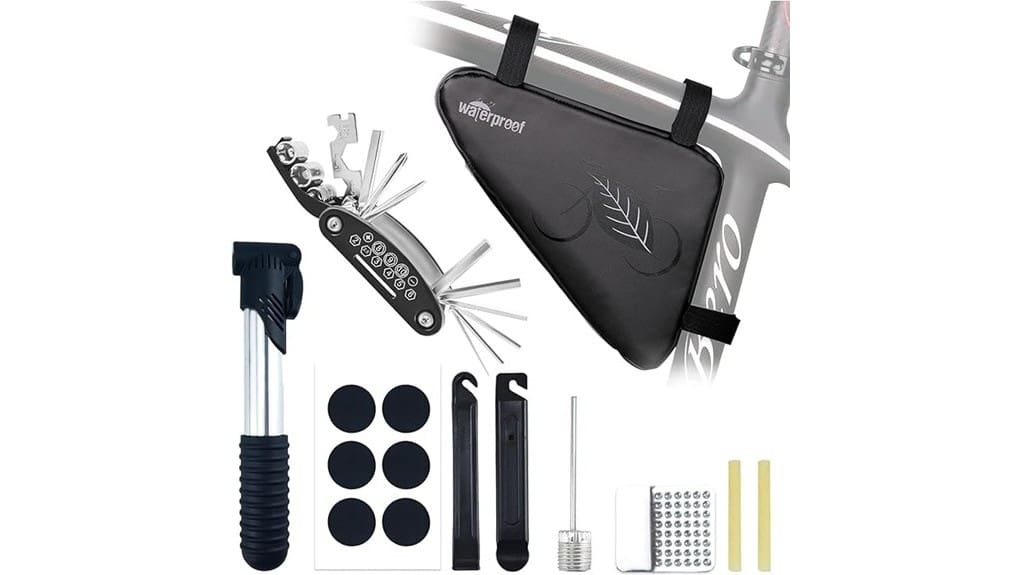
Having established who the Jupiter suits, let’s look at what you actually get and the core hardware that delivers that everyday performance. The box contents include a partially assembled 17″ aluminum alloy frame, 700C wheels, 21-speed Shimano EF500 drivetrain, dual disc brakes, bell, reflectors, basic tool kit and mounting hardware. Component quality is pragmatic: scratch-resistant pearl paint and ergonomic adjustable saddle/handlebars prioritize utility and freedom. Wheels and brakes are stout for mixed urban use; Shimano shifting is familiar and serviceable. You’ll find mounting points for racks and bottles—practical versatility without unnecessary frills. This setup makes the Jupiter a solid option for beginner riders looking for reliable, everyday commuting gear.
On-Road Performance: Handling, Shifting, Braking, and Ride Feel
When you ride the AVASTA Jupiter 700C, the aluminum frame and 700C wheelset deliver a composed, predictable handling package that suits commuting and light touring—steering stays stable at speed yet remains responsive in tight turns. You get cornering confidence from balanced geometry and a stiff but forgiving frame that tracks cleanly. The 21-speed Shimano EF500 shifting is crisp; shifts under load are reliable when you manage cadence, and pedal responsiveness feels direct across the cassette. Dual disc brakes provide consistent modulation and stopping power in varied conditions. Overall ride feel is efficient and controlled, letting you explore with assured agility. For riders considering upgrades, a well-chosen carbon frame can further reduce weight and enhance ride responsiveness.
Fit, Comfort, and Practical Features You’ll Use Every Day
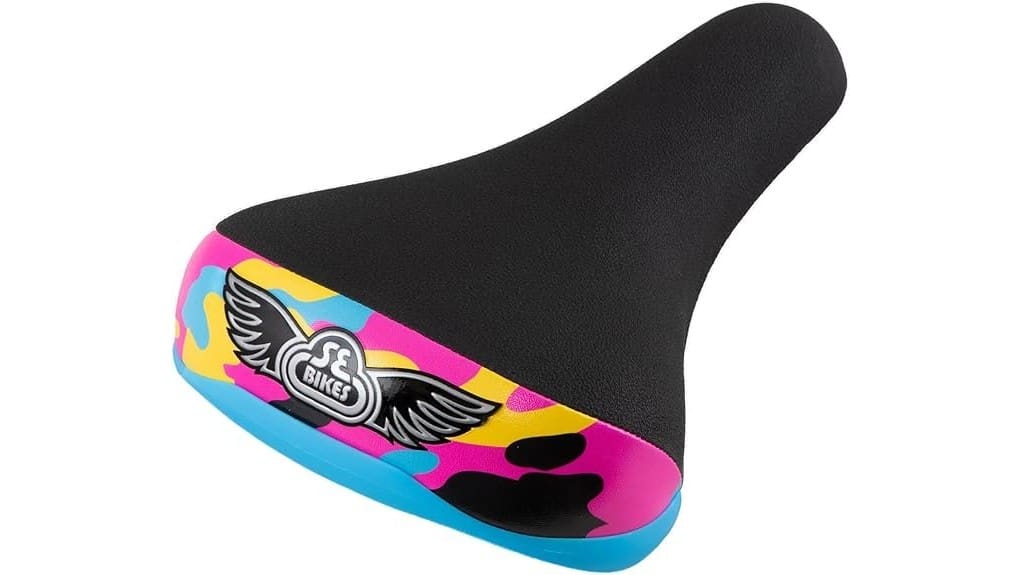
Because the Jupiter’s frame and cockpit are built around adjustability, you can quickly dial in a riding position that balances comfort and control for commuting or longer rides. The S (17″) aluminum frame, fully adjustable ergonomic saddle and handlebars, and adjustable reach let you fine-tune posture to reduce fatigue without sacrificing responsiveness. Dual disc brakes and 21-speed Shimano shifting complement a confident fit. Practicality is strong: multiple storage mounts for water bottles, mudguards, and a rear rack expand utility; included bell, reflectors, and tool kit make daily use straightforward. Overall, comfort is engineered, not guessed. Our selection focuses on helping riders achieve the perfect bike fit through products and systems designed for adjustability and comfort.
Price, Value, and Buying Considerations (Assembly, Warranty, Alternatives)
Comfort and practicality matter, but you’ll also want to weigh price and ownership costs before buying the AVASTA Jupiter. You’ll find competitive price tiers for an aluminum 700C hybrid—entry-level value with solid components, mid-tier packages including accessories, and occasional deals that boost value. Assembly is semi-assembled; expect basic tools and 15–30 minutes for setup or modest shop labor. Check Warranty terms for frame and components; AVASTA typically covers manufacturing defects but not wear items. If you seek alternatives, compare drivetrain quality, disc brake performance, and included mounting points to match your freedom-focused needs. Also consider adding a quality floor pump to your toolkit to keep tires properly inflated and extend component life.
Some Questions Answered
Does It Come in Other Colors Besides Chameleon Grey?
Yes — you can choose beyond Chameleon Grey; the bike is offered in multiple color options depending on retailer stock. You’ll evaluate finish variations like the pearl paint shown (scratch-resistant) and potentially matte or gloss alternatives listed at purchase. You’ll want to confirm availability before ordering, since regional inventory and model year can change offered finishes. This lets you pick a look that matches your ride and sense of freedom.
Is There a Step-Through Frame Option Available?
No — there’s no step through variant offered for this model. You’ll get the step-over S (17″) frame with compact geometry that eases standover and mounting, but it isn’t a true step-through. If you need a lowered top tube for frequent on/off freedom, you’ll want to seek a dedicated step-through frame or a different model; this one prioritizes lightweight aluminum stiffness and road-oriented handling over ultra-low entry.
Can I Install an Electric-Assist Kit on This Frame?
Yes — you can install an electric-assist kit, but check fitment first. You’ll evaluate motor upgrade options (hub or mid-drive) against the aluminum 700C frame, dropout spacing, and brake compatibility. Plan battery placement for balance: rear rack, downtube, or seatpost mounts each affect handling and freedom to carry gear. You’ll want robust mounting points, adequate clearance, and a kit rated for dual disc brakes and 21-speed Shimano shifting.
What Is the Recommended Tire Pressure for Mixed Roads?
Use 37–60 psi for mixed roads: aim for 45–55 psi on variable terrain for a balance of comfort, rolling efficiency, and puncture resistance. You’ll lean toward 37–45 psi on rough, debris-strewn sections to absorb shocks and increase traction. On smoother pavements push toward 55–60 psi for lower rolling resistance. Check tire sidewall limits, adjust for rider weight and payload, and test short runs to fine-tune pressure.
Are Replacement Parts (Frame Components) Readily Available?
Yes — you can source many frame components, but availability varies. You’ll find aftermarket compatibility with common 700C aluminum frames for parts like seatposts, handlebars, and racks; specialty items may be limited. Check warranty coverage before altering the frame, since third‑party parts or modifications can void claims. Inspect supplier lead times and confirm exact specs (seat tube diameter, mounting points) to guarantee fit and maintain your riding freedom.