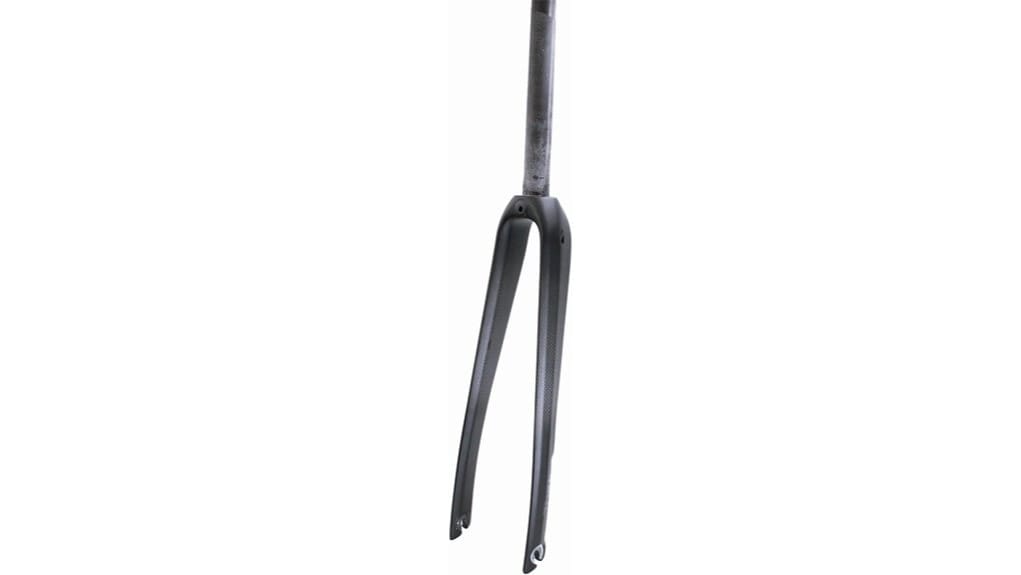
You’ll get a ~400 g full-carbon 700C fork that balances lateral stiffness with tuned vertical compliance for reduced vibration and responsive power transfer. A 45 mm offset yields stable, predictable cornering and confident exits. It fits 1-1/8″ straight steerers, 700C wheels with 9 mm QR, and tires up to 32C, while supporting both flat-mount disc and caliper brakes. It’s a practical upgrade for mixed-pavement riders; continue for detailed specs, fit notes, and buying considerations.
Some Key Takeaways
- Full carbon construction (~400 g) offers a high stiffness-to-weight ratio with tuned compliance for reduced road vibration.
- 45 mm offset provides a balanced mix of quick steering response and stable handling through corners.
- Dual brake compatibility (flat-mount disc and caliper) increases versatility across build types and braking preferences.
- Cleared for up to 700x32C tires, allowing road, commuting, and light gravel use without frame modifications.
- One-year warranty and bonded dropouts advise regular inspections; consider budget alternatives for long-term durability concerns.
Quick Verdict: Is the WCS 700C Carbon Road Fork Worth Buying?
While it won’t transform a bike overnight, the WCS 700C Carbon Road Fork delivers a clear value proposition: its full carbon construction (~400 g) gives you stiffness and vibration damping, the 45 mm offset balances responsiveness and stability, and dual brake compatibility (flat‑mount disc and caliper) plus up to 32C tire clearance make it a versatile upgrade for road, commuting, or light gravel use. You’ll get measurable gains in ride quality and handling without radical frame changes. Consider aero testing results and weight scaling when comparing wheels and frames; this fork shifts the performance balance toward a lighter, more composed ride. This makes it a practical choice for riders focused on road bike wheels and optimized rolling efficiency.
What the WCS 700C Fork Is: Specs, Materials, and Construction
Because the WCS 700C Carbon Road Fork uses a full carbon fiber layup, it delivers a high stiffness-to-weight ratio—about 400 g for the fork—while also providing engineered compliance for vibration damping. You get full carbon construction, a 1-1/8″ straight steerer, and dual brake compatibility (caliper and flat-mount disc), all focused on responsive control. The profile uses aero shaping to reduce drag without adding mass, and layup orientation targets lateral stiffness with vertical compliance. Manufacturing emphasizes consistent resin distribution and bonded dropouts for durability. The result balances weight savings, ride quality, and predictable handling for independent riders. This fork is aimed at cyclists who prioritize improved handling and efficiency through optimized stiffness and lightweight construction, reflecting principles of stiffness-to-weight ratio.
Fit and Compatibility: Steerer, Wheel Size, Tire Clearance, and Brakes
If you need a straightforward, widely compatible fork, the WCS 700C fits standard 700C wheels and uses a 1-1/8″ straight steerer for threadless headsets, so it installs into most modern road frames without adapters. You’ll get reliable steerer compatibility with common headtube standards; no tapered cups needed. Wheel fit targets 700C with 9mm quick-release dropouts. Tire clearance is rated to 700x32C, so you can run wider rubber for comfort and mixed surfaces. Brake routing supports both flat-mount disc and traditional caliper setups, giving dual brake compatibility and flexible system integration for varied builds. This option complements accessory choices for riders focusing on pedal and drivetrain setups and mountain bike pedals integration.
On-Road Performance: Stiffness, Comfort, Handling, and Braking
Although built from full carbon fiber for low weight, the WCS 700C fork prioritizes a balance of stiffness and compliance that you’ll notice on mixed pavement. You get a responsive ride feel: lateral stiffness transmits power cleanly while vertical compliance soaks road buzz. Vibration damping reduces rider fatigue over longer routes without deadening feedback. The 45 mm offset and tuned layup deliver predictable cornering grip, letting you lean and exit with confidence. Dual brake compatibility pairs with the structure to provide consistent braking modulation; lever inputs translate to controlled deceleration, aiding composure and freedom of line choice. Aluminum frames often complement such forks by offering lightweight stiffness that enhances overall bike handling.
Final Buying Guide: Who Should Buy It, Alternatives, Price, and Warranty Considerations
When deciding whether the WCS 700C Carbon Road Bike Fork fits your needs, weigh its low weight, tuned compliance and 45 mm offset against your riding priorities and brake setup: it’s ideal if you want a responsive, lightweight fork that supports both caliper and flat-mount disc brakes, accepts 700x32C tires, and mounts to a 1-1/8″ straight steerer with 9mm quick-release dropouts. You should buy it if you prioritize agility, shock absorption and minimal weight for road, commuting or light gravel. Consider budget alternatives if price or proven long term durability concerns you; warranty is one year, so plan inspections and preventative care. Many new riders also invest in essential gear like helmets, lights, and basic repair tools to stay safe and prepared.
Some Questions Answered
Does the Fork Include a Crown Race or Headset Bearings?
No, it doesn’t include a crown race or headset bearings. You’ll install a separate crown race compatible with a 1-1/8″ straight steerer; check crown race compatibility before fitting. You’ll also source headset bearingtypes (sealed cartridge or loose ball) suited to your frame’s headtube and your preferred preload system. This keeps weight low and lets you choose bearing quality for longevity, sealing, and serviceability to match your riding freedom.
Is a Thru-Axle Conversion Kit Available?
No, a dedicated thru-axle conversion kit isn’t included, but you can fit axle adapters to enable thru axle compatibility. You’ll need 9mm-to-thru-axle adapters sized for your hub and a matching 12mm or 15mm thru-axle, ensuring rotor spacing and brake mount alignment remain correct. Install torque specs and compatibility checks matter; if you want freedom to upgrade, source high-quality adapters and confirm frame/headset clearance before riding.
What Is the Recommended Torque for the Steerer Top Cap?
You should set the steerer top cap to 2–4 Nm. Use proper tightening to preload the headset bearings without compressing them; this preload specification prevents play while allowing smooth rotation. Tighten the top cap incrementally, check play, then secure stem bolts to the manufacturer’s torque. Don’t overtighten the cap—carbon steerer demands caution. If in doubt, follow headset or frame torque charts or consult a pro mechanic for safety.
Is Internal Cable Routing Supported or Possible?
No — the fork doesn’t support internal routing; it lacks internal ports for hidden cables. You can run cables externally along the steerer and fork leg using secure clamps or zip-ties, but you won’t achieve true internal routing or fully hidden cables. That said, external routing keeps maintenance simple and preserves steerer integrity; if you need hidden cables, you’ll want a frame or fork specifically designed with internal routing channels and factory ports.
Are Spare Dropouts or Replacement Parts Sold Separately?
No — spare dropouts aren’t sold directly by WCS for this fork. You can source aftermarket dropouts, but spare availability from the manufacturer is limited; you’ll need to contact WCS or retailers for stock. Expect replacement pricing to vary: OEM parts (if available) cost more, while generic dropouts run cheaper but may need fitting. You’ll want proof of compatibility and a skilled mechanic to install replacements safely.