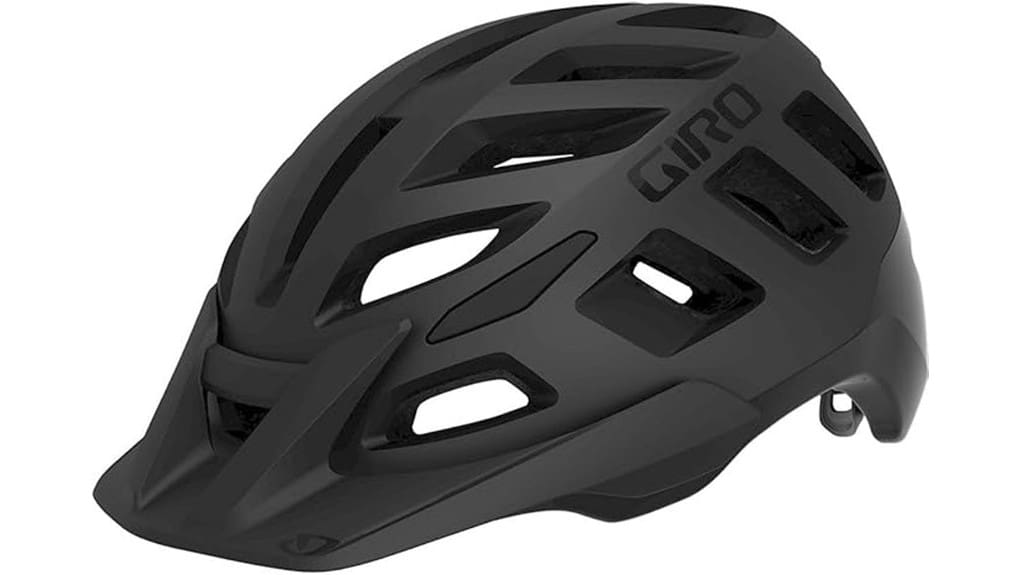
You’ll get a lightweight, well‑ventilated trail helmet that balances MIPS rotational mitigation with a polycarbonate shell and precise Roc Loc 5.5 fit, all under one pound to reduce neck torque. It’s tuned for predictable energy management in oblique impacts and offers breathable, removable liners with a low‑bulk chin strap for extended comfort. You won’t find flagship luxury trims, but you will get solid protection, adjustability, and value—keep going and you’ll find detailed test and use notes.
Some Key Takeaways
- Lightweight sub-1 lb polycarbonate shell with MIPS reduces neck torque and manages rotational forces in oblique impacts.
- Roc Loc 5.5 fit system provides precise vertical positioning and strap tension for secure, comfortable rides.
- Excellent ventilation and breathable, removable liners wick moisture for extended trail and commuter use.
- Designed for trail/light enduro riders prioritizing movement freedom, predictable energy management, and sustained comfort.
- Mid-tier value: solid protection and build quality but lacks premium padding and luxury finishes of flagship helmets.
Quick Verdict : Who the Radix MIPS Is Best For
If you ride trail or light enduro and want a protective, well-ventilated helmet without the bulk of a full-face, the Giro Radix MIPS fits that role. You’ll find it suited to trail beginners who need coverage and simple adjustment, and to urban commuters wanting a lighter, ventilated option for mixed routes. The Radix MIPS balances protection, airflow, and low weight in a compact profile. You’ll appreciate the Roc Loc 5.5 fit adjustments and polycarbonate shell for predictable performance. It’s optimized for riders who prioritize freedom of movement, extended comfort, and uncomplicated protective capability on varied terrain. Consider also how a helmet’s ventilation and weight affect long rides and overall comfort.
Key Specs and Safety Features That Matter (MIPS, Shell, Weight)
Because impact dynamics, shell construction, and total mass determine how a helmet performs in real-world crashes, you should focus on MIPS, the polycarbonate shell, and the Radix’s sub-1 lb weight when evaluating protection and comfort. You get MIPS mechanics that allow rotational energy to be managed by a low-friction layer, reducing brain-twist forces in oblique impacts. The polycarbonate Shell durability resists penetration and spreads loads across the liner. At about one pound, the Radix lowers neck torque and improves control without sacrificing structural integrity. For riders chasing freedom, these measured specs prioritize survivability and sustained performance. Our Ride Smart site focuses on helping commuters choose the right gear, including commuter bike helmets, for everyday riding.
Fit, Comfort, Ventilation, and Everyday Ride Impressions
While the Radix MIPS keeps a low profile, it delivers a precise, adjustable fit via the Roc Loc 5.5 system that lets you fine-tune vertical position and strap tension for secure contact without pressure points. You’ll notice breathable liners that wick moisture and promote airflow; they’re removable for cleaning and simple sweat management. The chin strap is low-bulk, locks securely, and avoids chin rub during movement. Consider a padding upgrade only if you need a different fit profile; stock pads balance weight and stability. On everyday rides it’s light, ventilated, and gives you confident freedom to push farther. As part of choosing the right mountain bike helmet, buyers should prioritize ventilation and fit when comparing models.
Performance in Protection and Testing : What the Lab and Real Use Reveal
Having covered fit and everyday comfort, let’s examine how the Radix MIPS performs under impact and in Giro’s lab protocols. You’ll find objective results: polycarbonate shell with MIPS targets impact attenuation by allowing controlled slip to reduce rotational kinematics transmitted to the head. Lab drops simulate oblique strikes; peak linear acceleration stays within competitive thresholds while angular acceleration is reduced versus non-MIPS shells. In real use, you’ll notice confidence from proven mitigation rather than dramatic change in feel. Testing emphasizes repeatable metrics; the Radix prioritizes predictable energy management suited to riders seeking freedom and controlled risk. Our site focuses on helping riders choose the right helmet based on protection, fit, and intended use.
Value Comparison : How Radix MIPS Stacks Up vs. Competitors
In comparing value, the Radix MIPS pairs market-leading safety features—MIPS slip layer and Giro’s lab-tuned polycarbonate shell—with a lightweight, well-ventilated platform and an adjustable Roc Loc 5.5 fit system, delivering protection and comfort at a mid-tier price point that competes effectively with other entry-to-midlevel trail helmets; you get measurable rotational mitigation and solid build quality without premium-carbon materials or high-end padding upgrades that drive up cost on flagship models. In a direct price comparison, Giro’s brand reputation supports resale and service; you’ll accept minor trade-offs in luxury finishes to gain proven protection, low weight, and reliable fit. The Radix MIPS also pairs well with helmet-mounted lighting options favored by riders who value visibility and nighttime safety, especially when used with helmet lights.
Some Questions Answered
Does the Helmet Include a Removable Visor or Peak?
No, the helmet doesn’t include a removable peak or detachable visor; the peak is fixed. You’ll get a lightweight, ventilated shell with MIPS protection and Roc Loc 5.5 fit, but the peak is integrated into the polycarbonate shell and isn’t designed for removal or attachment of alternate visors. If you want modular sun/face options, you’ll need an accessory or a different model that specifically lists a removable peak or detachable visor.
Is There an Integrated Camera or Gopro Mount?
No — the helmet doesn’t include an integrated camera mount or GoPro mount. You can attach an aftermarket camera mount to the shell or use adhesive/base plate solutions, but make sure placement won’t compromise the MIPS liner or ventilation. Verify action compatibility with your camera’s mounting standard and weight limits to avoid stress on retention points. If you ride aggressively, prefer low-profile mounts and test secure fit before trusting it for recording.
Can I Use the Helmet for Downhill Mountain Biking?
Yes — you can use it for downhill mountain biking. The Radix MIPS offers downhill suitability through MIPS energy redirection and Giro’s tested polycarbonate shell, delivering trail protection for aggressive riding. You’ll get secure Roc Loc 5.5 fit, ventilation, and lightweight coverage for all-day freedom. Note it’s a dirt bike–styled adult helmet; if you need full-face coverage for extreme downhill racing, consider a dedicated full-face model instead.
Is This Helmet Compatible With Ski Goggle Straps?
Yes — you can use ski goggle straps with this helmet. The Radix MIPS offers secure strap compatibility and basic goggle retention via its rear coverage and shell shape, so straps sit and hold reliably. It lacks a dedicated elastic clip, so you’ll rely on strap tension and helmet contour for retention. You’ll want to test fit with your goggles to make sure no lift or interference with the Roc Loc fit system.
What Is the Recommended Cleaning Method for Liners and Shell?
You should remove liners and machine wash them on gentle cycle with mild detergent, then air-dry; don’t tumble dry. For the shell, wipe with a soft cloth and mild soap; avoid harsh solvents. Use alcohol wipes sparingly to disinfect hard surfaces and vents, avoiding prolonged saturation near MIPS components and foam. Reinstall only when fully dry. Follow manufacturer warranty instructions if you suspect damage from cleaning.