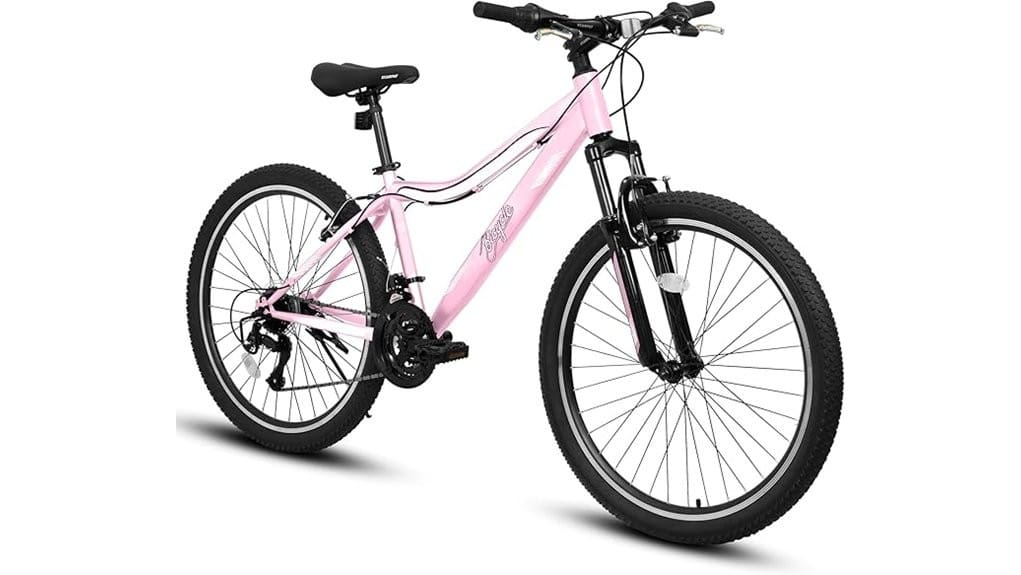
You’ll pick 24- or 26-inch wheels by matching rider height, terrain, and control needs: 24-inch suits shorter riders and offers quicker acceleration and nimble handling on tight lines, while 26-inch rolls over rough ground better, yields higher top speed and greater stability for taller riders or faster trails. The carbon-steel frame balances toughness and ride feedback; a 3×7 drivetrain gives wide, predictable gearing; V-brakes and front suspension aid control on technical descents — keep going to see setup and maintenance details.
Some Key Takeaways
- 24-inch wheels suit shorter riders (kids or under ~5’0″) and offer quicker acceleration and nimble handling on tight trails.
- 26-inch wheels roll over obstacles better, provide higher top speed, and suit riders roughly 5’0″–5’8″ or faster terrain.
- High-density carbon steel frames balance toughness and vibration damping while maintaining alignment and predictable ride feel.
- 3×7 drivetrain (21-speed) gives a wide, usable gear range for climbing torque and descending speed with simple maintenance.
- Mechanical V-brakes plus adjustable front suspension deliver predictable stopping, improved contact, and confidence on technical descents.
Which Fits You Better: 24-Inch or 26-Inch Mountain Bike?
Choose the wheel size that matches your height, riding style, and trail demands: 24-inch wheels suit shorter riders (typically kids or those under ~5’0″) and offer quicker acceleration and more nimble handling on tight, technical lines, while 26-inch wheels provide greater rollover capability, higher top speed, and improved stability for riders roughly 5’0″–5’8″ or for those tackling rougher, faster terrain. You’ll assess rider height, wheel clearance, and terrain suitability to decide. For an age range focused on youth-to-teen progression, 24″ eases learning; 26″ extends capability. Choose based on fit, control, and desired trail freedom. Consider also matching wheel choice to overall bike components and intended use for optimal performance and comfort, such as selecting compatible tires and brakes for wheel size.
Frame, Durability, and Ride Feel: What the Carbon Steel Frame Delivers
Because the frame uses high-density carbon steel, you get a balance of toughness and predictable ride behavior: the material resists dents and fatigue on rocky trails while the tubular geometry and weld quality maintain alignment and handling precision. You’ll notice minimal Frame fatigue over extended use; the steel’s yield strength and section thickness distribute loads, preventing microfractures. The chassis soaks vibration yet returns energy cleanly, preserving Ride responsiveness for quick direction changes and confident line choice. Geometry prioritizes stability without dulling feedback, so you can explore freely, trusting the frame to stay true under impact and sustained mileage. The site focuses on products and advice for riders who appreciate the nuances of steel bike frames and want durable, well-crafted options.
Drivetrain and Gearing Explained: How the 21-Speed (3×7) Performs on Climbs and Descents
While the 3×7 21-speed drivetrain may look simple, it gives you a wide, usable gear range that balances climbing torque and descending speed. You get three chainrings and seven cogs yielding distinct gear ratios that cover steep pitches and fast flats. On climbs choose lower chainring with larger rear cogs for torque; on descents shift to larger chainring and smaller cogs for cadence and control. Practice progressive shifting technique: anticipate grade changes, ease pedaling load during shifts, and avoid cross-chaining. The system is predictable, repairable, and lets you explore freely without sacrificing mechanical simplicity or performance. For riders shopping for upgrades, consider cassette compatibility and specifications to ensure proper shifting with your derailleur and chain; see Mastering Bike Cassettes for guidance.
Safety and Control: V-Brakes, Front Suspension, and Handling on Rough Trails
Maintain confidence on rough trails by relying on the bike’s mechanical V‑brakes and adjustable front suspension to control speed, absorb impacts, and stabilize handling. You’ll note V‑brakes deliver linear brake modulation for predictable stopping force; short lever travel and solid pad contact let you modulate speed without skidding. The adjustable front fork soaks hits from roots and rocks, preserving tire contact and steering precision. Combined, they increase trail confidence by maintaining traction and predictable geometry under load. You can push lines, manage technical descents, and recover from perturbations while feeling secure in braking response and suspension feedback. For riders choosing protective gear to match this confidence, a properly fitted mountain bike helmet is essential to ensure safety on challenging terrain.
Buy, Assemble, and Maintain: Setup Tips, Who It’s Best For, and Long-Term Care
When you’re ready to buy and set up this mountain bike, focus on fit, component inspection, and a disciplined maintenance plan to guarantee long-term performance. Choose frame size that frees your movement; verify carbon steel integrity, fork function, and drivetrain smoothness. Assembly: follow instructions, torque headset and stem, align wheels, bleed not required for V-brakes—adjust pads and cables, confirm 85% pre-assembled parts. Pack packing tools: hex set, torque wrench, cable ties, pump, spare tube. Who it’s best for: riders seeking durable, low-maintenance freedom on mixed terrain. Storage tips: dry, elevated, clean chain, schedule inspections and lubrication. Consider also how full suspension geometry affects handling and comfort on trails by reviewing suspension design when selecting components.
Some Questions Answered
Is Cutomization (Accessories/Paint) Possible Without Voiding Warranty?
Yes — you can customize accessories and paint without voiding the warranty if you avoid structural changes. You’re free to add frame stickers, replace handlebar tape, and install custom grips or pedals so long as you don’t alter the high-density carbon steel frame, weld, or modify load-bearing components. Keep receipts, document installations, and use compatible parts. If unsure, check the manufacturer’s warranty terms or get written approval before making major changes.
What Is the Bike’s Total Weight and Weight Limit?
The bike’s total weight is approximately 14.5 kg (32 lbs), and its payload capacity (maximum rider plus cargo) is 120 kg (265 lbs). You’ll benefit from a high-density carbon steel frame and components designed to balance strength and agility while keeping weight manageable. Don’t exceed the payload capacity; doing so risks frame stress, compromised handling, and warranty issues. Carry gear within racks or panniers rated for added loads.
Are Replacement Parts (Fork, Drivetrain) Readily Available?
Yes — replacement parts are readily available. You’ll find good spare compatibility with standard 3×7 drivetrain components and common headset/stem dimensions, so aftermarket forks and derailleurs fit without custom work. You can source V-brakes, cassettes, chainrings, and suspension forks from major suppliers. You’ll want to verify axle spacing and steerer tube diameter before ordering an aftermarket fork to guarantee precise fit and preserve safe handling and performance.
Can the Bike Be Used With Bike Racks or Child Seats?
Yes — you can fit a rear rack and attach a compatible child carrier if you follow mounting limits and weight specs. You’ll use the bike’s sturdy high-density carbon steel frame and rear mounting points; confirm rack compatibility with wheel size (24/26) and brake clearance. Install per manufacturer torque and safety guidelines. Secure child carrier to rated rack or frame mounts only, and verify total load doesn’t exceed frame and brake capacity for safe, liberating rides.
Is Tubeless Conversion for the Rims Supported?
No, the rims aren’t tubeless compatible out of the box; they require rim tape, valve conversion, and likely new tubeless-ready rims for reliable performance. You can retrofit with proper rim tape, tubeless valves, and sealant types like latex or synthetic sealants, but expect added work and potential seating issues. If you want freedom from flats, consider upgrading to factory tubeless-ready rims or consult a bike shop for a safe tubeless conversion.