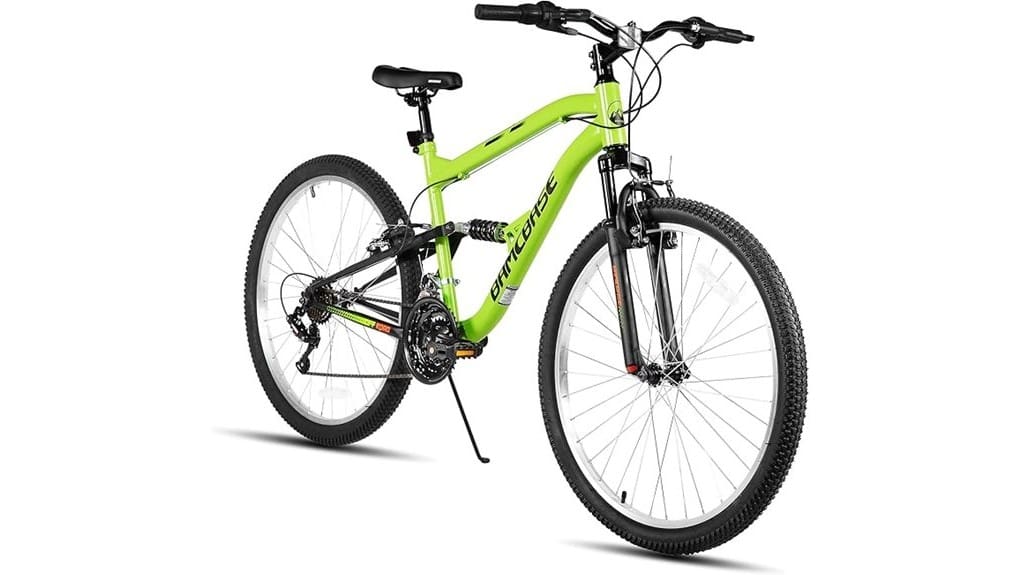
You’ll get a 90%-assembled 26″ full-suspension mountain bike with a medium (17–19″) frame, 18-speed derailleur shifting, dual V-brakes, and XC tires that handle gravel and rough roads. It’s sturdy and comfortable, great for beginner riders and commuters who want forgiving suspension and easy maintenance, though the high-carbon steel frame is heavy and V-brakes underperform in wet conditions. It’s solid value for casual trail use, and the full review explains setup, tweaks, and upgrade options.
Some Key Takeaways
- Sturdy 90% assembled full-suspension 26″ mountain bike best for medium-frame (17–19″) riders around 152 cm–5’8″.
- 18-speed derailleur with twist-grip shifters provides reliable, straightforward shifting for casual trail and urban use.
- Dual V-brakes offer predictable stopping but underperform compared to hydraulic systems, especially in wet conditions.
- 26″ XC tires and forgiving suspension soak rough roads and gravel, ideal for beginners and weekend trail riding.
- Heavy high-carbon steel frame limits nimble climbing; good budget value for durability with clear upgrade paths.
What the Hiland Full Suspension Mountain Bike (HH HILAND) Includes
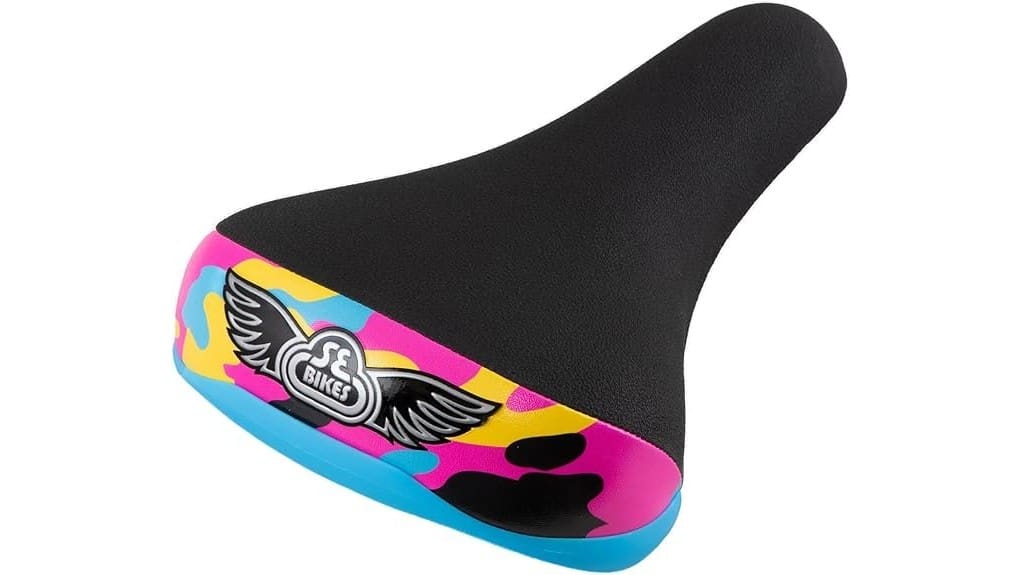
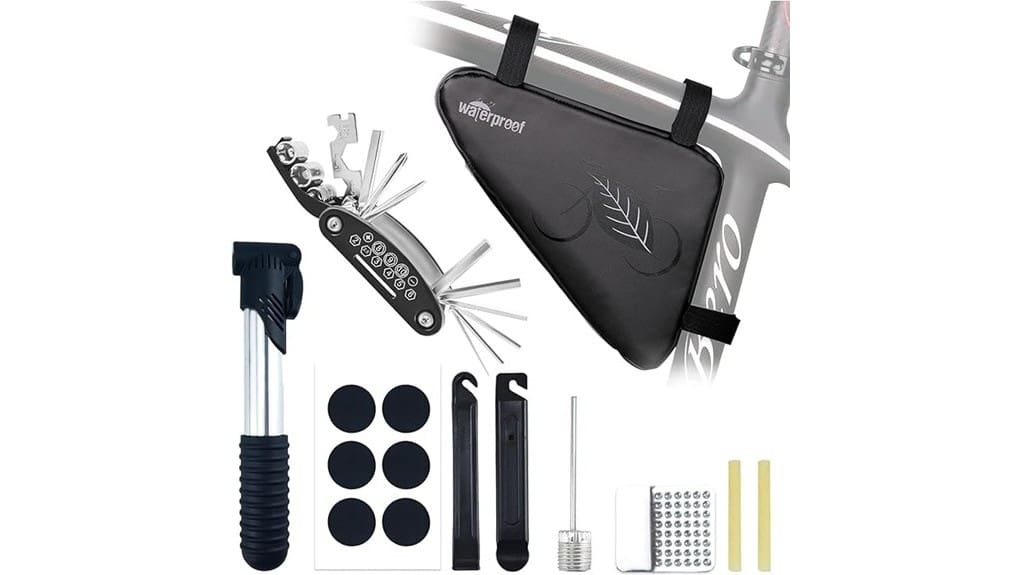
Included with the Hiland Full Suspension Mountain Bike (HH HILAND) you’ll get a mostly assembled 26-inch, medium-frame (17–19 in) dual-suspension mountain bike finished in green, with an 18-speed derailleur drivetrain (front and rear), twist-grip shifters, dual V-brakes, all-terrain XC tires, soft adjustable saddle, and tools for final assembly — the bike ships 90% assembled in a package weighing about 20.49 kg with dimensions 53 × 28.5 × 8 inches. You’ll also find included accessories like basic tools and mounting hardware. The build quality feels rugged, the parts are replaceable, and warranty details are modest but clear, supporting confident, independent rides. The package and included manuals make it easy for riders to perform routine maintenance and repairs, ideal for those interested in bike maintenance.
Who This 26 Dual-Suspension Bike Is Best For
If you want a capable, budget-friendly full-suspension mountain bike for general trail riding and rough roads, the Hiland HH HILAND is a solid choice—especially if you’re between about 152 cm and roughly 5’8″ and prefer a medium (17–19″) frame with a 26″ wheel. You’ll like it if you crave weekend freedom on mixed terrain and need forgiving suspension without breaking the bank. It suits adventurous beginner commuters and urban commuters who want rugged capability for potholes and gravel. Not for aggressive downhill racers, it’s ideal for riders seeking comfort, easy maintenance, and versatile, confidence-building performance. The site also offers other mountain bike gear and accessories for riders looking to gear up.
Real-World Ride: Suspension, Tires, Brakes, and Gearing Performance
Now that you know who this bike suits, let’s look at how it actually rides — starting with suspension, tires, brakes, and gearing. You’ll feel the full suspension soak hits on choppy climbs and descents; suspension tuning is basic but effective for casual trail freedom. The 26-inch all-terrain XC tires give reliable tire traction on loose dirt and gravel. Dual V-brakes offer predictable brake modulation, though stopping power trails higher-end hydraulic systems. The 18-speed derailleur and twist grip deliver straightforward gear shifting; it’s not lightning-fast, but it keeps you moving and exploring without fuss. For riders shopping for upgraded components, consider matching wheel and tire choices to your riding style with mountain bike wheels to get the most from the bike.
Assembly, Fit, and Comfort: Setup, Adjustments, and Sizing Tips
While the Hiland arrives about 90% assembled, you’ll still need to finish a few key steps—attach the front wheel and handlebars, adjust the saddle height, and tighten bolts—using the included tools. Follow a simple tool checklist: wrench, Allen keys, and tire pump. Set saddle so your leg has a slight bend at the bottom stroke; adjust reach to keep wrists neutral. Use posture cues—bend elbows, open chest, hips back—to stay balanced on rough trails. Test brakes and shifting before riding. Small tweaks to saddle tilt, stem height, and tire pressure change comfort and control, freeing you to ride farther. For those setting up, consider the basics of full suspension design to understand how adjustments affect ride quality.
Pros, Cons, and Final Buying Recommendation (Value for Money)
Having finished setup and fit checks, you can judge whether the Hiland Full Suspension Mountain Bike gives you the performance and value you need. Pros: sturdy dual-suspension frame, comfortable saddle, 18-speed derailleur range, tough XC tires and easy adjustments let you explore trails or extend Urban commuting routes. Cons: heavy high-carbon steel frame limits nimble climbing; dual V-brakes underperform in wet conditions; no electric assist limits Battery range options. Final recommendation: if you want rugged freedom on a budget and prioritize durability over lightweight speed, the HH HILAND offers solid value; commuters seeking e-assist should look elsewhere. This bike pairs well with hardtail accessories tailored for hardtail mountain bike enthusiasts.
Some Questions Answered
Does the Bike Come With a Warranty or Guarantee?
Yes — the bike typically includes a manufacturer warranty, and you can contact customer support for specifics and claim steps. You’ll want to confirm coverage length and what’s excluded (wear items, crashes). If you want longer protection, ask about an extended warranty or retailer plans before buying; those give extra peace of mind for parts and labor. Keep documentation and serial numbers handy to make claims smoother.
Are Replacement Parts Readily Available and Inexpensive?
Yes — you’ll find spare components and aftermarket options for common parts like tires, brake pads, cables, and derailleurs, and they’re generally inexpensive. You can swap in widely available 26-inch wheels, V-brake parts, and standard twist-shift components without much fuss. Expect specialty frame or proprietary suspension pieces to be harder to source and pricier. You’ll want to stock basics and explore local shops for the best deals.
Can This Bike Be Used for Light Commuting or Only Trails?
You can use it for light urban commuting and fitness rides, not just trails. The full dual suspension and 26-inch tires handle rough city streets and potholes, while the 18-speed drivetrain gives you efficient gearing for flats and hills. It’s heavier than a city bike, so you’ll feel that on longer commutes, but the adjustable saddle and durable brakes keep you comfortable and confident as you ride free.
Is the Bike Compatible With a Child Seat or Rear Rack?
Yes — you can fit a child seat or rear rack, but you’ll need to check mounting points and weight limits. The dual suspension and step-through frame give flexibility, yet the high-carbon steel frame and dual V-brakes may not include dedicated rack eyelets. You’ll likely use clamp-on adapters or seatpost-mounted racks and a compatible child seat rated for the bike’s specs. Test stability and braking with added load before riding.
What Is the Recommended Tire Pressure for Road vs. Trail?
For road riding, aim for higher tire pressure — about 40–50 psi — for lower rolling resistance; for trail use, drop to roughly 25–35 psi to boost traction and comfort. Those psi ranges balance speed and grip, but you’ll want to experiment within them based on rider weight and terrain. Check tire sidewalls for manufacturer limits, use a reliable gauge, and don’t run pressures that compromise pinch-flat protection or control.