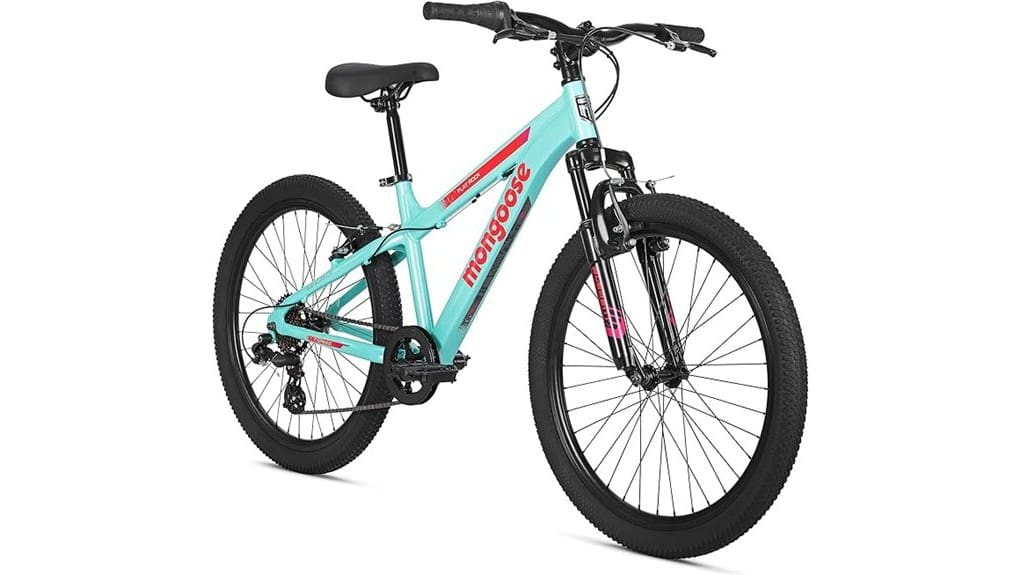
You’ll find the Mongoose Flatrock is a lightweight 26‑inch hardtail that suits mixed‑terrain riders seeking agile handling and quick acceleration. Its aluminum frame and suspension fork keep front traction over small bumps while preserving pedaling efficiency. A 7‑speed twist drivetrain and V‑brakes favor simplicity, field serviceability, and low cost over race performance. Expect predictable cornering and limited capability on technical descents; continue for component details and practical upgrade suggestions.
Some Key Takeaways
- Lightweight aluminum frame offers responsive cornering and corrosion resistance, suited for riders 5’4″–6’2″.
- 26-inch wheels and hardtail geometry prioritize agility and quicker acceleration on tight singletrack.
- Suspension fork smooths small bumps, improving front traction without excessive pedaling bob.
- 7-speed drivetrain with twist shifters and V-brakes provides low-complexity, easily serviceable performance.
- Best value for recreational cross-country, gravel, and commuting, but limited for aggressive technical descents.
Mongoose Flatrock At a Glance: Key Specs and Who It’s For
If you want a straightforward hardtail for trail and commuter use, the Mongoose Flatrock pairs a lightweight aluminum frame with 26-inch wheels and a suspension fork to handle rougher surfaces. You get a 7-speed drivetrain with twist shifters, linear pull brakes, knobby tires, and a recommended rider height range of 5’4″–6’2″. This setup suits riders seeking reliable, low-maintenance freedom on mixed terrain. Compare components and durability in a price comparison to similar hardtails to judge value. Check available color options to match personal expression without compromising functional priorities. For riders focused on full-suspension performance differences, consider learning about full suspension mountain bike dynamics when deciding between hardtail and dual-suspension designs.
Frame, Fork, and Wheels: What the Flatrock’s Build Means on Trails
The Flatrock’s lightweight aluminum frame, 26-inch wheel platform, and suspension fork combine to deliver a predictable, efficient ride on mixed trails: the aluminum keeps overall weight down and resists corrosion, 26‑inch wheels offer nimble handling and quicker acceleration in tight singletrack, and the suspension fork smooths bumps to maintain traction without excessive bob. You’ll notice aluminum benefits in responsive cornering and reduced rider fatigue, while frame geometry prioritizes stability at speed. Wheels balance agility and robustness; tire choice and rim construction determine wheel durability and puncture resistance. Overall, the build favors controlled exploration and confident trail engagement. For riders choosing wheels, matching the wheelset to your riding style and terrain—especially selecting the right wheel size—is key to optimizing performance.
Drivetrain and Brakes in Real Rides: Shifting, Stopping, and Performance
Expect the Flatrock’s 7-speed drivetrain and linear pull brakes to deliver straightforward, predictable performance on most trail conditions. You’ll shift with twist shifters that index cleanly across seven ratios; cadence control is adequate for climbs and flats. Brake modulation is linear for a hardtail with V-brakes, giving you predictable deceleration without complex maintenance. Routine gear maintenance—cleaning, lubing, and occasional cable tension adjustment—keeps shifting crisp and prevents chain wear. You can rely on the system for basic trail freedom; it’s engineered for low complexity, easy field service, and consistent operation rather than race‑grade precision. For best longevity, consider using a chain wear indicator to monitor stretch and know when to replace your chain.
Ride Feel and Trail Use Cases: Comfort, Handling, and Recommended Terrain
While you won’t get long‑travel plushness, the Flatrock’s aluminum hardtail and suspension fork combine to soak small bumps and keep the front wheel tracking, letting you maintain speed on flowy cross‑country trails. You feel firm pedaling efficiency with predictable handling; the frame transmits feedback but doesn’t punish you. Suspension comfort is sufficient for rough singletrack and fire roads, but you’ll notice limits on technical descents and big hits. Trail versatility favors cross‑country, gravel connectors, and light bike‑park laps rather than aggressive enduro lines. You can push lines confidently, trade some plushness for efficiency, and enjoy liberated, competent rides. Check out our selection of mountain bike gear to outfit your next ride.
Value Verdict and Buying Advice: Pros, Cons, and Who Should Buy This Bike
Having covered how the Flatrock rides on trails, let’s assess whether its performance and components justify the price. You get a lightweight aluminum frame, 26-inch wheels, basic suspension and knobby tires—suitable for recreational singletrack and fire roads. Pros: durable platform, predictable handling, low-cost replacement parts and affordable maintenance. Cons: 7-speed drivetrain and linear-pull brakes limit aggressive trails; component upgrades may be required for harder terrain. Who should buy: riders seeking freedom on mixed trails, budget-conscious commuters considering commuter conversion, and beginners who want a capable, low-maintenance hardtail with clear upgrade paths. Many readers of this Gear Guide for Hardtail Mountain Bike Enthusiasts appreciate guidance on parts and upgrades to extend a bike’s usability, especially for entry-level models featuring similar spec and design choices like the Flatrock—see hardtail maintenance.
Some Questions Answered
Is Assembly Required Out of the Box or Delivered Fully Built?
Assembly required: you’ll receive a partial build. The bike ships with major components attached, but you’ll need to install the front wheel, handlebar, pedals, seatpost and adjust brakes and gears. You’ll use basic tools and a torque guideline; expect 20–40 minutes if you’re comfortable, longer otherwise. This partial build balances shipping protection and packability while letting you perform final alignment, ensuring safer fit and immediate ride readiness once completed.
What Is the Bike’s Total Weight for Shipping and Lifting?
The bike’s total shipping weight is typically around 36–40 pounds, so you can expect manageable lifting ergonomics for most riders. You’ll handle the boxed bike by its frame and wheel areas; lift with your legs and keep the load close to your torso to reduce strain. If you’re near the recommended rider height range, two-person lifts are optional for stairs or tight spaces. Check actual carton weight from the seller.
Are Replacement Parts and Upgrades Readily Available?
Yes — you’ll find replacement parts and upgrades readily available. You can use many third party compatibility components (wheels, drivetrains, brakes, saddles) and aftermarket options (suspension forks, tires, shifters) to tailor performance. The aluminum frame and standard 26-inch wheel sizing simplify swaps; 7-speed fittings and linear-pull brake mounts match common parts. You’ll want to verify dimensions and mounting standards before buying to guarantee smooth installation and reliable operation.
Does the Bike Come With Any Warranty or Customer Support?
Yes — you get basic warranty coverage and manufacturer support. Warranty details typically include a limited lifetime warranty on the aluminum frame and a 1‑year warranty on parts and paint, though terms vary by retailer. You’ll use Support channels such as Mongoose customer service (phone/email), authorized dealers, and retailer returns for claims or questions. Keep purchase proof and serial numbers handy to expedite technical assistance and warranty processing.
Can Accessories Like Racks and Fenders Be Easily Installed?
Yes — you can fit accessories like racks and fenders, provided you check mounting points. The frame’s design supports cargo compatibility via rear rack mounts and eyelets; front fork mounting brackets may be limited, so you’ll need low-profile options or clamp-on adapters. Make certain spacing for 26-inch wheels and tire clearance with knobby tread. You’ll want proper hardware and torque specs to maintain ride integrity while keeping your freedom to customize.