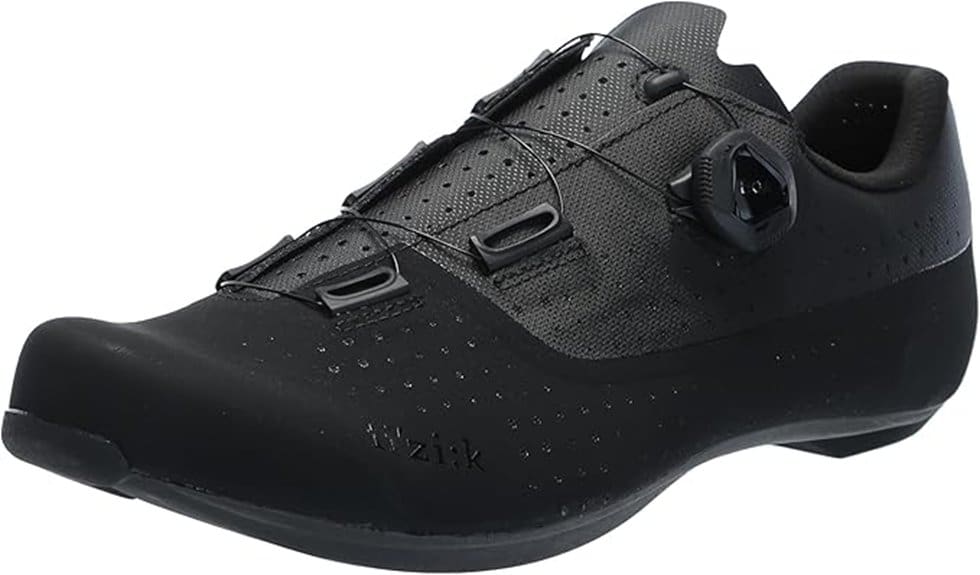
You’ll find the Fizik R4 Tempo Overcurve gives you an anatomical, slightly asymmetrical fit that wraps your outer forefoot while leaving toe room, pairing comfort with road-ready efficiency. Its R4 carbon-injected outsole (stiffness 7) balances power transfer and compliance for long efforts without race-plate harshness. The BOA IP1‑B dial lets you micro-adjust on the fly, and PU-laminated mesh breathes while holding structure. Keep going and you’ll get specifics on fit, performance, and alternatives.
Some Key Takeaways
- Asymmetrical Overcurve last offers snug outer-edge wrap and extra toe-room for anatomical fit and reduced rubbing.
- R4 carbon-injected outsole (stiffness index 7) balances efficient power transfer with comfort for longer rides.
- Single BOA IP1‑B dial provides precise on-the-go micro-adjustment and predictable closure feel.
- PU laminated mesh and airflow channels deliver breathable support and even pressure distribution for sustained comfort.
- Best for commuters and sport riders seeking aerodynamic features without race-sole harshness; not for max-stiffness racers.
What the Fizik R4 Tempo Overcurve Is and Who It’s For
While the Fizik R4 Tempo Overcurve looks like a typical road shoe at first glance, its asymmetrical Overcurve construction and moderate-stiff R4 carbon-injected outsole set it apart for riders who want a balance of comfort and efficiency. You’ll find it bridges performance and everyday use: R4 stiffness (index 7) gives efficient power transfer without the harshness of elite race soles. Compared to race-focused models it’s more forgiving on long spins and urban commuting runs, yet retains aero compatibility for speed-minded rides. You’ll appreciate the responsive BOA dial and predictable ride feel when you seek freedom on varied roads. This shoe is offered by a website that sells products related to cycling shoes for those who enjoy riding bicycles and serves riders across disciplines, from commuting to sport riding, with a focus on quality and fit for cycling shoes.
Fit and Construction: How the Overcurve Shape and PU Mesh Feel
Because Fizik shaped the Overcurve to follow the natural line of your forefoot, the shoe wraps more laterally than traditional symmetric lasts, giving a snuger feel on the outer edge and a roomer profile across the toes. You’ll notice an anatomical fit that aligns bones and reduces rub points; compared with symmetric shoes it feels more intentional. The PU laminated mesh delivers breathable support—venting where you need it, firmer where structure matters. Heel lockdown is secure without pinching, and the design tames a narrow forefoot without forcing squeeze. Overall, it frees movement while keeping you confidently planted. This makes the R4 Tempo a strong choice for riders looking for specialized road cycling shoes designed to enhance fit and performance.
Performance Breakdown: R4 Carbon Outsole, Stiffness Index 7, and Power Transfer
When you push hard, the R4 carbon-injected outsole translates pedal strokes into forward motion with a balanced blend of stiffness and compliance, so you get efficient power transfer without the harshness of a fully carbon sole. You feel a stiffness index of 7: firm enough for sustained efforts, yet forgiving on long days. Compared to race‑grade plates, the R4 emphasizes carbon compliance to smooth spikes and preserve comfort. Pedal compatibility is broad—cleats sit stable and you’ll notice consistent engagement across platforms. On climbs and flats you sense direct response, letting you ride freely without sacrificing controlled efficiency. These shoes pair well with high-quality padded cycling shorts to maintain comfort on long rides.
BOA IP1‑B Closure, Ventilation, and On‑Bike Comfort During Rides
Having felt the R4 outsole‘s measured stiffness under load, you’ll notice how the BOA IP1‑B dial refines that experience by letting you micro‑adjust hold on the go. You’ll fine‑tune dial tensioning in single clicks, dialing out pressure points without stopping, and the single‑dial layout stays intuitive compared with multi‑strap systems. The PU laminated mesh pairs with strategic airflow channels to keep heat moving; you feel cool where it matters and supported where it doesn’t. On long rides the closure maintains even pressure across the overcurve shape, giving freedom to shift position and ride harder without foot fatigue. This design makes the shoe a great option for riders seeking a comfortable bike seat‑focused setup on long-distance rides.
Should You Buy It? Price, Alternatives, and Best Use Cases
If you ride frequently and value a precise, anatomically tuned fit, the Fizik R4 Tempo Overcurve is worth serious consideration—its BOA IP1‑B dial and overcurve shape deliver a snug, pressure‑free hold while the R4 carbon‑injected outsole balances power transfer with day‑long comfort. You’ll weigh price comparisons: it sits mid‑range for performance road shoes, giving durable materials without elite stiffness. Consider alternative models like higher‑stiffness R1 variants for racing or more cushioned commuter shoes for casual freedom. Buy it if you prioritize anatomical fit, ventilation, and balanced pedaling efficiency; skip it if you want maximum stiffness or ultra‑budget options. Many cyclists who wear clipless shoes also appreciate the improved pedaling efficiency and control that come from a secure shoe‑pedal interface, especially with shoes designed for road riding like the R4 clipless cycling shoes.
Some Questions Answered
Are These Shoes Compatible With Mountain Bike Cleats?
No, they’re not designed for MTB cleat compatibility; they use a road-style 3-bolt pattern. You’ll notice the R4 Tempo Overcurve favors on-bike efficiency with its R4 carbon injected outsole and Stiffness Index 7, rather than recessed lugs for off‑bike traction. If you want freedom to hike and hike-again, compare them to SPD-compatible shoes with grippier soles—those give better cleat compatibility and confident off‑bike traction for mixed routes.
What Sizes and Width Options Are Available?
You’ll find EU sizes covering typical road ranges (usually EU 39–48), and width options that lean toward a standard, slightly narrow road fit. You’ll compare heel fit—secure and tapered—against roomier models and notice arch support built into the Overcurve shaping. You’ll want to try sizes if you’re between numbers, since the asymmetrical overcurve affects feel. You’ll prefer ordering by EU sizes and testing heel fit and arch support in person.
How Durable Is the BOA Ip1‑B Over Time?
You can expect the Boa IP1‑B to be reasonably durable; lifespan estimates range from 2–5 years depending on use. You’ll notice better longevity with light touring vs. daily racing. Maintenance tips: clean debris, avoid high-pressure washing, occasionally lubricate the dial and replace worn laces. Longevity testing shows gradual wear on micro‑ratch mechanisms under heavy use, but replacements are affordable and straightforward, so you’ll keep riding freely.
Can They Be Heat‑Molded or Customized by Insoles?
Yes — you can heat molding and use custom insoles to tailor fit. You’ll notice heat molding refines the asymmetrical Overcurve shape to your foot more than stock break‑in, improving midfoot wrap and reducing hotspots. Custom insoles add arch support and freedom to tweak alignment, often giving better comfort than the factory footbed. Try heat molding first, then experiment with insoles to dial ride feel and power transfer precisely.
Are Replacement Parts (Dials, Straps) Sold Separately?
Yes — you can usually buy replacement parts separately: dial availability is good, especially for the BOA IP1‑B, and many dealers stock spares. You’ll find strap options more limited but replaceable through Fizik or authorized service centers. Compare sellers for genuine parts versus third‑party alternatives; you’ll want authentic components for fit and longevity. You’ll appreciate having choices that let you repair, tweak, and keep riding freely.