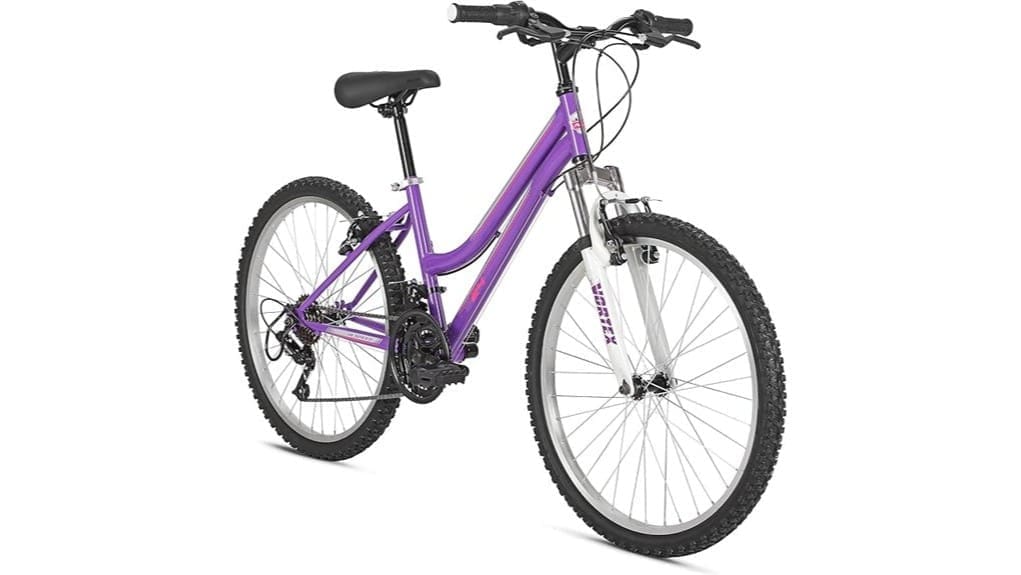
You’ll like the Pacific Mountain Sport if you want a rugged, entry-level ride that’s forgiving on sidewalks, gravel and easy singletrack. It uses a steel frame, 50 mm suspension fork, 18-speed twist drivetrain and 24- or 26-inch knobby wheels for predictable dirt traction and steady handling. V‑brakes deliver linear stopping power while simple components keep maintenance straightforward. It’s heavier than higher-end bikes but built to teach you the basics—keep going and you’ll get setup, fit, and buying tips.
Some Key Takeaways
- Rugged steel frame and 50 mm front suspension offer a confident, forgiving ride on sidewalks, gravel, and beginner singletrack.
- 18-speed drivetrain with twist shifters shifts crisply for learning riders, though less precise than higher-end trigger systems.
- 24- and 26-inch knobby wheel options suit different rider heights; 26″ fits roughly 54–61 inch riders for faster cruising.
- V‑style brakes provide linear stopping power but lack the modulation and performance of higher-spec disc brakes.
- Best as an affordable entry-level mountain bike for neighborhood rides and light trails; heavier frame may limit serious climbing.
Performance and Specs at a Glance (Wheels, Frame, Suspension, Drivetrain, Brakes)
Think of the Pacific Mountain as a no-nonsense trail partner: it pairs a rugged steel frame with either 24- or 26-inch knobby wheels to suit younger riders or adults (26-inch fits about 54–61 in tall), and a 50 mm front suspension fork that soaks up roots and ruts. You get an 18-speed drivetrain with twist shifters for intuitive gear selection and reliable V‑style brakes for consistent stopping power. Your wheel choice balances agility and rollover ability; suspension tuning is straightforward—preload and pressure adjustments let you tailor compliance. It’s built tough, simple to maintain, and liberating to ride. The site also offers a focused selection of accessories and components for hardtail mountain bikes to complement the Pacific Mountain.
How It Rides: Neighborhood Cruising, Light Trails, and Beginner Mountain Biking
When you roll out on the Pacific Mountain, you’ll feel a confident, steady ride that’s equally at home on sidewalks, gravel paths, and beginner singletrack. You glide over curbs and ripples with the 50 mm fork smoothing bumps while knobby tires bite into dirt for predictable traction. Comfort feedback is immediate—seat, suspension, and tire compliance tell you what the surface demands. Shifting through 18 speeds stays crisp; brakes are linear and reassuring. Handling nuances emerge as speed and terrain change, rewarding small inputs and building your skills. It invites exploration, giving you freedom to cruise, commute, and cautiously push light trails. Properly set up suspension, including fork preload and damping, can significantly improve comfort and control for riders on varied terrain like this, especially when learning about suspension forks.
Who Should Buy the 26-Inch vs 24-Inch Model (Height, Use Case, and Fit Tips)
Because wheel size affects reach, handling, and confidence on varied terrain, choosing between the 26‑inch and 24‑inch Pacific Mountain means matching your height, intended riding, and fit preferences. If you stand 54–61 inches, the 26‑inch suits you for longer rides, light trail exploration, and faster cruising; shorter riders or teens often prefer the 24‑inch for nimble handling and lower standover. Consider usage scenarios: neighborhood commuting, beginner mountain loops, or family outings. Make simple fit adjustments—saddle height, stem length, and handlebar position—to dial reach. Follow comfort tips: test standovers and take a short ride before committing. A proper bike fit can significantly improve comfort and performance, so consider using a bike fit system to fine-tune your setup.
Assembly, Durability, and Warranty: What to Expect After Purchase
After you’ve settled on the right wheel size and made basic fit adjustments, you’ll face assembly, ongoing durability, and warranty details that shape ownership. You’ll get a mostly prepackaged bike; follow clear assembly tips—tighten headset, align front wheel, torque stem bolts, set brake pads and cables, and check tire pressure—so you’re trail-ready fast. The steel frame and 50 mm fork handle rough suburban trails and light mountain runs; expect solid wear resistance if you maintain chain, brakes, and suspension. Warranty expectations: 5-year frame, 1-year parts, 30-day wearables—register immediately and keep receipts to protect your freedom to ride. Consider upgrading components over time to match your preferred riding style.
Pros, Cons, and Buying Recommendation (Who This Bike Is Best For and Alternatives)
If you want a rugged, affordable entry-level mountain bike that’s ready for neighborhood rides and light trails, the Pacific Mountain Sport delivers dependable value without fuss. You’ll like its sturdy steel frame, 50 mm fork, knobby tires, and simple 18-speed setup—great for learning and exploring freedom on dirt or pavement. Downsides: weighty steel limits climbing, V-brakes and twist shifters lack precision for serious trails, and components may need earlier replacement. Buy it if you want affordable adventure and solid resale value as you upgrade. For budget alternatives, consider entry aluminum models or used higher‑spec bikes. Consider also reading about bike frame types to match the right frame material to your riding goals.
Some Questions Answered
Can This Bike Accommodate a Rear Rack or Fenders?
Yes — you can fit a rear rack or fenders, but check clearance and load capacity first. You’ll need to verify drivetrain clearance around the cassette and derailleur so panniers or mudguards won’t interfere with shifting. The steel frame and 26‑inch setup handle basic racks; stick to moderate loads within the bike’s rated capacity. With proper mounts or clamp-on hardware, you’ll add utility without compromising trail feel or confident, free‑riding fun.
Is a Kickstand Included or Compatible?
No, a kickstand isn’t included, but you’ve got solid kickstand options and a simple compatibility checklist to follow. You’ll want a rear‑mount or chainstay clamp kickstand that fits steel frames and 26‑inch wheel geometry; confirm frame clearance, mounting boss presence, and tire clearance. Choose a sturdy adjustable kickstand rated for your rider weight and terrain. You’ll enjoy reliable parking freedom once you install the right model.
What Is the Bike’s Total Weight Fully Assembled?
The fully assembled bike weighs about 18.6 kg (≈41 lbs), matching the listed shipping weight and weight specs closely. You’ll appreciate that this steel-frame build balances durability with manageable heft for trail launches and neighborhood freedom. The package weight (18.55 kg) reflects how it arrives, and assembled weight stays roughly the same; expect a bit of variance from accessories or setup, but you’ll still handle it confidently on rides.
Are Replacement Tires and Tubes Standard Sizes?
Yes — you’ll find replacement tires and tubes are standard sizes for easy sourcing. Tire compatibility matches common 26‑inch (or 24‑inch option) mountain bike specs with knobby profiles, so you can choose wider or more trail‑oriented treads. Valve types are typically Schrader on this model, letting you use widely available tubes and pumps. You’ll have freedom to upgrade tires for terrain, confident parts are affordable and simple to swap.
Does It Come Partially Assembled Out of the Box?
Yes — it arrives partially assembled. You’ll get a factory setup with handlebars, fork, and many components preinstalled; you’ll finish assembly at home. Grab a tool checklist (wrenches, Allen keys, pedal wrench, pump) and follow the instructions to mount wheels, pedals, seat, and adjust brakes and gears. You’ll be ready to ride with confidence after a final torque check and quick test ride to fine‑tune for your next adventure.