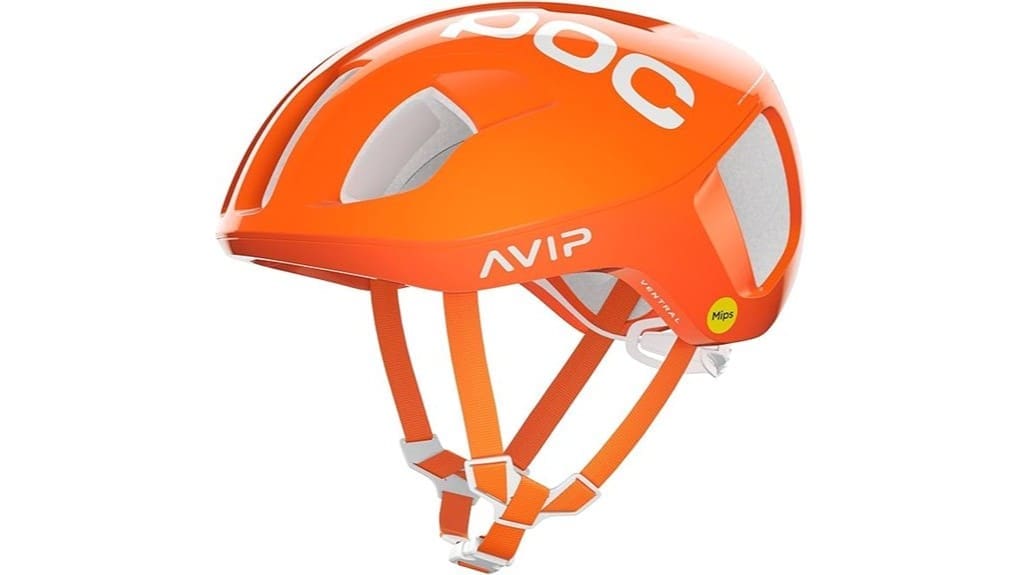
You’ll find the POC Ventral MIPS (CPSC) blends race‑level aerodynamics with commuter practicality, giving you strong rotational protection from its integrated MIPS layer and controlled impact management via EPS and reinforced structure. The 360° size‑adjustment and microdial deliver a secure, pressure‑free fit for all‑day rides, while large intake ports and internal channels balance cooling with low drag. It’s light, stable, and ventilated for mixed routes; keep going for detailed fit, performance, and buying notes.
Some Key Takeaways
- Excellent safety with integrated MIPS, EPS shell, and reinforced structure managing rotational and linear impact forces.
- Aerodynamic Ventral shape balances low drag with large intake ports and internal channels for sustained cooling.
- Lightweight, breathable liner and 360° microdial adjustment deliver secure, comfortable fit for long rides.
- Real-world performance: stable during climbs and sprints, effective ventilation on sustained efforts, minimal on-road adjustments.
- Drawbacks: limited visor compatibility and premium price; best purchased from POC or authorized dealers for warranty and fitting.
Quick Verdict: Who the POC Ventral MIPS (CPSC) Is Best For
Who should pick the POC Ventral MIPS (CPSC)? You want a helmet that balances speed, cooling, and everyday usability. If you’re among commuter urbanists who need lightweight durability for mixed routes, this fits. If you’re a casual triathlete seeking aerodynamic help without sacrificing ventilation, this works too. You’ll get precise 360° adjustment for a secure fit, structural vents that push airflow, and a multi-use design for road and long mountain rides. You’ll appreciate the freedom to ride hard or commute comfortably while retaining reliable protection and breathable performance in varied cycling conditions. It’s an excellent choice for riders focused on commuter bike helmets that combine protection for daily use with performance features.
How the Ventral MIPS Protects: MIPS, Structure, and Impact Performance
If you liked the Ventral MIPS for its blend of speed and ventilation, here’s how it actually protects you on impact. You get an integrated MIPS layer that reduces rotational forces during oblique impacts, improving rotational mitigation without bulk. The helmet’s EPS shell and reinforced outer structure manage linear energy, while targeted crush zones control deformation. Carefully selected liner materials balance shock absorption and weight, delivering predictable deceleration. Vented channels don’t compromise integrity; they’re routed to preserve structural ribs. In short, the Ventral MIPS combines rotational mitigation, tuned shell geometry, and smart liner materials to protect you effectively on the road. The Ventral MIPS is designed specifically for road cycling enthusiasts who prioritize aerodynamic performance and comfort while maintaining high safety standards, making it a strong choice for those shopping for road cycling helmets.
Fit, Comfort, and Adjustment: 360° Sizing and Day‑Long Wear
While you’re riding, the Ventral MIPS keeps a secure, customized fit through its 360° size-adjustment system that cradles the head without pressure points. You fine-tune fit instantly via the adjustment microdial, locking the shell close to your skull for confident handling. Lightweight construction and breathable liner materials reduce fatigue so you stay free to push distance or speed. Chinstrap geometry and low-profile pads prevent slip and hot spots during long efforts. The result: predictable stability, minimal adjustments on the road, and comfort that supports full-day rides—precise, durable, and engineered for riders who value range and control. The helmet is offered alongside other cycling-specific safety products on Helmet Picks for better bike helmet shopping and comparison.
Ventilation and Aerodynamics: Airflow Ports, Internal Channels, and Cooling on the Road
Having nailed fit and stability, the Ventral MIPS then focuses on moving air where you need it most: large, strategically placed intake ports pair with internal channels to pull cool air in and flush heat out along the scalp. You’ll appreciate precise airflow tuning that balances ventilation with aerodynamic drag, letting you push hard without feeling cooked. Thoughtful vent placement guides air through low-resistance paths, accelerating exhaust toward the rear. On long rides you’ll notice sustained cooling without noisy turbulence. The result: efficient heat management that preserves performance and the freedom to ride harder, longer, and more confidently. The Ventral MIPS also complements helmet safety standards and design considerations found in the ultimate guide to choosing the right mountain bike helmet, including discussions of mountain bike helmets and their features.
Real‑World Performance and Value: Riding Tests, Pros, Cons, and Buying Options
Because real rides reveal what specs and promises don’t, you’ll want to judge the Ventral MIPS on how it performs across varied conditions—commutes, long road days, and mixed-terrain outings. You’ll notice balanced weight distribution that keeps the helmet stable during climbs and sprints, and the 360° adjustment locks position without pressure points. Ventilation stays effective on sustained efforts; aero shaping doesn’t cost cooling. Pros: strong MIPS protection, light feel, precise fit. Cons: limited visor compatibility for off-road use, premium price. Buy options: direct from POC for full warranty or authorized dealers for fitting and local returns. POC’s focus on combining aerodynamic design with safety technologies makes the Ventral MIPS a compelling choice for riders who prioritize both speed and protection.
Some Questions Answered
Is This Helmet Compatible With Cycling Lights or Accessories?
Yes — you can mount lights and accessories; the helmet offers good mounting compatibility. You’ll find secure attachment points and smooth surfaces for most rear lights and small cameras. Light placement works best on the rear lower shell or integrated vents with straps; avoid obstructing ventilation channels. You’ll want low-profile mounts or silicone straps for a tidy, aerodynamic fit. Always test stability before riding at speed for safety and freedom on the road.
Can I Use It for E-Bike Commuting at Higher Speeds?
Yes — you can use it for e-bike commuting at higher speeds, but check speed certification for your e-bike class. The helmet’s MIPS and structural ventilation handle impacts and airflow from electric motors’ higher cruise speeds, and the 360° fit keeps it secure during fast rides. You’ll enjoy lightweight comfort and aerodynamic support, yet always match helmet choice to local regulations and your e-bike’s maximum assisted speed for peak safety.
How Does It Perform in Extreme Cold or Wet Conditions?
It performs well but with limits: you’ll get modest thermal insulation from the lightweight shell and internal channels, so it won’t be as warm as insulated winter helmets. You’ll appreciate water repellency on the exterior that sheds light rain, though prolonged downpours can seep through vents. You can extend use in cold or wet rides by adding a thin skull cap and a waterproof overcap to maintain warmth and keep water out.
Are Replacement Pads and Parts Readily Available?
Yes — replacement availability is strong; you can get official pads, straps, and buckles from POC and major retailers. You’ll also find decent aftermarket compatibility for sweat pads and liners, though fit and materials vary. You’ll want OEM parts for peak safety and fit, but aftermarket options give freedom to customize comfort and wear. Keep spare pads handy for long-term use and cleaner hygiene.
What Is the Weight Difference Between Sizes?
You’ll see modest size variance: weight comparisons typically show small to large sizes differ by about 20–40 grams. You’ll get the lightest small size for nimble rides, medium nearby, and large adding the most mass for coverage. This variance reflects shell and liner volume, not material change. You’ll choose based on fit first, knowing weight differences won’t noticeably affect long-ride comfort or ventilation performance.