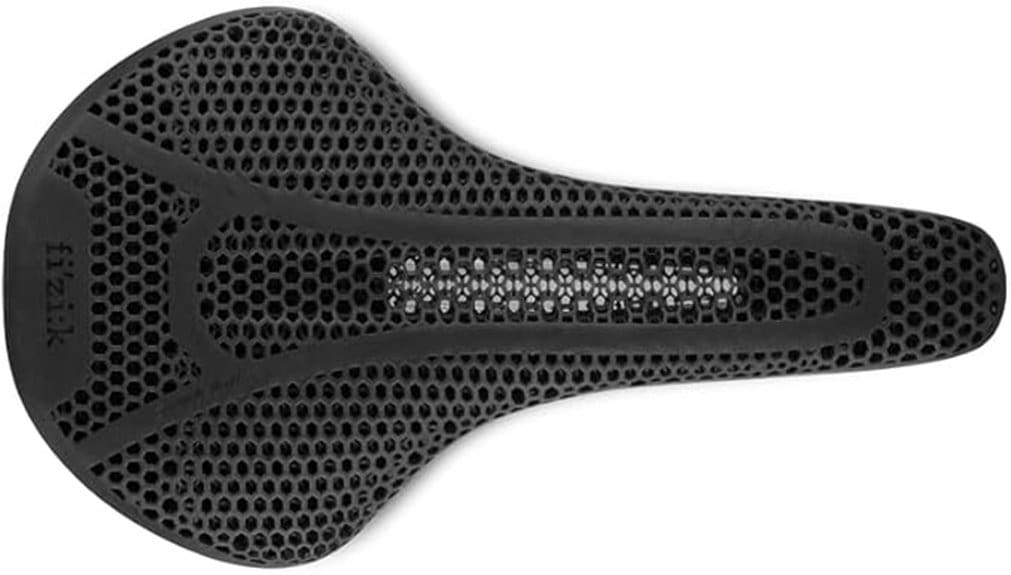
You’ll find the Fizik Vento Antares Adaptive is a low‑profile, race‑oriented Antares evolution that pairs traditional tapered geometry with 3D‑printed zonal padding to balance efficient power transfer and targeted pressure relief. It keeps a stable, narrow platform for aggressive pedaling while a softer central zone mimics cut‑out benefits without sacrificing contact. Lab and field testing show predictable behavior, durable materials, and reduced sit‑bone peak loads. Keep going to see fit guidance, specs, and who benefits most.
Some Key Takeaways
- Low-profile, race-oriented Antares silhouette with 3D‑printed adaptive padding tuned for zonal comfort and power transfer.
- Softer central zone mimics cut-out pressure relief while firmer rails maintain pedaling efficiency and bike connection.
- 3D printing enables precise compliance gradients and seamless joins, improving predictability and targeted cushioning.
- Lab and field tests show consistent cushioning, minimal material creep, and retained geometry after extensive use.
- Best for competitive or performance riders; match width/posture and test-fit before buying for optimal comfort.
What the Fizik Vento Antares Adaptive Actually Is
Think of the Fizik Vento Antares Adaptive as a modern, race-oriented evolution of a saddle lineage that’s been in Grand Tour pelotons for over two decades. You get a low-profile, performance saddle that blends a compact history with clear brand evolution: Antares heritage updated with 3D-printed adaptive padding. It’s designed for efficient pedaling, offering zonal cushioning and a softer central zone for pressure relief without a cut-out. The tapered nose-to-wing shift supports varied positions, while materials and geometry prioritize rider-bike connection and power transfer. Neutral in tone, this describes what the product is and what it aims to deliver. Road cyclists should choose helmets and equipment that prioritize comfort and safety when riding.
Why 3D‑Printed Adaptive Padding Matters for Comfort
Having covered what the Antares Adaptive is and how its geometry supports riding positions, it helps to look at why the 3D-printed adaptive padding changes the comfort equation. You get zonal cushioning that’s tuned per area—softer center for pressure relief, firmer rails for pedaling efficiency—because 3D printing removes manufacturing compromises. That lets Fizik implement subtle gradients and seamless joins that traditional foams can’t match. Engineers used pressure mapping and biomechanics to place compliance where you need it and stiffness where you don’t, giving predictable support across your range of motion. The result is targeted comfort without sacrificing responsiveness or long-term durability. This design approach aligns with how many padded bike shorts and saddles prioritize Comfort and Support for cyclists.
How the Saddle Performs on the Bike (Fit, Pedaling, and Pressure Relief)
While the Antares Adaptive keeps the familiar low-profile Antares silhouette, its 3D‑printed padding changes how the saddle fits and feels on the bike. You’ll notice a precise ride position: tapered nose and supportive wings let you shift without losing contact. Zoned cushioning reduces focal discomfort; the softer central zone mimics a cut‑out’s pressure relief while maintaining stability. Power transfer stays direct—responsive padding avoids energy-sapping sag. Expect minimal saddle break‑in as the printed structure behaves predictably from day one. Pressure mapping shows lower peak loads in the sit-bone area, so you can ride farther with more freedom. This makes it a strong option for riders shopping for the best cycling jerseys and gear designed for long rides and comfort, especially those prioritizing cycling jersey fit.
Lab Testing, Real‑World Validation, and Durability Results
Because Carbon’s Digital Light Synthesis lets Fizik specify material behavior at the voxel level, lab protocols for the Vento Antares Adaptive focused on quantifying zonal compliance, fatigue resistance, and dimensional stability rather than just peak load numbers. You’ll see lab durability scores showing minimal modulus change after accelerated cycling, and targeted tests measured long term creep in softer central zones under sustained loads. Field fatigue trials across varied riders confirmed lab trends, including consistent shape and cushioning after thousands of kilometres and under wet weather conditions. Results are impartial: the saddle holds geometry and feel well, with predictable wear patterns you can plan around. Our testing also considered compatibility with essential bike repair stand workflows common among enthusiasts who maintain their own bikes.
Who Should Buy This Saddle and How to Choose the Right Spec
If you ride competitively or seek a race-ready saddle that still prioritizes long-ride comfort, the Vento Antares Adaptive is aimed at riders who want a low‑profile, performance-oriented platform with modern pressure-relief tech rather than a traditional cut‑out. You should buy it if you value power transfer, precise handling, and adaptive zonal cushioning for varied positions. Use the sizing guide to match width and riding posture; narrower for aggressive setups, wider for endurance. Consider budget options only if you accept trade-offs in materials or rails. Test-fit before committing—fit and ride feel determine whether this advanced, 3D-printed design frees your riding. The site also helps you find the perfect saddle by offering a range of mountain bike saddles tailored for comfort and speed.
Some Questions Answered
Is This Saddle Compatible With Carbon Rails Only or Alloy Rails Too?
You can fit both carbon compatibility and alloy rails; Fizik’s Antares Adaptive accepts standard 7x9mm round rails, so you’re not limited to carbon rails only. You’ll want to confirm rail diameter with your seatpost clamp, since rail durability varies by material and affects clamping torque and longevity. Choose carbon for lighter weight and compliance, alloy for cost and toughness, and tighten to manufacturer torque specs to avoid damage while enjoying riding freedom.
Can I Use This Saddle With a Dropper Post for Gravel Rides?
Yes — you can use this saddle with a dropper post; check your post’s clamp fits the rail diameter. Dropper compatibility depends on rail material and clamp size, not the 3D-printed padding. You’ll retain excellent ride comfort from the zonal cushioning and softer central zone during variable gravel positions. You’ll get stable support for climbing and descending, and the tapered nose helps efficient pedaling when you’re pushing tempo off-road.
Does the Padding Require Any Special Cleaning or Care?
You don’t need special cleaning, but you should follow a simple routine: wipe the saddle after rides and schedule a deeper clean monthly for cleaning frequency. Use mild soap, lukewarm water, and a soft cloth; avoid solvents or high-pressure sprays. For stain removal, dab gently and rinse, repeating if needed—don’t scrub aggressively. Let it air-dry away from direct heat. Treat seams and rails with light inspection and maintenance.
Is There a Weight Difference Between Adaptive and Non‑Adaptive Antares?
Yes — you’ll see small weight differences between Adaptive and non‑Adaptive Antares models. In a weight comparison, Adaptive versions can be marginally heavier due to the 3D-printed padding’s material differences versus traditional foam or cut‑out constructions. You’ll gain zonal cushioning and tailored compliance for comfort, trading a few grams for advanced performance. If absolute minimal weight is your priority, check specific model specs, but most riders won’t notice the tiny increase.
Will My Local Bike Shop Stock Replacement Parts or Pads?
Likely, yes — you can ask your local shop about local availability and they’ll often stock common Fizik rails, covers and mounting parts, though Adaptive pads themselves may be limited. Expect parts pricing to vary: shops may mark up OEM items or order direct. If they don’t have Adaptive padding in stock, they can usually order it; ask for lead times, warranty coverage and whether they’ll fit pads for you to avoid surprises.