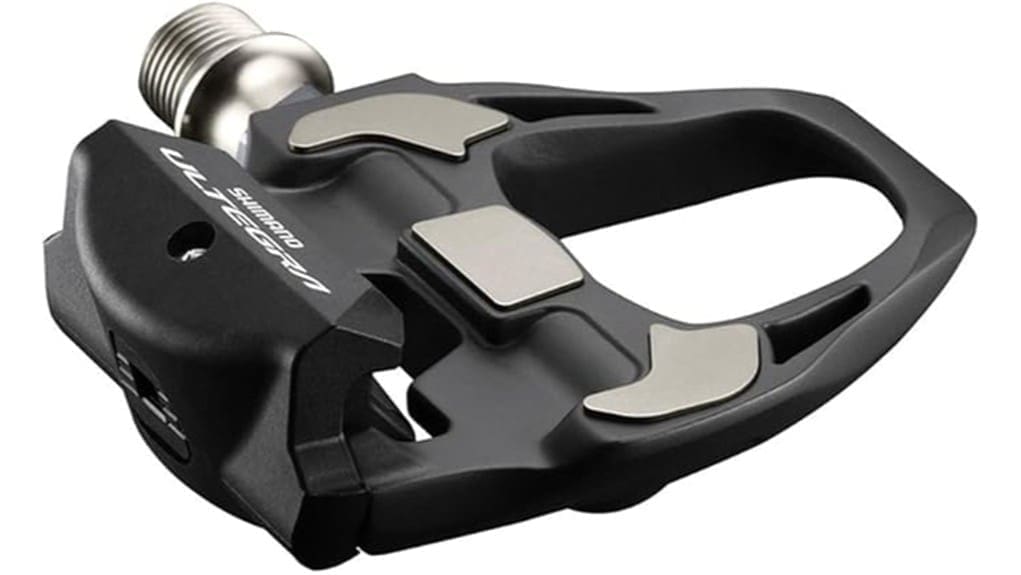
You’ll get a stiff, lightweight carbon platform that delivers Ultegra-level efficiency without Dura-Ace cost. At 248 g per pair the PD-R8000’s carbon body, integrated stainless wear plate, sealed bearings and low stack height minimize energy loss and keep your foot stable under load. Engagement is crisp, float controlled, and tension is adjustable for secure entry and exit. Fit with SPD‑SL 3‑bolt cleats and fine‑tune axle length and tension for peak power and comfort—keep going for setup and comparisons.
Some Key Takeaways
- Lightweight carbon-composite body with stainless wear plate yields stiff, efficient power transfer for serious enthusiasts.
- Manufacturer weight ~248 g per pair with a low stack height 0.7 mm shorter than PD-6800.
- Wide platform and optimized bearing placement improve load distribution and reduce hotspots and fatigue on long rides.
- Sealed bearings and durable materials offer good longevity, with periodic wear-plate and bearing maintenance recommended.
- Compatible with SPD-SL 3-bolt Ultegra cleats; adjustable tension and +4 mm axle option enhance fit and clearance.
Shimano PD-R8000 At a Glance: Who This Pedal Is For
Although aimed at serious enthusiasts, the PD-R8000 fits any rider who wants Ultegra-level performance without stepping up to Dura-Ace. You get a carbon-composite platform that balances low stack height with broad contact for efficient power transfer and consistent float. If you crave responsive pedaling and minimal shoe-to-axle distance, this pedal reduces energy loss without compromising durability. Adjustable tension lets you tailor entry and release confidence, while the stainless body plate and wide bearing placement sustain stiffness under load. Pedal aesthetics remain clean and purposeful—functional design that frees you to ride harder, farther, with predictable control. For riders upgrading wheels and components, pairing the PD-R8000 with a compatible wheelset choice maximizes overall drivetrain efficiency.
What the PD-R8000 Offers: Key Specs and Materials
Having established who the PD-R8000 suits, let’s inspect what it brings on paper: a 248 g pair (manufacturer spec) carbon-composite body with an integrated stainless-steel wear plate, 9/16″ thread, and a low stack height that’s 0.7 mm shorter than PD-6800. You get a carbon composite chassis for stiffness and weight saving, paired with a stainless plate where cleat contact causes abrasion. Wide bearing placement and an ample platform distribute load for consistent engagement. Thread standardization and optional axle lengths simplify fit. Materials and geometry prioritize a minimal, efficient connection—precise, durable, and focused on liberating your ride. For riders replacing drivetrain parts, pairing the pedal with the right replacement chain and correctly matching components improves overall shifting performance and longevity.
How They Perform on the Road: Power Transfer, Durability, and Feel
Expect immediate, efficient power transfer from the PD-R8000: the carbon-composite body and integrated stainless-steel wear plate create a stiff, low-profile platform that minimizes energy loss and keeps your foot stable under load. You’ll notice direct power feedback through each pedal stroke; the wide platform and optimized bearing placement distribute load evenly, reducing hotspots and fatigue. Durability is robust—stainless plate resists wear, carbon resists flex, and sealed bearings tolerate miles of variable conditions. Feeling is precise yet predictable: engagement is crisp, float is controlled, and surface traction underfoot is reliable with compatible shoe soles. These pedals free you to push harder, longer. Road bike wheel and component selection also influences overall ride quality, so consider matching your pedals to the rest of your build for the best results from wheel and component choices.
Fit, Compatibility, and Setup Tips (Cleats, Tension, and Axle Options)
When you fit PD-R8000s, start by matching Shimano SPD-SL cleats to your shoe sole and set them so your ball-of-foot sits over the pedal spindle for maximum power transfer and knee alignment. Choose 3-bolt Ultegra cleats, adjust fore-aft and lateral position, and lock the plate securely. Set release tension low initially; use progressive tension calibration to find a secure feel without restricting unclipping. If you need more leverage or clearance, opt for the 4 mm longer axle. Monitor cleat wear and pedal float—cleat float affects tracking and comfort—and recheck torque and alignment after 50–100 km. Consider your overall riding style and goals when selecting pedal systems to ensure the best match for performance and comfort, especially if you prioritize power transfer.
Final Verdict and Buying Advice: Value, Alternatives, and Who Should Buy
After you’ve set cleats, tuned float and tension, and decided on axle length, it’s time to judge whether the PD-R8000 earns your purchase. You get pro-level stiffness, low stack height, and a lightweight carbon platform that rewards efficient pedaling. For value, run a price comparison against PD-6800 and entry-level carbon options; PD-R8000 sits mid-high but justifies cost if you prioritize performance. Check warranty terms and anticipate modest long term maintenance: periodic plate, bearing checks and grease. Resale value stays strong for Shimano Ultegra. Buy it if you demand durable, efficient freedom on road rides. Also consider other models across our site to find the best fit for different rider needs, especially if you value pro-level stiffness.
Some Questions Answered
Are PD-R8000 Pedals Compatible With Mountain Bike Shoes?
No — PD-R8000 pedals aren’t compatible with most mountain bike shoes; they use the SPD-SL road cleat system, so SPD shoe compatibility is limited. You’ll need road-specific shoes with three-bolt mounts for secure engagement. Off road limitations include poor mud clearance, larger slippery platform, and cleats that don’t recess, reducing walking ability and increasing wear. If you want MTB use, choose SPD two-bolt pedals for true off-road functionality and freedom.
Can I Use These Pedals With SPD (2-Bolt) Cleats?
No — you can’t use SPD (2-bolt) cleats directly with these pedals. The PD-R8000 uses 3-bolt SPD-SL cleat compatibility, so 2-bolt cleats won’t engage. You could evaluate platform adapters or aftermarket converter plates, but they’re rare and often compromise float, stack height, and security. If you want freedom to switch shoe systems, choose pedals designed for SPD or use a separate adapter-free setup to maintain reliable cleat compatibility and performance.
Do PD-R8000 Pedals Require Special Maintenance Tools?
No — you won’t need exotic tools. You can perform routine cleaning kit tasks and tension adjustments with basic hex wrenches and a pedal spanner; bearing service requires a thin cone wrench or Shimano-compatible service tool if you disassemble the axle. Use grease, solvent, and a compact cleaning kit for exterior care. For full bearing overhaul, consider a shop or Shimano toolset to preserve seal integrity and ride freedom.
Is There a Left/Right Specific Torque for Pedal Installation?
Yes — you should follow a left/right specific threaded torque: Shimano recommends tightening each PD-R8000 pedal to the specified torque for the crank arm thread. You’ll apply standard right-hand torque on the drive (right) pedal and reverse (asymmetrical tightening) for the left pedal to prevent loosening. Use a torque wrench, clean threads, and grease or anti-seize as directed. That guarantees secure, reliable installation and preserves freedom to ride.
Are Replacement Axles and Bearings Sold Separately?
Yes — you can buy replacement axles and bearing kits separately for the PD-R8000. You’ll find Shimano-specified axles (including the optional 4 mm longer axle) and service bearing kits through dealers or Shimano service centers. Parts let you restore preload, smoothness, and longevity without replacing the whole pedal. Check part numbers for compatibility, use correct torque and grease, and consider professional service if you want guaranteed alignment and sealed-bearing integrity.