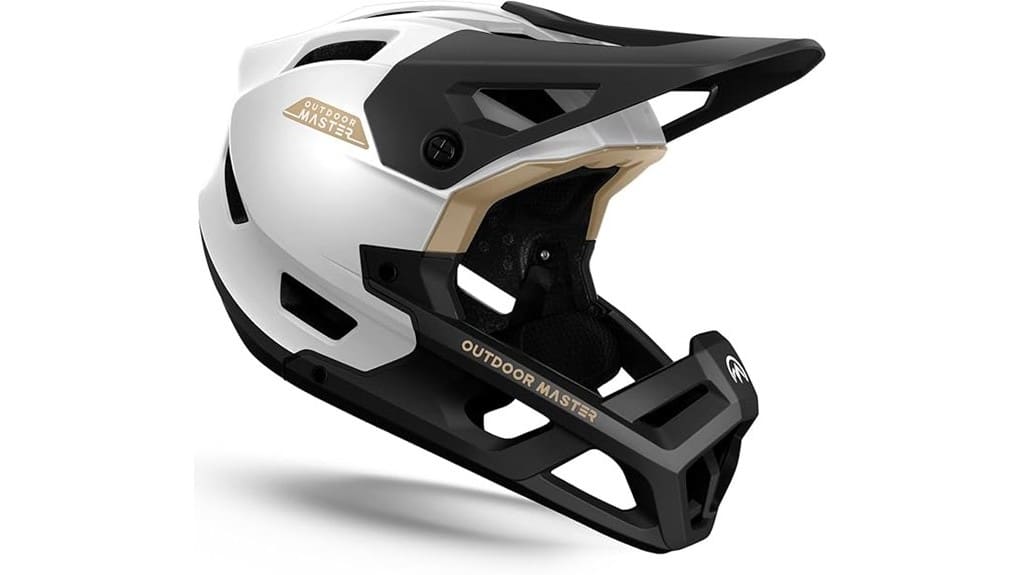
You’ll get trail-ready, full-face protection with the OutdoorMaster Grizzly, sized for 57–62 cm heads and matching round to slightly oval shapes; center it, snug the dual-thickness D-ring straps under your jaw, and check for even temple and occiput contact. A rigid chinbar, shock pads, and an EPP collarbone zone disperse impacts while 27 vents, a sub-750 g weight, and a removable liner keep you cool and comfortable. Read on to see detailed fit, safety, and use notes.
Some Key Takeaways
- Full-face shell with removable chinbar and EPP collarbone system offers layered impact protection for trail rides and crashes.
- Best fit for head circumferences 57–62 cm; center helmet and check even contact around temples and occiput.
- Lightweight sub-750 g design and 27 vent channels reduce neck fatigue and maintain steady airflow on long rides.
- Removable, washable liner controls moisture and odor; padding durability should be monitored over months.
- Adjustable pivoting visor, goggle retention channel, and dual-thickness D-ring strap threading enable secure, customizable fit and vision.
Who the Grizzly Fits Best and How to Size It
While the Grizzly targets adult riders, it’s best suited to heads measuring 57–62 cm (22.4–24.4 in); measure around the widest part of your head just above the eyebrows to confirm fit. You’ll appreciate the clear adult sizing and two D-ring thickness options for strap adjustment, letting you fine-tune tension without guesswork. Match helmet interior to your head shape—round or slightly oval—and check for even contact around temples and occiput. Fit tips: center the helmet, secure straps snugly under the jaw, and make certain no pressure points. If you want freedom on trails, precise sizing keeps movement secure and comfortable. For more on selecting the right helmet type, consider researching mountain bike helmet fit and features to match your riding style.
How the Grizzly Protects: Chinbar, EPP Collarbone System, and Shock Pads
The Grizzly concentrates protection where impacts matter most: its full-face chinbar shields your jaw and lower face. You’ll notice chinbar integrity from its rigid shell and secure attachment points that resist flex on strikes. Behind that shell, shock pads absorb initial forces, lowering peak loads before energy reaches your head. The EPP collarbone system adds staged deformation to protect shoulder routes and helps with controlled impact dispersion across the torso and helmet. Together, these elements create layered defense: a stiff outer barrier, energy-absorbing pads, and a sacrificial collarbone zone so you can ride bolder with measured safety. This layered approach matches key road cycling helmet design priorities like comfort and safety emphasized for cyclists.
Comfort and Ventilation on Long Rides (27 Vents, <750 G, Liner)
After outlining how the Grizzly layers impact protection, it’s worth looking at how it keeps you comfortable on long rides. You’ll notice the sub-750 g weight reduces neck fatigue, making multi-hour freedom rides easier. The 27 vents and injection-molded channels move air efficiently; in a breathability test you’ll feel steady airflow across forehead and cheeks. The removable, washable liner controls moisture and odor; check padding durability over months to guarantee cushioning stays consistent. Fit for 57–62 cm heads pairs with light construction to maintain comfort without compromising safety. Overall, ventilation and low weight prioritize sustained comfort and control. This helmet complements other essential cycling gear like protective accessories that contribute to overall ride safety.
Goggle, Visor, and Strap Features That Affect Real-World Use
Because your goggles, visor, and straps are the primary interface between rider and environment, they directly shape visibility, fit security, and on-ride adjustments. You’ll appreciate the helmet’s goggle retention channel that keeps lenses stable over rough terrain and reduces snagging. Visor adjustability lets you dial sun and debris protection without tools; the pivoting visor also improves lens compatibility with taller goggle frames. Check strap threading through the D-ring sets to fine-tune tension and emergency release; two thickness options give predictable micro-adjustments. Overall, these elements work together so you ride freer, see clearer, and adjust quickly on the trail. Many riders also pair helmets with helmet-mounted lights to enhance visibility during low-light rides.
Final Verdict: Performance, Pros/Cons, and Who Should Buy
Bringing goggle, visor, and strap performance into the overall picture, you can judge the Grizzly by how it balances protection, comfort, and usability on real rides. You get robust full-face protection, EPP collarbone impact system, and secure goggle fit without excess weight. Pros: solid ventilation, removable liner, and adjustable D-rings for a tailored fit. Cons: limited formal battery life relevance (no electronics), and sizing limited to 57–62 cm. Who should buy: adult riders wanting freedom to push trails with reliable coverage and multiple color options for style. It’s purposeful, comfortable, and trail-ready. Riders who commute or explore urban routes will appreciate features designed for everyday use, including commuter helmet considerations.
Some Questions Answered
Is This Helmet Certified for Downhill Racing Events?
No — it isn’t explicitly downhill certified or guaranteed race approval. You’ll appreciate the full-face design, EPP collarbone impact system, chinbar pads, and 27 vents, but official downhill certification and event-specific race approval depend on meeting standards like ASTM, CE EN, or FIM noted by organizers. You’ll need to check the helmet’s label or manufacturer documentation and confirm with race organizers before using it in sanctioned downhill racing events or competitive settings.
Can I Use a Bluetooth Communication System With It?
Yes — you can use a Bluetooth communication system, but check fit and mic placement. You’ll fit most compact Bluetooth packs and speakers to the shell or strap, and the goggle-strap channel helps secure wiring. Position the mic near the chinbar or under the liner for clear pickup; test placement to avoid wind noise. Keep units lightweight to preserve comfort and ventilation, and use removable liners for easier mounting and maintenance.
What Colors and Finishes Are Available?
You can choose Matte black or Glossy camo finishes. You’ll get a subdued, non-reflective Matte black for stealth and minimal glare, or a bold Glossy camo that stands out and sheds water. Both finishes preserve ventilation channels and goggle compatibility. You’ll appreciate durable paint and a consistent fit across options; cleaning’s simple with the removable liner, and the visor’s pivoting action works the same regardless of finish.
Does It Come With a Warranty or Return Policy?
Yes — you get coverage. You’ll find a warranty length that typically spans one year against manufacturing defects, and a return window commonly set at 30 days from delivery for unused gear. You’ll need proof of purchase and to follow the seller’s return instructions; inspect items promptly. If you want longer protection or exchanges, check retailer policies or add third-party coverage so you keep freedom to choose repairs or replacements.
How Does It Perform in Very Cold or Snowy Conditions?
It performs adequately in cold or snowy conditions but needs attention to prevent visor icing and cold transfer through the chin area. You’ll appreciate the pivoting visor and ventilation control, though heavy wet snow can ice the visor; carry a cloth or anti-fog treatment. The EPP collarbone impact system and chinbar shock pads keep protection intact; consider adding chin strap insulation or a thin balaclava to seal drafts and keep warmth without restricting freedom.