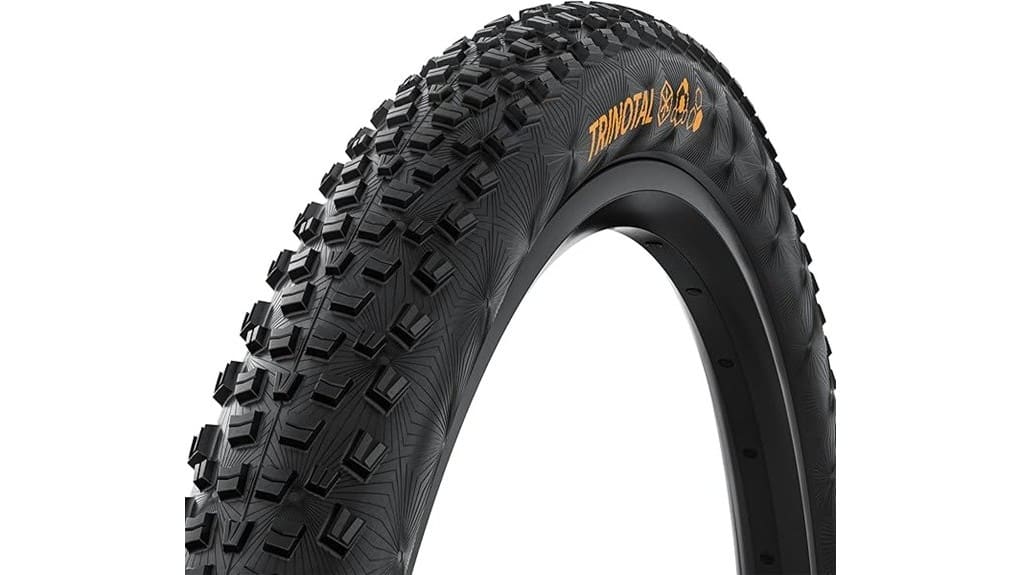
You’ll like the Continental Trinotal if you want a fast, tubeless MTB tire that’s confident on mixed and loose terrain. It uses a Trinotal compound and reinforced trail casing so you can run low pressures for grip without feeling mushy, and the tubeless setup is forgiving to install. Rolling resistance stays impressively low for climbs and flats, while sidewalls resist everyday punctures and e‑bike torque. Keep going and you’ll get setup tips, pressures and buying advice.
Some Key Takeaways
- Trinotal compound delivers a fast, grippy balance for mixed and loose terrain with confident cornering bite.
- Tubeless‑ready design and easy setup allow lower pressures for comfort and fewer punctures.
- Trail casing with E25 reinforcement offers strong puncture resistance and durability for e‑bike use.
- Low rolling resistance and good damping make it efficient on climbs and smooth over trail chatter.
- Best for riders seeking versatile, fast tubeless performance on mixed trails; match rim width and pressures.
Quick Verdict : Who the Trinotal Is Best For
If you ride mixed or loose terrain and want a fast, confident tubeless tire that handles cross-country and down-country efforts, the Continental Trinotal is made for you. You’ll appreciate its balance: low rolling resistance for long rides, enough traction to lean into loose corners, and reinforced casing that tolerates rough lines. It’s beginner friendly—easy to set up tubeless and forgiving at lower pressures—yet competent for riders chasing speed. Commuter suitability is a bonus if your route mixes pavement with gravel. If you prize freedom to explore varied trails without fuss, the Trinotal delivers practical, no-nonsense performance. For riders who want reliable protection against flats, pairing the Trinotal with a quality tubeless sealant like those used for tubeless tire sealants can make rides more worry-free.
What the Trinotal Promises : Compound, Casing, Tubeless and E‑Bike Features
You liked the quick verdict because it promised a tire that can do a lot; now let’s see how Continental backs that claim on paper and on trail. You get Trinotal compound that blends grip, damping and low rolling resistance — thoughtful rubber chemistry aimed at riding fast without sacrificing control. The tubeless-ready design lets you run low pressures for better ride comfort and fewer punctures. Trail casing is adaptive and reinforced, built for Down Country loads and E25 e‑bike torque. In short, the specs favor versatility: light enough for XC, stout enough for aggressive trail and electric assist. Continental also positions the Trinotal as a versatile option for riders shopping specifically for mountain bike tires that balance weight, durability and traction.
Real‑World Performance : Grip, Rolling Resistance, Damping and Puncture Resistance
Although the Trinotal reads like a do‑it‑all tire on paper, on trail it delivers a defined personality: you get confident bite in mixed and loose soils, noticeably low rolling resistance when pushing tempo, and a damping character that smooths chatter without feeling mushy. You feel direct traction feedback through varied terrain—small knobs transmit grip changes cleanly so you adjust line and speed instinctively. On fast climbs and flats it rolls quick; in rough sections it soaks impacts without deadening the trail. Puncture resistance is solid thanks to the reinforced trail casing and sidewall durability, so you ride bolder, worry less. It pairs especially well with wider, tubeless-ready mountain bike wheels to maximize traction and comfort.
Fitment, Setup and Pressure Guide for Tubeless 26×2.20
When swapping a 26×2.20 Trinotal onto your rim, start by checking rim width and bead compatibility so you won’t be fighting a stubborn tire or risking a poor seal; this tire pairs best with rim internal widths around 19–25 mm for a balanced profile and predictable sidewall support. Fit the tire carefully, seat the tire bead evenly, and confirm valve compatibility—Presta is typical, so use a tubeless-ready valve stem. Use 30–60 ml of quality sealant depending on ride length and temps; heavier sealant for thorny routes. Run pressures low enough for grip but high enough to avoid burping; tweak on trail. Consider matching the tire to a rigid fork designed for tubeless setups and gravel or MTB use to get the most from the ride and fork compatibility.
Buy or Skip? Value, Warranty and Final Recommendation
Decide based on where and how you ride: the Trinotal delivers a strong mix of grip, low rolling resistance and tubeless-friendly compliance that makes it a compelling buy for cross-country and down‑country riders tackling mixed to loose soils, and its E25 reinforcement adds confidence if you run an e‑bike. You’ll buy if you value speed, predictable cornering and tubeless setup ease. Check a price comparison—it’s not the cheapest, but durability and weight justify it versus budget rubber. Warranty is sensible (two years/ five since manufacture). If customer service responds fast, you’ll keep this as your go-to tire. The company also partners with retailers that specialize in wheelset upgrades, making it easier to match the Trinotal to the rest of your build.
Some Questions Answered
Is the Trinotal Available in Other Sizes or Widths?
Yes — you’ll find the Trinotal in other wheel diameters and casing options beyond 26×2.20. You can choose sizes that suit modern rigs and different trail goals, and select trail or reinforced casings for durability or lighter feel. If you want freedom to ride varied terrain, pick a wider or larger-diameter version with the tougher casing for aggressive lines, or a lighter casing for faster, more playful cross-country laps.
Can I Use the Trinotal With Inner Tubes Instead of Tubeless?
Yes — you can fit an inner tube in the Trinotal, though it’s tubeless-ready by design. You’ll gain simplicity and easier roadside repairs, but lose lower-pressure comfort and some puncture resistance. When using a tube, watch inner tube compatibility and adjust pressures upward slightly to avoid pinch flats; tubeless pressures won’t work. I’d run modestly higher PSI, ride confidently, and switch back to tubeless when you crave that extra suppleness.
What Rim Width Is Recommended for Optimal Trinotal Performance?
You’ll want a rim internal width of about 23–30mm for ideal Trinotal performance; that range balances tire profile, rim compatibility, and secure bead seating. I’d stick near 25–27mm for mixed and loose terrain to keep the tread stable, preserve cornering grip, and allow low pressures without burping. You’ll feel more confident rolling fast and choosing lines when the tire and rim truly mate.
Are There Color or Tread Variations of the Trinotal?
No — you won’t find many colorways availability choices; Continental ships the Trinotal mostly in standard black. You’ll see limited pattern variations between Grip and Trail casings (different tread layouts and reinforcement), but not flashy hues. If you crave freedom to customize, plan to personalize rims or sidewall decals. I’d rather have functional tread options than gimmicky colors, so focus on the pattern differences for real performance gains.
Is the Trinotal Compatible With Tubeless Sealant Brands?
Yes — you can use mainstream tubeless sealants with the Trinotal. You’ll get solid sealant longevity if you apply recommended amounts and top up regularly. Fit the tire with proper rim tape, seat the bead confidently, then do careful pressure testing to confirm airtightness. I’d trust common latex-based sealants, but I’d also run a fast ride and recheck — freedom means being prepared, not surprised.