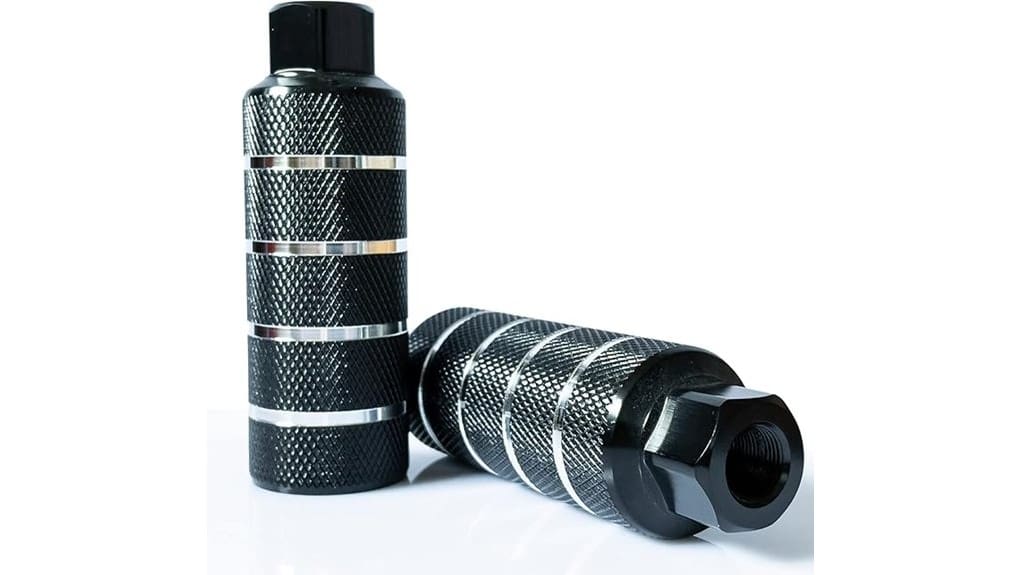
These 4.3″ pegs fit true 14 mm axles and give you a lightweight, quenched aluminum option that resists thread stripping and abrasion. They’re machined to tight tolerances to minimize wobble and have an engineered surface for grip without shredding shoes. They’re impact-resistant for park and trail tricks, and you can mount them even if the shaft only extends a few millimeters by removing the axle screw. Keep going to see installation tips and compatibility checks.
Some Key Takeaways
- 4.3″ pegs fit standard 14 mm axles when axle extends at least 5 mm beyond the hub for secure thread engagement.
- Quenched aluminum alloy construction offers high impact resilience and predictable fatigue resistance for tricks and drops.
- Surface texture balances grip and shoe preservation, producing shallow scuffs rather than rapid wear.
- Tight machining tolerances minimize wobble, but verify true 14 mm shaft and axle corrosion before installation.
- If axle shaft is short, remove the axle screw and slide the peg onto the axle, then test fit and torque properly.
Quick Fit Check: Do These 4.3 Pegs Work With Your Axle?
Wondering whether these 4.3″ (110 mm) pegs will fit your bike? You’ll start with quick measurements: confirm axle diameter is 14 mm and axle length extends at least 5 mm beyond the mounting point. If the shaft’s short, remove the axle screw and mount the peg directly onto the axle for a secure fit. Check axle compatibility for front or rear installation; these pegs suit both when specs match. You’ll also verify thread engagement and clearance so the peg won’t rub the frame or wheel. Be precise — a proper fit preserves control and keeps your freedom to ride hard. Also consider carrying a compact CO2 inflator for quick on-the-road tire repairs and inflation.
Build and Materials: What the Quenched Aluminum Alloy Delivers
Because the pegs are made from quenched aluminum alloy, you get a strong, wear-resistant component that resists thread stripping and holds up to freestyle impacts. You’ll notice the controlled heat treatment refines grain structure, raising yield strength without excess weight. That process also improves fatigue resistance so repeated loads from tricks won’t quickly initiate cracks. Machining tolerances stay tight, ensuring consistent fit on 14 mm axles and minimizing wobble. Surface hardness combats abrasion while preserving the option to file or modify edges. In short, the build prioritizes lightweight durability and predictable mechanical behavior for riders who demand freedom. These qualities make the pegs an excellent complement to high-quality chainrings for committed cyclists who value performance and reliability, especially when paired with Perfect Chainring Picks.
Performance in Freestyle Use: Grip, Durability, and Wear
With the quenched alloy providing a predictable backbone, you can focus on how the peg actually performs under freestyle loads: grip, longevity, and wear patterns. You’ll notice the engineered surface texture bites without shredding shoes, delivering consistent contact for stalls and grinds. Impact resilience is high—repeated drops and landings don’t deform the body or threads, so alignment stays true. Wear manifests as shallow scuffs rather than structural loss; replaceable edges would help, but current machining holds up. You’ll ride confidently knowing friction, strength, and predictable wear let you push lines without worrying about premature failure. These pegs are well suited to riders of full suspension mountain bikes who prioritize durability in aggressive trail and park settings.
Installation Tips and Axle-Length Fixes for 14 Mm Shafts
If your axle barely misses the mark, don’t assume the pegs won’t fit—you can still install Bike Pegs 4.3″ on a 14 mm shaft by verifying axle diameter and addressing insufficient axle length. First confirm the shaft is true 14 mm; measure and check for axle corrosion that can mask size. If axle length is under the required 5 mm past the hub, remove the axle screw and slide the peg directly onto the shaft for a secure fit. Clean threads, apply proper thread maintenance, and torque to spec. Inspect quenched alloy engagement; test fit before riding to assure freedom and safety. Consider using a dedicated bike repair stand to stabilize the bike while fitting pegs and making axle-length adjustments.
Final Verdict and Who Should Buy These Pegs
Although they’re simple in design, these 4.3″ Bike Pegs deliver reliable, ride-ready performance for riders who demand durability and consistent fit on 14 mm axles. You get a high-strength, quenched aluminum peg with non-slip surface and clear installation options when axles are short. As an affordable upgrade, they add passenger support and street-ready resilience without needless complexity. Target riders are freestyle BMXers who value secure mounting, predictable wear, and the option to run pegs front or rear. If you want freedom to carry a passenger or improve tricks with minimal weight penalty, these pegs are practical and purposeful. These pegs complement a shop focused on bike pedals and related cycling accessories.
Some Questions Answered
Are Spacers or Bearings Required for Certain Axle Setups?
Yes — you may need spacers or bearings depending on axle compatibility and hub design. You’ll check axle diameter and available shaft length; if the axle extends less than 5 mm beyond the mount, you’ll remove the axle screw and fit the peg on the shaft, possibly adding spacers to center the peg. Don’t skip bearing maintenance when installing pegs — inspect and grease bearings to avoid premature wear and guarantee safe, freewheeling performance.
Can These Pegs Be Used With E-Bike Conversions?
You can use them on many e-bike conversions, but check e bike compatibility and motor interference first. Verify your axle is 14 mm and extends ≥5 mm past mounting; if too short, remove the axle screw and fit the peg on the shaft. Confirm the motor housing or chainring won’t contact the peg under load. The aluminum pegs are strong and non‑slip, but test clearance and torque to avoid motor interference or mechanical failure.
Do They Come in Different Colors or Finishes?
Yes — you’ll find multiple color options and finish types. You can pick anodized black, silver, or vibrant colors that resist wear; finishes include matte and glossy anodizing for corrosion resistance and a non-slip surface. Choose based on style and durability: anodized finishes boost strength and reduce abrasion, while brighter colors express individuality. Verify compatibility with your 14 mm axle before buying to make certain a secure, long-lasting fit.
Are Peg Removal Tools Included or Needed?
No, included tools aren’t provided; you’ll need basic tools to remove them. You’ll use a wrench or Allen key matching your axle screw; if axle’s short you’ll remove the screw and slide the peg onto the shaft, then tighten. Removal alternatives include using a penetrating spray for seized threads or heating briefly to loosen adhesive/lock compound. You’ll want a torque feel—don’t overtighten—and carry a compact wrench for on-the-go swaps.
What Is the Weight Capacity per Peg?
Each peg’s maximum load is about 80–100 kg, depending on installation and axle condition. You’ll rely on the quenched aluminum alloy’s material strength and secure mounting to hit that range; poorly fitted axles or short screws reduce capacity. Install directly on a 14 mm shaft if needed, verify axle protrusion exceeds 5 mm, and don’t push beyond freestyle impacts. You’ll want conservative margins for safety and rider freedom.