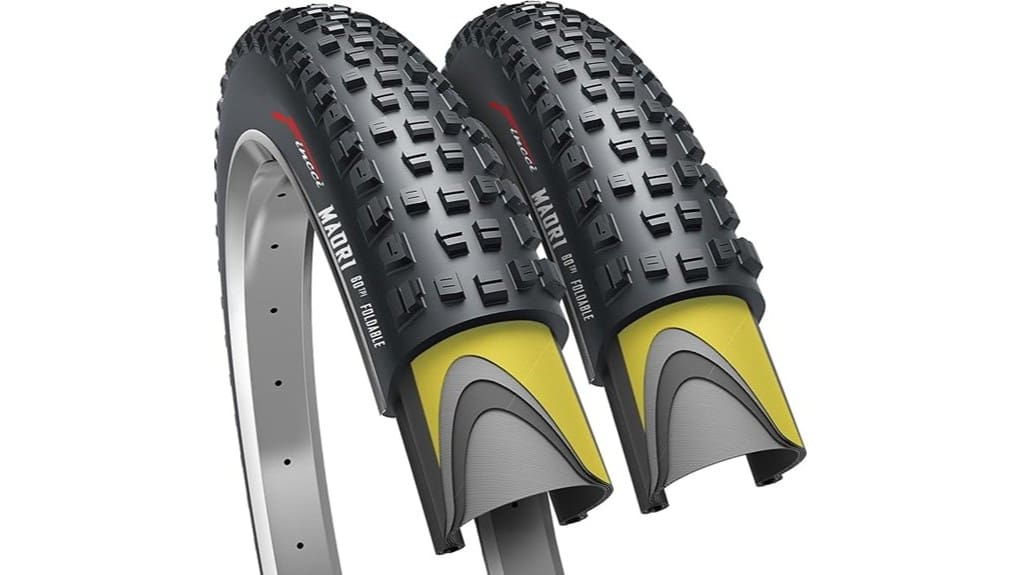
You’ll find the Fincci Maori 29×2.25 is a fast-rolling, versatile tire that suits mountain, trekking, hybrid and e‑bikes. It uses a 60 TPI casing with foldable Kevlar beads and a 1 mm antipuncture nylon layer for balanced durability and decent puncture resistance. Center knobs keep cruising efficient while side lugs offer stable cornering and moderate wet bite. It’s heavier than race rubber but practical for everyday use — keep going to see detailed fit, performance and tradeoffs.
Some Key Takeaways
- Fast-rolling center knobs reduce rolling resistance on tarmac and hardpack while still providing controlled acceleration on loose surfaces.
- Progressive side knobs offer predictable cornering stability at moderate lean angles for mixed-terrain riding.
- 60 TPI casing with foldable Kevlar bead and 1 mm antipuncture nylon balances suppleness, durability, and convenient mounting.
- Wet braking is improved over slicks but traction lags behind aggressive mud-specific tires; compound firms in cold temperatures.
- Best for riders seeking versatile, durable 29×2.25 tires; avoid if minimal weight or extreme muddy grip are top priorities.
Fincci Maori 29×2.25 at a Glance: Specs and Who It Suits
Overview: the Fincci Maori 29×2.25 is a foldable, 29″ mountain bike tyre built for faster, more comfortable rides on mixed surfaces. You get 29×2.25 sizing, 57-622 ETRTO, 60 TPI, Kevlar foldable bead and 1 mm antipuncture nylon. That combination targets versatile riders who value range and freedom. Objective specs suggest suitability for mountain, trekking, hybrid and e-bikes. Expect clear durability testing outcomes thanks to robust compound and puncture layer. Seasonal performance varies with compound stiffness; lower temps firm it up. Noise level stays moderate on tarmac while ride comfort remains especially improved versus narrower, harder tyres. The site also helps riders choose the right mountain bike tires for their preferred terrain.
How the Maori Rides: Speed, Grip, and Real-World Performance
Expect the Maori to favour speed without sacrificing predictable traction: its fast-rolling tread and 60 TPI casing lower rolling resistance on tarmac and hardpack, while the 2.25″ width and pronounced center knobs still bite into loose surfaces for controlled acceleration. You’ll notice confident cornering stability at moderate lean angles; side knobs engage progressively, letting you push lines without sudden breakaway. Wet traction is respectable for a fast-rolling profile — expect shorter braking distances than slicks but less grip than aggressive mud tires. Overall you get efficient cruising, responsive handling, and enough off-road assurance to ride farther and freer. This tire is a strong choice for riders focused on road bike tires that balance speed and off-road capability.
Build Quality and Puncture Protection: Folding Kevlar, 1 Mm Nylon, and 60 TPI
While the Maori’s tread and casing give you speed and predictable grip, its construction determines how well that performance holds up under real-world abuse. You get a foldable Kevlar bead that eases transport and mounting while offering Kevlar durability against rim-damaging failures. A 1 mm nylon antipuncture layer balances weight and protection, cutting through typical trail debris without deadening ride feel. At 60 TPI the casing is supple enough for traction yet robust under sidewall stress; TPI implications mean faster rolling but modest puncture resistance compared with higher-TPI racers. Overall, the build prioritises practical resilience and freedom to ride. Many riders find that choosing the right tire involves considering tire purpose alongside construction and tread.
Fit and Compatibility: Tire Size, ETRTO 57-622, and Bikes That Work
For a reliable fit, the Maori’s 29 x 2.25 (ETRTO 57-622) dimension matches standard 29-inch rims and gives a mid-wide profile that suits most modern trail, trekking, hybrid and e-bike platforms. You’ll find it fits 29er frames with typical wheel clearance for 2.25-inch rubber, but you should verify fork and chainstay spacing on tight frames. The ETRTO code guarantees consistent rim compatibility; match rim width to the 57 mm section for peak handling. Check axle standards (thru‑axle vs quick release) and hub spacing before purchase. Installation is straightforward if your bike’s specifications align. For help choosing wheels that complement the Maori tire, consult a guide on mountain bike wheels to ensure rim and hub compatibility.
Pros, Cons, and Should You Buy the Fincci Maori Pair?
Because the Fincci Maori 29×2.25 pairs fast rolling with solid grip, you’ll get a balanced tire that suits trail, trekking and e‑bike use without sacrificing speed. You benefit from foldable Kevlar beads, 60 TPI construction and antipuncture nylon for dependable durability. Pros: confident traction, comfortable ride, wide compatibility and clear manufacturer warranty. Cons: heavier than race-specific rubber and marginal added rolling resistance versus ultra‑light tires. Consider retail pricing against performance — these feel like value for everyday freedom riding. Buy if you want reliable, versatile tires and responsive customer service; skip them if you chase minimal weight. Gear up with the right mountain bike gear to match your riding style.
Some Questions Answered
Are These Tires Tubeless-Ready or Require Tubes?
They require tubes; they aren’t listed as tubeless-ready. You’ll want to use inner tubes unless you convert the bead and rim for tubeless setup. Assess tubeless compatibility carefully: the tire’s foldable Kevlar bead and 60 TPI construction don’t guarantee an airtight seal. Consider valve stem types when converting — use proper tubeless valves and rim tape, and make certain bead seating and sealant compatibility. If you prefer freedom from flats, plan conversion or buy native tubeless tires.
What Is the Recommended Tire Pressure Range?
Recommended range is 30–50 PSI. You’ll find ideal PSI depends on rider weight, terrain and rim width: lighter riders or rough trails benefit from lower pressures around 30–35 PSI for better Ride Comfort and traction, while heavier riders or smoother surfaces lean toward 45–50 PSI for reduced rolling resistance and puncture resistance. You should experiment within this range, adjusting in small increments to balance comfort, grip and speed.
Do Replacement Tires Come With the Same Warranty?
Yes — replacement tires usually carry the original manufacturer warranty, but you should confirm specifics. You’ll want to check warranty transferability; some warranties stay with the product, others require original purchaser registration. Prorated coverage can apply for replacements based on wear or time elapsed, reducing refund or repair value. Inspect warranty terms, keep receipts, and contact Fincci support to make certain your replacement receives full or prorated protection.
Are They Available in Other Tread Patterns or Colors?
No—Fincci primarily offers this model in the standard tread and basic black color, so color options are limited. You can, however, explore alternative treads from Fincci’s other models or third-party 29×2.25 options if you want different grip patterns or accent colors. Check with the seller for current stock and warranty on alternate models. You’ll retain freedom to choose performance characteristics by comparing compound, tread design, and puncture protection.
How Long Is the Expected Tread Lifespan Under Regular Use?
You can expect an estimated lifespan of about 1,500–3,000 miles under regular mixed-surface use. Mileage expectations vary with riding style, load, and terrain: aggressive off-road use lowers life toward 1,500 miles, steady commuting on pavement pushes it toward 3,000 miles. You’ll notice tread wear and reduced grip before failure; replace when performance or puncture resistance degrades. Keep pressures and alignment tuned to maximize longevity.