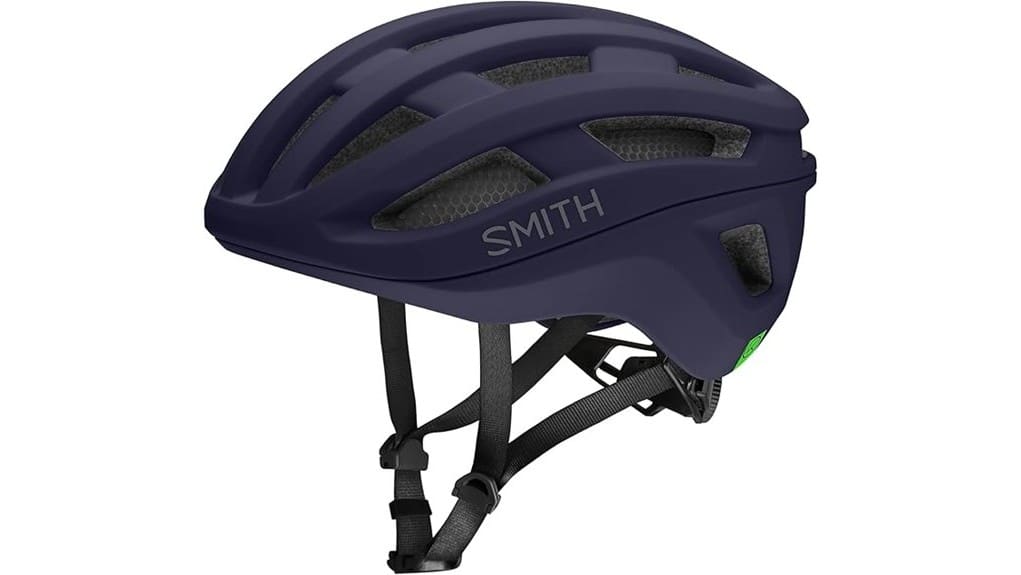
You’ll get a lightweight, well-ventilated road helmet that prioritizes rotational-impact mitigation via MIPS and predictable crush energy dissipation from zonal Koroyd. It fits small heads with a click-adjust rear dial, thin webbing, and minimal temple/occiput pads to reduce slip and hotspots. Twenty-one vents and AirEvac limit fogging while maintaining structural integrity. It meets CPSC/CE/AS standards and favors ventilated protection over modular extras — continue for detailed fit, tech, and trade-offs.
Some Key Takeaways
- Low-mass (≈11 oz) road helmet with strong ventilation and a compact shell suited for long rides and reduced neck fatigue.
- MIPS low-friction layer plus zonal Koroyd tubes combine to mitigate rotational and linear impact forces predictably.
- 21 vents and directed airflow channels maximize cooling while AirEvac routes exhaled air to reduce eyewear fogging.
- Rear dial fit, thin webbing, and removable temple/occiput pads provide stable micro-adjustment for small heads.
- Meets CPSC, CE EN 1078, and AS/NZS 2063 standards; best for ventilated protection rather than modular accessories.
Verdict First: Is the Smith Persist MIPS Worth Buying?
Should you buy the Smith Persist MIPS? You’ll gain a low-mass, CE/ CPSC-certified helmet that prioritizes rotational-impact mitigation via MIPS and zonal Koroyd energy absorption. Assess risk tolerance: 21 vents and polycarbonate shell balance ventilation with structural integrity; AirEvac limits eyewear fogging without compromising protection. Aesthetic options are limited but clean, supporting liberated riding without flashy compromises. Check storage compatibility with racks or pack compartments given the small-size profile and 11-ounce weight. If you demand freedom of movement and quantifiable safety margins, the Persist MIPS is a defensible purchase; if you need modular extras, reconsider. The site focuses on helping riders choose the right commuter bike helmet by highlighting features and fit considerations like those found on the Smith Persist commuter helmet.
How the Persist Fits and Adjusts for Small Heads
Having established its safety and ventilation profile, let’s examine how the Persist accommodates small heads. You’ll use the rear adjustable dial to fine-tune fit; incremental clicks let you tension without over-constraining. The strap comfort is pragmatic: thin, low-profile webbing with a micro-adjuster that prevents slip under load. Inner padding is minimal but strategic—removable pads at temples and occiput provide contact points that reduce hot spots while preserving ventilation. These elements combine to deliver predictable helmet stability during accelerations and sudden maneuvers. For riders who value freedom, the system minimizes motion and distraction, lowering risk without restricting movement. The Persist’s design reflects core principles of choosing the right mountain bike helmet, emphasizing protection, fit, and ventilation helmet selection.
Safety Features: MIPS, Koroyd Coverage, and Standards Compliance
While you won’t see a single technology solve every crash scenario, the Persist combines MIPS rotational protection with zonal Koroyd energy absorption to address both angular and linear forces that cause brain injury. You’ll benefit from clear MIPS mechanics: a low-friction layer allowing controlled relative motion between helmet and head to reduce rotational acceleration. Koroyd behavior is engineered to crush predictably, dissipating impact energy across sacrificial tubes in critical zones. The shell and retention system keep these elements positioned to meet CPSC, CE EN 1078, and AS/NZS 2063 standards, so you can ride with measured confidence. The site focuses on helping riders pick the right gear, including helmets and accessories, to “Protect Your Ride” with trusted products and information about cycling helmets.
Ventilation and Eyewear Integration on Road Rides
Because sustained heat and trapped moisture can impair concentration and increase risk on long road rides, the Persist’s 21 fixed vents and zonal Koroyd layout are engineered to maximize through‑flow and rapid convective cooling across the scalp. You’ll notice directed airflow channels that move hot air out while pulling cooler air in, reducing thermal load during sustained efforts. The helmet’s AirEvac integration with Smith eyewear routes exhaled air away from lenses to mitigate lens fogging under variable cadence and ambient conditions. That mitigates visual impairment risk, so you can ride free without compromising situational awareness. The design also complements common mountain bike pedal setups by maintaining rider comfort during extended efforts and technical climbs, supporting pedal-focused performance.
Final Buying Considerations: Weight, Sizing, Price, and Who Should Choose It
Good ventilation and eyewear integration lower physiological strain and reduce one set of risk factors, but weight, fit, and cost shape the helmet’s overall suitability for your rides and exposure. At 11 ounces, the Persist offers favorable weight balance for long road efforts, limiting neck fatigue while maintaining Koroyd energy absorption and MIPS rotational protection. The small shell with rear adjustable dial grants practical sizing flexibility, but verify head circumference against Smith’s chart before buying. Price brackets reflect tech and certifications; choose this helmet if you prioritize ventilated protection, light mass, and dependable standards compliance for liberated, risk-aware riding. Consider also how the helmet’s certification and safety standards impact real-world protection, especially for rotational impact scenarios.
Some Questions Answered
Does the Helmet Come With a Warranty or Crash Replacement Program?
Yes — you get coverage, but confirm specifics with Smith. The helmet typically carries a limited warranty; warranty duration varies by region and retailer, so check your paperwork or Smith’s site. Crash coverage is often handled through a crash replacement program that offers a discounted or complimentary replacement after an impact, subject to inspection and proof of purchase. You’ll want to register your helmet and retain receipts to preserve your rights.
Is the Persist Compatible With Aftermarket Communication Systems?
Yes — you can fit most aftermarket communication systems, but you’ll need to verify antenna integration and Bluetooth pairing clearance before installation. The Persist’s polycarbonate shell and zonal Koroyd limit internal cavity space; mounting external modules or antennas can alter impact dynamics and ventilation. You’ll want low-profile mounts and to test Bluetooth pairing range; avoid intrusive adhesives or holes that compromise MIPS function or CPSC/CE compliance to preserve safety and freedom.
Can I Remove or Replace the Helmet Padding for Washing?
Yes — you can remove the helmet padding for washing. The Persist features removable liners; you’ll detach them carefully to avoid damaging Velcro or seams. Follow washing instructions: hand-wash with mild soap, rinse thoroughly, air-dry away from heat. Don’t machine-wash, tumble-dry, or use solvents, which can degrade foam or compromise MIPS performance. Reinstall liners securely before riding to maintain fit, protection, and your freedom to ride confidently.
Are Replacement Parts (Visors, Dials) Available From Smith?
Yes — you can source visor replacements and retention dials from Smith. You’ll want to confirm model E007563L65155 compatibility before ordering to avoid fit or safety compromises. Replace damaged parts promptly to maintain MIPS function and Koroyd integrity; using non‑OEM components increases failure risk. Contact Smith Optics support or an authorized dealer for genuine parts, installation guidance, and torque/fit specifications to preserve certified protection and your riding freedom.
What Color Options and Finish Types Are Offered?
You’ll find multiple color options and finish types: matte and gloss variants in solid black, white, navy, and a high-visibility yellow. Color options include subdued and high-visibility palettes; finish types are specified as matte or glossy polycarbonate shells. You’ll want to confirm availability for small size, as color stocks vary. Prioritize high-visibility finishes for risk reduction; matte finishes reduce glare but may show scuffs more readily.