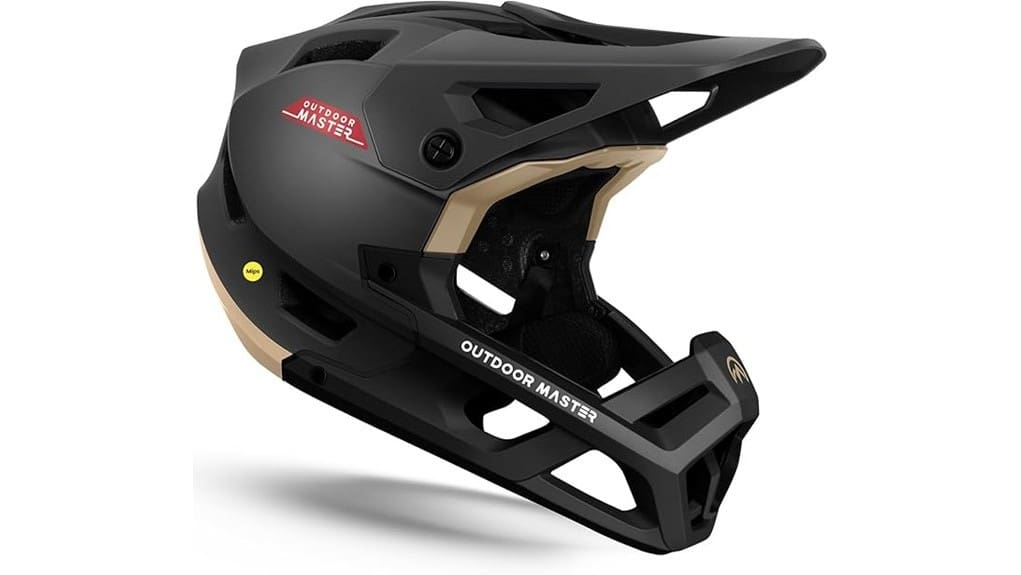
You’ll get downhill-level protection in a sub‑750 g full‑face that uses MIPS to reduce rotational forces, an EPP collarbone system to dissipate lateral energy, and chinbar shock pads for linear impact management. Size Small fits 54–62 cm and the shell, adjustable padding, dual D‑ring straps and removable liners let you micro‑tune fit and retention. Twenty‑seven vents, washable liners and two chin pads manage heat and moisture. Keep going and you’ll find detailed fit, ventilation and use-case guidance.
Some Key Takeaways
- MIPS-equipped full-face helmet reduces rotational forces in oblique impacts for improved brain protection.
- EPP collarbone system and chinbar shock pads dissipate lateral and localized forces to protect clavicle and jaw.
- Sub-750 g weight with 27 high-flow vents balances protection and sustained-ride comfort and cooling.
- Adjustable shell, removable liners, and dual D-ring straps enable snug, customizable fit for varied clothing and head sizes.
- Pivoting visor, goggle strap channel, and light compatibility suit aggressive trail, BMX, and night riding needs.
Real-World Protection: How MIPS, EPP Collarbone System, and Chinbar Pads Perform
Although no helmet can prevent every injury, the Rhino MIPS combines targeted systems that measurably reduce specific impact forces: MIPS lowers rotational forces transmitted to your brain during oblique impacts, the EPP collarbone system dissipates lateral energy to reduce clavicle loading, and chinbar shock pads absorb linear and localized forces to protect facial and jaw structures. You’ll rely on MIPS for reduced rotational impact in glancing blows, EPP for distributed lateral deceleration, and chinbar pads for localized force attenuation. After a significant event perform a post crash inspection; replace the helmet if internal liners, MIPS layer, or shell show deformation. This review is part of our Ultimate Guide to Choosing the Right Mountain Bike Helmet, which covers fit, safety features, and use cases for different riding styles and protections like full-face designs and MIPS technology, providing practical buying advice for mountain bikers of all levels with an emphasis on mountain bike helmets.
Fit, Comfort, and Sizing Tips for the Rhino MIPS (Small Fits 54–62 Cm)
When you put on the Rhino MIPS in size Small (54–62 cm), the shell and adjustable padding deliver a snug, helmet‑secure fit while still allowing micro‑adjustments via the dual D‑ring strap sets and removable liners; this balance minimizes helmet shift without compressing pressure points. You’ll measure head circumference at eyebrow level and use measurement tips to confirm Small fits your range. Make size adjustments with the dual D‑rings and swap liners for contour. Check helmet care instructions to preserve padding elasticity and MIPS integrity. Tighten straps so helmet stays stable under dynamic loads but doesn’t restrict movement or hearing. For guidance on picking commuter-specific helmets and accessories, see our commuter bike helmets recommendations.
Ventilation, Weight, and Ride-Day Comfort: 27 Vents, Liner, and Pad Options
After confirming fit and strap adjustments, evaluate how the Rhino MIPS performs on long rides: its just-under-750 g shell and 27 high‑flow vents with injection‑molded channels work together to manage heat and airflow while the removable, washable liner and two chin pad options let you tune internal comfort and moisture control. You’ll notice active airflow across the crown and cheekpads, reducing sweat buildup without compromising protection. The liner maintenance is straightforward—remove, wash, replace—so you keep fabrics fresh between outings. Overall weight balances protection and endurance; on long runs you’ll feel ventilated control and configurable padding for sustained freedom on trail. For riders focused on saddle fit and performance, consider how saddle choice and padding interact with helmet ventilation and comfort during extended rides, especially when selecting mountain bike saddles.
Features That Matter for Downhill, BMX, and Racing: Visor, Goggle Channel, and D-Ring Straps
Because races and descents demand secure optics and reliable strap retention, the Rhino MIPS uses a pivoting visor, dedicated goggle-strap channel, and two sets of D-rings to keep gear and fit locked in place. You’ll use visor adjustability to fine-tune sun and debris protection without compromising helmet balance. The goggle channel seats frames securely, preventing lift during compressions and high-speed sections. Two sets of D-rings let you perform strap customization for thicker clothing or layered gloves, maintaining consistent chin retention. Design choices prioritize predictable interface behavior so you can ride hard, confident that optics and straps stay where you set them. For night rides or low-light conditions, pairing the helmet with a compatible helmet light improves visibility and safety.
Final Verdict and Who Should Buy the OutdoorMaster Rhino MIPS
If you need a full-face helmet that balances high-end impact protection with practical usability, the Rhino MIPS delivers predictable rotational mitigation via MIPS, targeted collarbone and chinbar impact control, and purpose-built interfaces for goggles and straps. You’ll get a polycarbonate shell, EPP collarbone system, chinbar shock pads, and 27 vents in a sub-750 g package that fits 54–62 cm heads. Buy it if you demand downhill-level protection without excess bulk—suitable for aggressive trail riders, BMX racers, and youth riders stepping up to full-face safety. Urban commuters seeking enhanced security on fast descents will also benefit. This helmet is a strong choice for riders who prioritize full suspension compatibility and protective performance on technical terrain.
Some Questions Answered
Does the Helmet Include Bluetooth or Comms Compatibility?
No — the helmet doesn’t include built‑in Bluetooth or comms compatibility. You won’t find integrated helmet connectivity or a prewired module; the design focuses on impact protection, ventilation, and fit. You’ll add third‑party communication units or stick-on speakers/microphones in the liner or under the helmet. For reliable rider communication, choose compact MTB comms rated for close‑fit full‑face use and position them to avoid interference with the MIPS and chin‑pad systems.
Is the Helmet DOT, CPSC, or CE CErtified?
No — it isn’t listed as DOT certified, CPSC, or European CE certified. You’ll find MIPS rotational protection, EPP collarbone impact system, and full-face impact features, but the product info doesn’t claim DOT certified status, CPSC certification, or European CE approval. If you demand certified compliance for legal or competition use, you should contact the manufacturer for documentation or select a helmet explicitly labeled DOT certified or European CE certified to guarantee regulatory acceptance.
Can I Replace the MIPS Liner if Damaged?
Yes — you can replace the MIPS liner if it’s damaged, but replacement options depend on manufacturer availability. Contact OutdoorMaster for official replace options and guidance to maintain MIPS performance. Note that tampering or using non‑OEM liners may void warranty coverage and compromise safety. If the helmet sustained an impact, replace the entire helmet per safety best practices; otherwise follow OEM instructions for installation and compatible parts.
Are Replacement Visors or Chinbars Sold Separately?
No — replacement visors or chinbars aren’t typically sold separately by OutdoorMaster for this model. You’ll need to contact the manufacturer or retailer for availability, warranty coverage, or authorized repair options. If they can’t supply parts, consider third-party repair shops or compatible aftermarket visor availability, but check fit and safety. Keep receipts and photos for warranty claims, and don’t ride with a compromised chinbar or missing visor if safety is a priority.
What Is the Recommended Cleaning Method for the Helmet?
You should spot clean the shell and pads with mild soap and water and a soft cloth; avoid solvents and high-pressure spray. Remove the washable comfort liner and chin pads for separate gentle hand-washing, air-dry only. Machine washability concerns mean you shouldn’t launder the helmet or use a clothes washer/dryer, since agitation and heat can damage the MIPS, EPP collarbone system, chinbar pads, adhesives and fit. Store dry.