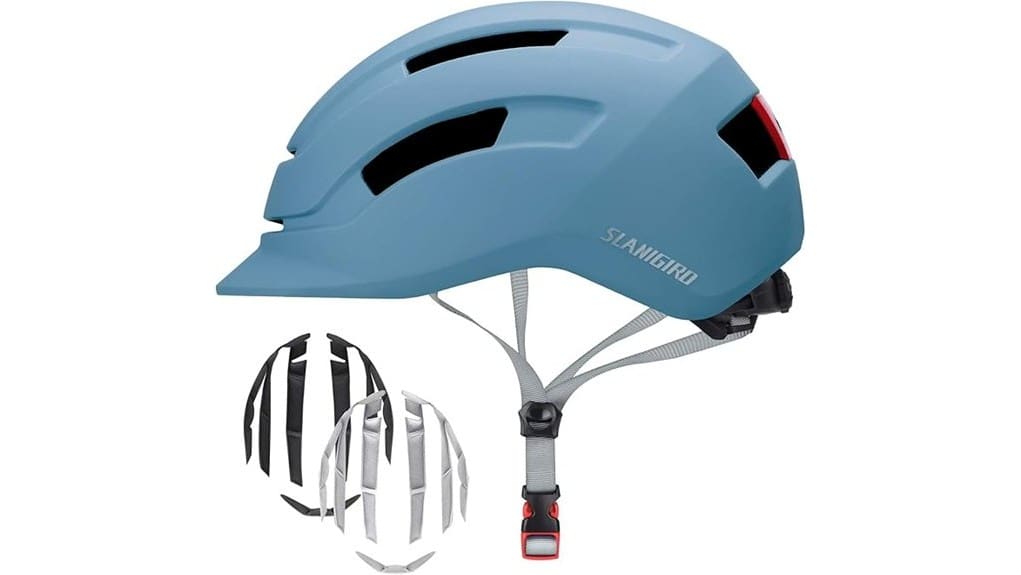
You’ll get a lightweight, dual-certified urban helmet that meets US and EU safety standards and uses a bonded polycarbonate shell with an EPS liner to manage impacts. It fits most adults (M 55–58 cm, L 59–61 cm) and secures with a retention dial and chin V for a snug, no-shift fit. Eight vents and moisture-wicking pads keep you cool on commutes. A rear USB light offers 6–8 hour runtime and three modes—keep going to learn specifics.
Some Key Takeaways
- Dual-certified construction (US and EU) with bonded polycarbonate shell and EPS liner offers reliable urban impact protection.
- Lightweight, low-profile design with eight vents balances comfort and ventilation for commuter rides.
- Size M (55–58 cm) and L (59–61 cm) with retention dial and chin-strap adjustments ensure a secure, customizable fit.
- Integrated rear USB light (2-hour charge, 6–8 hour runtime, three modes) improves daytime and night visibility.
- Removable moisture-wicking pads and tool-free accessory compatibility enhance all-day comfort and practical use.
Safety & Construction: Certifications, Shell, and Impact Protection
Because urban riding exposes you to mixed traffic and unpredictable surfaces, this helmet is built to meet that challenge: it’s dual certified to US and EU safety standards and combines an integrated polycarbonate shell with an EPS liner to deliver durable abrasion resistance and controlled energy absorption on impact. You’ll appreciate the clear focus on dual certification and shell integrity: the bonded shell resists cracking while the EPS crushes progressively to manage forces. Construction is lightweight yet robust, minimizing bulk without sacrificing protection. That balance lets you move freely through the city, confident the helmet performs reliably in routine and unexpected impacts. Our shop also offers a range of compatible helmet accessories for urban cyclists to enhance visibility and comfort.
Fit, Sizing, and How to Adjust for a Secure Ride
When you put the helmet on, it should sit level on your head with the front edge about one to two finger-widths above your eyebrows so your forehead stays protected without the helmet tipping forward. Choose the size matching your head circumference: M fits 55–58 cm, L fits 59–61 cm. Tighten the retention dial until the shell feels snug but not painful; the helmet shouldn’t shift when you nod. Adjust the chin strap so it forms a V under each ear and fasten securely; you should be able to fit one or two fingers between strap and chin. Recheck fit before every ride. Many riders prefer helmets designed for commuter bike helmets because they balance protection and everyday comfort.
Ventilation, Weight, and Comfort for Daily Commuting
Now that your helmet fits correctly, you’ll notice ventilation and weight play a big role in day-to-day comfort. You’ll feel eight large vents move air through engineered airflow channels, pulling heat away on warm rides and reducing sweat buildup. The integrated lightweight shell and EPS liner cut mass without sacrificing protection, so you won’t tire from a heavy load. Removable, contoured pads provide secure contact and consistent padding breathability, balancing cushion with moisture wicking. For commuting freedom, this helmet keeps you cool, light, and focused on the route, not on overheating or pressure points. Choose a helmet that meets safety standards and suits your urban riding needs.
Integrated Rear USB Light: Runtimes, Modes, and Real-World Visibility
Although compact, the integrated rear USB light delivers practical visibility for urban riding: it charges in about 2 hours, runs roughly 6–8 hours depending on mode, and offers three selectable brightness patterns so you can match output to traffic and daylight conditions. You’ll find the light straightforward to use: a single button cycles modes and a status LED reports charge level to help preserve battery health. Mounting options are secure and tool-free, snapping into the helmet’s rear pocket or detaching for handheld use. In real-world conditions the beam remains visible to motorists across intersections and during dawn or dusk commutes. The site also offers a helpful buying guide to compare helmet light features and choose the best option for city cyclists.
Who This Helmet Is Best For and Final Buying Recommendation
If you commute in the city or run regular urban errands, this helmet is a strong choice thanks to its dual safety certifications, lightweight construction, and practical rear USB light that keeps you visible during dawn and dusk rides. You’ll appreciate commuter style features: a low-profile look, eight vents for airflow, and a size adjustment system that fits most adults. It’s best for riders who prioritize daily practicality, visibility, and compactness over glamorous extras. Consider storage options for accessories since the helmet lacks built-in pockets. Buy it if you want reliable protection, comfort, and simple, freedom-focused functionality. This helmet pairs well with other commuter-focused gear like commuter bike accessories to complete your daily riding setup.
Some Questions Answered
Can I Use Aftermarket Visors or Accessories With This Helmet?
Yes — you can use some aftermarket magnetic visors and vented attachments, but you’ll need to be careful. Check compatibility with the helmet’s polycarbonate shell and adjustment system so added parts don’t interfere with fit or safety certifications. Avoid any accessories that require drilling or alter the EPS liner. Prefer lightweight, reversible mounts and test fit before riding. Keep the rechargeable rear light unobstructed and verify vents remain effective.
Is the Helmet Compatible With Eyewear or Prescription Glasses?
Yes — you can wear eyewear with this helmet. You’ll find good temple fit against the helmet’s sides and enough lens clearance so frames don’t press into the shell. The size adjustment helps position the helmet to avoid rubbing, and vents give airflow around lenses to reduce fogging. Thin or wraparound frames work best; bulkier sunglasses or thick prescription frames might need minor repositioning for comfortable, secure wear.
How Do I Clean and Care for the Helmet Liner and Straps?
You clean the liner and straps by removing removable pads, hand-washing them in mild soap and cool water to remove odor, then air-drying completely. Wipe non-removable liners and straps with a damp cloth and mild detergent; avoid soaking the shell or electronics. Inspect regularly and replace padding if it’s flattened, torn, or still smells after washing. Store the helmet dry, away from direct sunlight and extreme heat to extend its life.
Does the Helmet Have Any Reflective Elements Besides the Rear Light?
Yes — besides the rear light, you’ll find reflective piping along key seams and subtle helmet decals on the shell to boost visibility. The reflective piping outlines the helmet’s profile for side visibility, while the decals add rear and lateral reflectivity without altering style. You’ll appreciate their low-profile look that still enhances nighttime safety. They won’t replace active lighting, but they complement the USB rear light effectively.
What Is the Expected Lifespan or Replacement Timeline for This Helmet?
You should replace the helmet every 3–5 years as a general service life guideline, or sooner if it sustains an impact. Your replacement schedule should also consider visible wear, degradation of the EPS liner, or damaged straps and retention. If you ride frequently or in harsh conditions, lean toward a 3-year timeline; casual riders can expect up to 5 years. Keep records and inspect the helmet regularly to protect your freedom on the road.