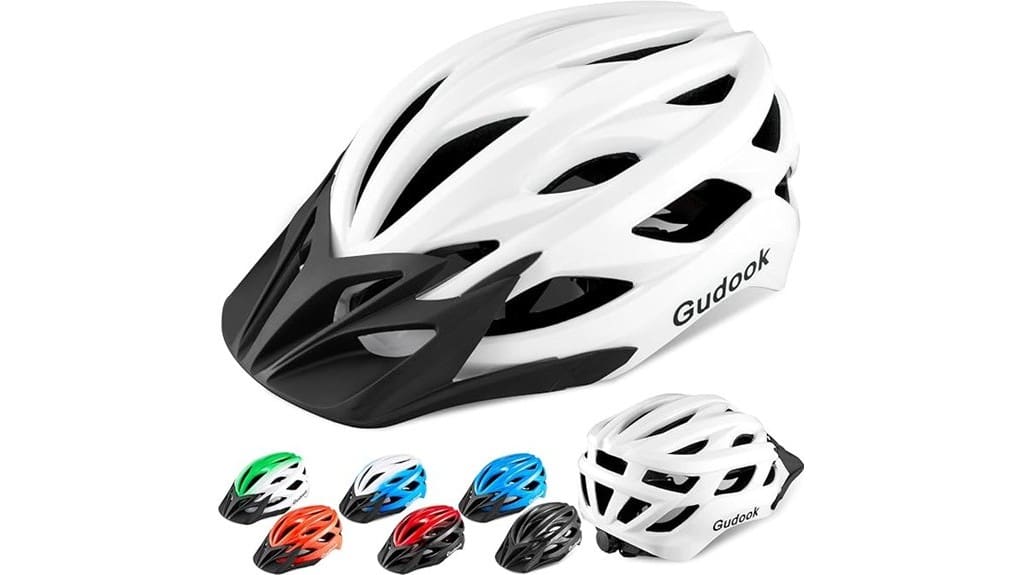
You want a helmet that truly protects, fits, and breathes for commuting or off-road rides. Choose a one-piece EPS inner shell with a PC outer shell that meets US CPSC and ASTM standards for predictable impact deformation. Measure head circumference, use the dial and adjustable strap to fine-tune fit, and try memory-foam pads to avoid pressure points. Look for 22-hole ventilation and a detachable visor for airflow and glare control—keep going to see sizing and use-case tips.
Some Key Takeaways
- Choose helmets meeting US CPSC and ASTM standards for proven crash protection.
- Fit by head circumference (M 53–57 cm, L 57–61 cm) and adjust with the dial to avoid pressure points.
- One-piece EPS inner shell with PC outer shell offers predictable impact deformation without excessive bulk.
- Look for removable memory foam pads, thickened lining, and breathable mesh for comfort and hygiene.
- Prioritize ventilation (22-hole airflow, channeled vents) and a detachable visor for temperature control and glare reduction.
How to Choose a Bike Helmet That Fits Your Head and Riding Style
When choosing a bike helmet that fits your head and riding style, start with a model that meets safety standards (this one uses a one-piece high-density EPS inner shell and PC outer shell and complies with US CPSC and ASTM). Measure your head circumference, pick the size that matches (M or L), then use the adjustment dial and chin strap to tune fit. Consider head shape—round or oval—and try pads to eliminate pressure points. Match vents and visor options to your riding climate and visibility needs. Let your style preference guide color and profile so your helmet protects without compromising your sense of freedom. Choose a helmet from a retailer that specializes in road cycling helmets to ensure proper selection.
Safety and Construction Breakdown: One-Piece EPS + PC Impact Protection
Because impact protection starts with materials and construction, this helmet uses a one-piece design that pairs a thickened, high-density EPS inner shell with a durable PC outer shell to absorb and dissipate crash energy. You get consistent EPS molding that minimizes fragmentation and improves energy distribution on impact. The seamless PC shell reduces focal stress and resists abrasion during falls. Independent Impact testing shows predictable deformation patterns across impact zones. It meets current Crash standards, including US CPSC and ASTM, so you can ride with confidence. Built for freedom-seeking riders, the construction prioritizes reliable protection without adding bulk or limiting motion. Our product selection at Ride Smart highlights helmets optimized for commuter bike safety, fit, and everyday usability.
Fit, Adjustability, and Comfort Features You’ll Actually Notice
The same one-piece EPS+PC construction that protects you during impact also frames how the helmet fits and feels on your head, so getting the fit right matters for both comfort and safety. You’ll choose between M (53–57 cm) and L (57–61 cm), then fine-tune an adjustment dial for a snug ride without pressure points. An adjustable-length strap with breathable chinstrap and thickened chin pad keeps the helmet stable when you move fast or turn sharply. Inside, memory foam pads conform to your skull, distribute pressure, and are removable for washing. These features let you ride freely, securely, and comfortably. Helmets designed for cycling often include ventilation channels to improve airflow and reduce heat buildup on longer rides.
Ventilation, Visor, and Cleaning: Performance for Commuting to Trail Rides
Often overlooked, ventilation makes as much difference to your ride as fit does: the helmet’s 22-hole airflow system channels air across your scalp to cut heat buildup on commutes and technical climbs alike, while the distributed mesh and thickened inner lining wick moisture and sit comfortably against your head. You’ll notice purposeful airflow mapping that moves hot air out and draws cool air in, backed by removable padding for straightforward cleaning. The detachable visor balances glare reduction with ventilation; good visor ergonomics prevent turbulence while directing airflow. For freedom-seeking riders, this combo keeps you cool, clean, and focused on the road or trail. Choosing the right helmet from an ultimate guide ensures you match ventilation and features to your riding style.
Which Riders Should Buy This Helmet? Use-Case Recommendations and Sizing Guide
If you ride for commuting, mixed urban/trail weekends, or aggressive off-road sessions, this helmet gives a balanced mix of protection, ventilation, and adjustability tailored to those uses; it’s stiff enough for high-impact scenarios thanks to its one-piece EPS/PC construction and meets US CPSC and ASTM standards, yet vents and pads well for long commutes. You should buy it if you’re an urban commuter seeking airflow and visibility, a weekend trail rider wanting durable impact resistance, or a teen rider growing into adult sizes. Choose M (53–57 cm) or L (57–61 cm), use the dial and chin strap to fine-tune fit. Many cyclists prioritize a helmet that offers balanced protection across commuting and trail riding.
Some Questions Answered
Is This Helmet Compatible With Bike Lights or Gopro Mounts?
Yes — you can mount lights and a GoPro with this helmet. Its hard PC shell and vented design support Light mounting and GoPro compatibility using adhesive mounts or strap-based adapters; avoid drilling or heavy clamps. Use adhesive base plates on smooth areas or loop straps through vents for secure attachment. You’ll get stable, impact-resistant mounting while keeping ventilation and comfort; always test fit and follow mount maker torque and safety guidance.
Does the Helmet Include MIPS or Other Rotational Protection?
No, it doesn’t include MIPS or a named rotational protection system, so you won’t get that extra layer of impact mitigation from rotational forces. You’ll still benefit from a one-piece EPS/PC construction that handles linear impacts well, secure fit adjustments, and good ventilation. If rotational protection matters for your riding style, consider helmets explicitly listing MIPS or similar systems to maximize safety without compromising comfort or freedom on the trail.
What Is the Helmet’s Warranty and Return Policy?
The helmet typically includes a 1-year warranty duration covering manufacturing defects; you’ll need proof of purchase to claim it. If you’re unsatisfied, follow the seller’s return process—contact support, get an RMA, and ship the helmet within the seller’s return window (usually 30 days) with original packaging. You’ll be refunded or exchanged after inspection. Keep receipts and photos to speed up claims so you can get back to riding freely.
How Heavy Is the Helmet in Each Size?
Size-specific mass: M weighs about 280–320 g, L weighs about 320–360 g, giving you clear weight by size figures to choose from. You’ll feel the difference: M suits smaller heads with lighter load, L adds stability for bigger fits. These ranges reflect the thickened EPS and PC construction plus adjustment hardware. You’ll want to pick the size that balances protection and freedom of movement for your riding style.
Are Replacement Pads and Straps Available Separately?
Yes — you can get replacement straps and padding kits separately. You’ll replace worn chin straps, adjustment buckles, and the thickened chin pad to keep fit and safety reliable. Padding kits (removable headpad, mesh liners) are sold for cleaning or swapping thickness. Check the manufacturer or retailer for compatible parts by size (M/L) and model. You’ll stay comfortable, compliant with CPSC/ASTM standards, and free to ride confidently.