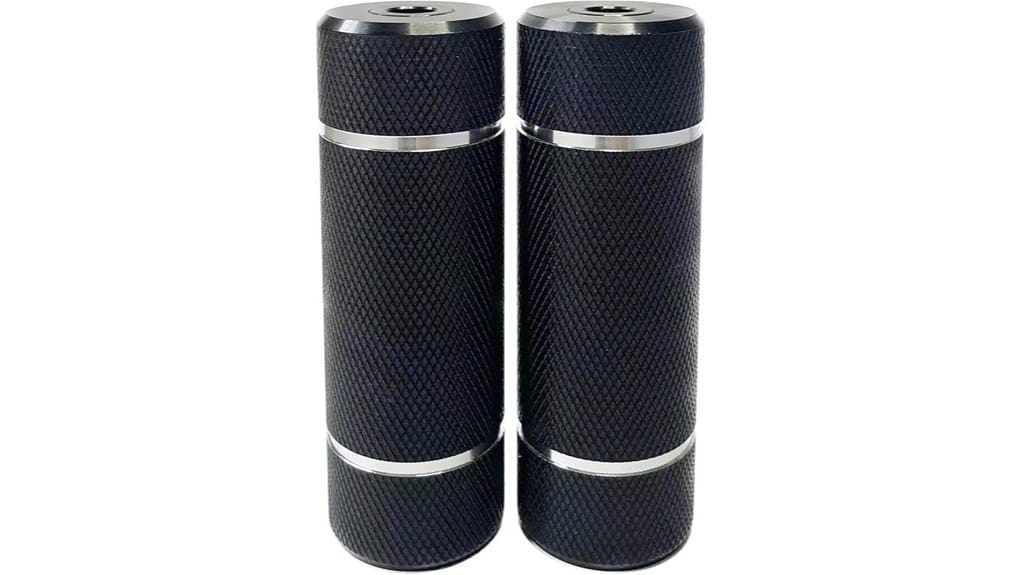
You’ll get durable, lightweight 4.3″ pegs that fit standard 14 mm axles with the included 3/8″ adapter, grip well for stalls and grinds, and resist wear thanks to quenched aluminum and an anodized finish. Installation’s straightforward—remove the axle nut, slide on the peg, torque back up—and routine cleaning plus occasional re-torquing keeps them reliable. They won’t fit short-thread axles or some e-bike setups, and more details on fit and care follow.
Some Key Takeaways
- Durable 4.3″ forged aluminum pegs offer strong, lightweight performance for tricks and passenger use.
- Machined, non-slip surface provides secure foot contact for stalls and grinds without being overly aggressive.
- Fitment: designed for 14 mm axles with included 3/8″ adapter; incompatible with short-thread axles.
- Installation requires axle nut removal, adapter use, and socket-wrench torque; periodic re-torquing advised.
- Not ideal for some e-bikes due to motor housings, dropout clearance, and hub-motor torque concerns.
Quick Verdict : Are BMX Bike Pegs 4.3 Worth Buying?
Though they won’t suit every axle, the BMX Bike Pegs 4.3” are worth buying if you need durable, lightweight pegs that handle tricks and passenger work. You’ll appreciate aluminum alloy construction that passed rigorous durability testing and stays lighter than iron alternatives, so you won’t deaden your ride. Installation’s straightforward on compatible axles, and the non-slip surface keeps your feet secure during stalls and grinds. You’ll like the clean aesthetic and practical style options that fit bold or minimalist setups. If you crave freedom to stunt and carry a passenger without excess weight, these pegs deliver. These pegs are ideal for riders who prioritize performance and durability in their pedal setup.
Who These 4.3 Pegs Fit and When They Won’t (Axles, E-Bikes, and Short-Thread Limits)
When you’re checking fit, focus first on axle diameter and thread length: these 4.3″ (110 mm) pegs are designed for 14 mm axles and 3/8″ axles (the adapter is included), but they won’t work on short-thread axles because there isn’t enough exposed shaft to secure the peg and nut safely. You’ll find axle compatibility straightforward for most BMX setups and many e-bikes with standard axle specs. For electric bikes, weigh motor housings, dropout clearances, and wiring routing before installing; some e bike considerations — torque from hub motors and altered axle geometry — can prevent safe fitting. When in doubt, measure. Many riders also pair pegs with compatible top gear and protective accessories to match riding style and bike setup.
Build and Grip Test : Aluminum Alloy Strength, Wear Resistance, and Non-Slip Surface
Because these pegs are forged from quenched aluminum alloy, you’ll get a clear balance of low weight and high tensile strength that holds up under repeated impacts and grinds. You’ll notice the anodized finish resists scratches and boosts corrosion resistance, keeping edges smooth through seasons. The machined traction pattern bites your shoe, reducing slip without feeling aggressive. Weight distribution feels neutral on both front and rear axles, so tricks land predictable. Wear resistance outperforms plastic and matches many steel pegs for longevity while staying lighter. Overall, these pegs let you ride harder and freer with dependable grip and durability. For maintenance and compatibility checks, consider essential bottom bracket tools like bearing press to ensure proper axle and peg installation.
Install, Use, and Maintain : Step-by-Step Fitting With the Included Adapter and Care Tips
After feeling the fit and grip during the build and ride, you’ll find installing and caring for these pegs straightforward. Remove the axle nut, slide the 4.3″ peg onto a 14 mm or 3/8″ axle using the included adapter, then reinstall and torque the nut with your socket wrench. Apply a small drop of thread locker if you want extra security, but avoid overuse. Use the pegs for grinds, passenger rides, or tricks, then follow a simple cleaning routine: wipe aluminum surfaces, remove grit, inspect for wear, and re-torque hardware periodically to maintain freedom and safety. Carrying a compact emergency tool kit with a socket wrench and spare hardware is a smart precaution for rides where immediate repairs might be needed, especially for essential emergency tools.
Final Pros, Cons, and Who Should Pick These Pegs
While they’re light and tough enough for regular street tricks and passenger runs, these 4.3″ aluminum pegs shine most when you want durable, low-maintenance foot platforms that won’t overburden your bike. You’ll get quenched aluminum strength, reliable non-slip contact, and adapters for 14 mm or 3/8″ axles — just avoid short-thread axles. Pros: wear resistance, low weight, strong trick compatibility, easy install and front/rear fit. Cons: limited to those axle types, needs your socket wrench, less forgiving than steel for extreme grinding. Pick these if you value freedom, clean aesthetic customization, and consistent ride performance. For securing your bike when parked, consider complementing these pegs with a quality bike cable lock.
Some Questions Answered
Are Replacement Adapters Available Separately?
Yes — replacement adapters are sometimes available separately from aftermarket adapters suppliers, but availability varies by retailer. You’ll want to check trusted parts shops or contact the manufacturer directly. If you prefer more control, you can consider DIY machining to create custom adapters, but only if you’re confident with tolerances and material strength. Don’t risk axle damage; verify thread length and compatibility before fitting replacements or fabricated adapters.
Do These Pegs Affect Wheel Balance or Require Rebalancing?
They generally won’t cause noticeable wheel imbalance or rotational vibration if you install both pegs symmetrically and tighten nuts correctly. You’ll add weight at the axle ends, but the paired, quenched aluminum design minimizes imbalance. If you ride precision-focused setups or feel new vibration, check symmetry, axle thread length, and hub bearings; rebalancing or professional inspection can eliminate any residual rotational vibration and restore smooth freedom on the road.
Are End Caps or Protective Plugs Included or Sold Separately?
No, end caps or protective plugs aren’t included; you’ll buy them separately. For end cap aesthetics, choose caps that match your bike’s look—matte black, polished, or colored options are common. Check protective plug materials: silicone, rubber, or plastic provide impact cushioning and water sealing, while aluminum blends offer durability and style. Pick plugs sized for 38 mm diameter pegs and confirm they suit your 14 mm or 3/8-inch adapter setup.
Can They Be Powder-Coated or Painted Without Weakening?
Yes — you can powder-coat or paint them without weakening if you use proper prep and temperatures. You’ll preserve the quenched aluminum’s strength by avoiding excessive baking temps; stick to powder or wet-coat processes rated for aluminum and follow manufacturer cure specs. Proper surface finish prep (abrasion, de-grease, primer) boosts adhesion and corrosion resistance. You’re free to customize, but test a sample first to confirm appearance and fit.
Do They Fit Threaded Axles Longer Than Standard Without Adapters?
Yes — they’ll fit longer threaded axles without adapters as long as the axle diameter and thread pitch match the peg’s specifications; thread compatibility is key. You’ll want sufficient exposed thread for the nut to secure the peg, so check axle length fitment before installing. If threads or length don’t match, use the included adapter for 3/8-inch axles or choose a different peg that matches your axle’s threads and length.