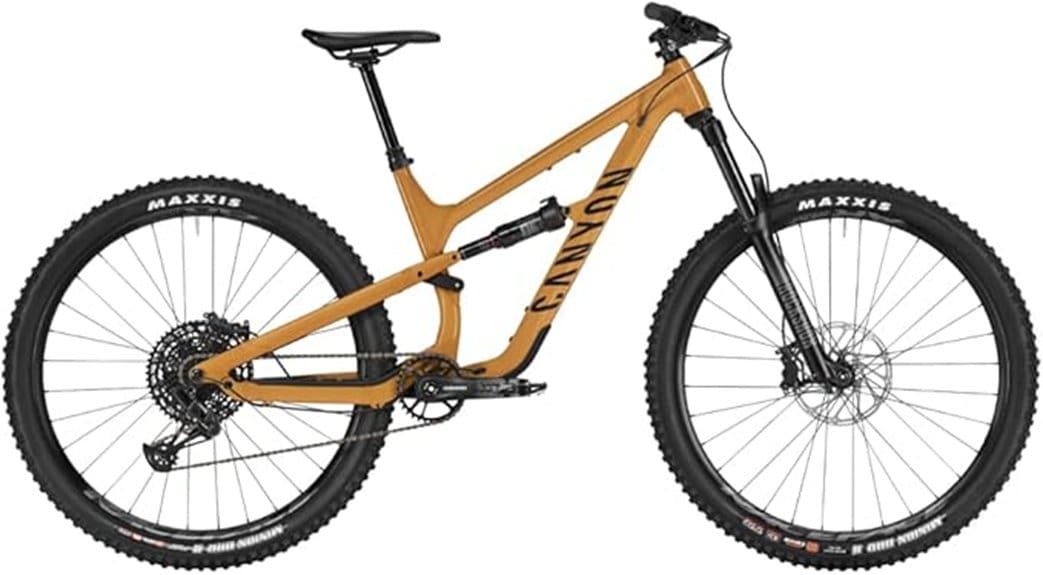
You’ll find the Canyon Spectral 5 is built for alpine trail work: a 150 mm RockShox front and Deluxe Select rear on a stiff aluminum frame keeps the bike planted on fast, rocky descents while SRAM gearing preserves cadence on long climbs. Progressive geometry with a slack front end and short rear center balances stability and nimble line-to-line handling, though low-speed wheel flop needs deliberate steering. Keep setup tight and tubeless; more details follow below.
Some Key Takeaways
- 150 mm RockShox 35 fork and Deluxe Select shock deliver controlled, tunable travel for fast, rocky alpine descents.
- Lightweight aluminum frame and progressive geometry keep the bike planted at speed without feeling sluggish in switchbacks.
- Alpine-specific SRAM gearing and balanced anti-squat provide efficient, predictable pedaling on long climbs.
- Short rear center and long reach yield nimble line-to-line handling while maintaining composure on demanding terrain.
- Recommended setup: 25–30% sag, tubeless tires, tuned rebound, and lowered dropper for steep technical sections.
Spec Highlights: How the Spectral 5 Is Built for Alpine Trails
When you push the Spectral 5 into steep, rocky alpine terrain, its spec shows why it belongs there: a 150 mm RockShox 35 Silver fork and matching Deluxe Select shock give balanced, tunable travel for high-speed impacts and tight-line control, while the lightweight aluminum frame and progressive geometry keep the bike planted without feeling sluggish in technical switchbacks. You’ll appreciate alpine specific gearing that keeps cadence manageable on long pitches without sacrificing top-end for fast descents. Frame material choices favor durability and predictable flex, letting you attack lines confidently. Every component feels chosen to extend range and preserve control. The lightweight aluminum frame also contributes to overall ride efficiency and durability advantages on rough alpine routes.
Real-World Ride Impressions: Steep, Technical Descents and Long Climbs
Although the Spectral 5 shines on fast, rocky descents, it also proves itself on long climbs, marrying confident downhill stability with efficient, predictable pedaling when the gradient points up. You’ll feel steep confidence on technical drops—the suspension tracks, brakes bite, and the chassis resists deflection so you can commit. On sustained ascents the SRAM range and balanced anti-squat let you settle into consistent climb pacing without excessive bob. Weight and travel aren’t race-lean, but they deliver controlled momentum and fewer stops to clear obstacles. If you want freedom to push both directions, the Spectral 5 rewards measured aggression. For riders looking to pair wheels with this bike, choosing the right mountain bike wheels wheel compatibility can further enhance handling and durability.
Handling, Fit, and Geometry: Stability vs. Agility on Technical Singletrack
Because the Spectral 5 balances a slack front end with a relatively short rear center, you get a bike that feels planted at speed yet nimble through tight, technical singletrack. You’ll notice confident high-speed stability from the long reach and low stack height that keeps mass centered and weight forward without feeling cramped. The shorter rear center tightens line-to-line responsiveness, helping you flick through roots and switchbacks. Be aware of modest wheel flop at very low speeds due to the slack angle; you’ll compensate with deliberate steering input. Overall geometry lets you push boundaries while staying composed on demanding terrain. Consider pairing it with riser handlebars to further improve comfort and control on rough trails.
Real-World Setup Tips: Suspension Tune, Tire Pressure, Tubeless, and Dropper Settings
Dial in your Spectral’s suspension and pressure to match your riding style and local trails for the biggest gains in control and comfort. Start with sag setup: 25–30% rear, mirror fork percentage, then refine rebound to prevent packing without skittishness. Use pressure charts as a baseline, adjust +/-5 psi for temperature or terrain. Go tubeless to run lower pressures, sealant for puncture resilience; check bead and rim compatibility. Set dropper height so you can fully lower for steep tech and reclaim saddle for climbs; short travel posts suit aggressive riders. Test, log, and iterate until it feels liberating. Consider upgrading to a stiffer fork chassis for improved handling on rough alpine trails.
Who Should Buy the Spectral 5 and How It Compares to Alternatives
Getting your Spectral 5’s setup right makes it clear who benefits most from the bike: riders who want a confident, capable machine for technical descents and long trail days. You’ll appreciate its stable, progressive geometry, 150 mm RockShox package, and reliable SRAM SX drivetrain when you push into steep, rough terrain. If you crave freedom to explore all-day rides, it outperforms lighter cross-country bikes and is more capable than casual trail machines. Consider a cheaper budget option only if you rarely ride technical lines; the Spectral also adapts well to a commuter conversion for mixed-use utility without losing trail focus. Many hardtail enthusiasts also upgrade components based on terrain and riding style to better suit their preferred trails.
Some Questions Answered
What Sizes and Colors Does the Spectral 5 Come In?
You’ll find the Spectral 5 in a size range from S to XL, covering riders who want nimble handling through to long-travel stability. Colorways availability typically includes a core matte or gloss finish plus an accent tone (brands rotate palettes each season), so you’ll see two to three factory options at launch. You can also expect limited editions or regional variants; check dealer inventory or Canyon’s site for current stock and sizes.
Is There a Warranty and What Does It Cover?
Yes — you get a manufacturer warranty: warranty duration is typically two years, though local laws can extend that. It covers defects in materials and workmanship for frame, fork and factory-installed components; it won’t cover normal wear, crash damage, misuse, or aftermarket modifications. You’ll need proof of purchase and to follow maintenance guidelines. Check your local Canyon terms for exact coverage details and any regional variations before you ride.
How Much Does the Bike Weigh?
About 14.5 kg (roughly 32 lb) for a medium spec stock build. You’ll notice the frame weight is relatively light for a burly trail bike, which helps keep the overall mass down. If you want freeride flair, component swaps (lighter wheels, carbon bars, or a different shock)’ll shave kilos, while beefier brakes or a plus-size tyre setup’ll add weight. Pick swaps to balance durability, feel, and freedom.
Can I Fit a Front Rack or Bikepacking Gear?
Yes — you can fit light bikepacking gear, but front rack compatibility is limited. The Spectral 5 lacks traditional low-mount rack bosses, so you’ll rely on fork-mounted racks or straps. Frame bag options are excellent: the sloping top tube and roomy front triangle accept multiple sizes for tools, food, and hydration. You’ll want compact loads, secure mounting, and attention to suspension clearance to preserve handling and agility on technical trails.
Are Replacement Parts and Upgrades Readily Available?
Yes — you’ll find replacement parts and upgrades readily available. Aftermarket components for common items (wheels, brakes, drivetrain, dropper) are plentiful, and parts compatibility is high thanks to standard SRAM and RockShox specs. You can confidently swap in performance upgrades or service items, though check axle spacing, shock mount hardware, and headset standards. You’ll retain freedom to customize, but match measurements precisely to avoid fit or performance compromises.