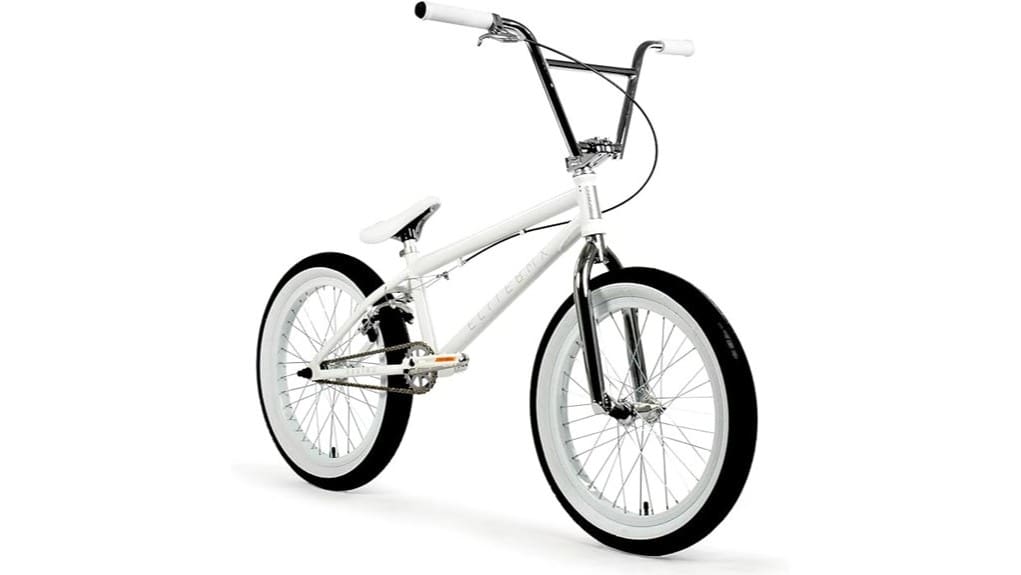
You’ll get the same tough freestyle frame across the Elite line, with wheel size tuning for fit and tricks: PeeWee is 18″ for 5–7 year olds learning basics, Outlaw is 20″ for most teens progressing freestyle, and Destro is 26” (also in 20″) for taller teens and adults wanting extra stability for big airs. Reinforced tubing, Cro-Mo cranks, sealed bearings and predictable components favor stalls, manuals and grinds, and below you’ll find sizing, weight and buying guidance.
Some Key Takeaways
- All three models share a reinforced steel frame and freestyle focus, differing mainly by wheel size and rider fit.
- PeeWee (18″) suits 5–7 year olds developing basic freestyle skills and confidence.
- Outlaw (20″) fits most teens and smaller adults seeking intermediate progression and versatility.
- Destro (26″, also in 20″) is for taller teens/adults (16+, up to ~5’10”) wanting stability for bigger tricks.
- Choose by rider height and intended use; components favor durability and predictable stunt performance.
How the Destro, Outlaw, and PeeWee Differ at a Glance
While all three Elite BMX models share the same steel frame, reinforced tubing, and intermediate-level freestyle focus, the Destro, Outlaw, and PeeWee differ mainly in size and intended rider age: the PeeWee (18″) fits younger kids (5–7 years), the 20″ Outlaw suits most teens and smaller adults, and the 26″ Destro is aimed at larger teens and adults, so you’ll choose based on rider height and age rather than major component changes. You’ll find identical core parts across models—3-piece Cro-Mo crankset, padded saddle, reflectors—while Color options and Custom accessories let you personalize fit and style for freer, expressive riding. Check out our selection of Top Gear and accessories to complete your setup.
Who Each Model Is Best For (Age, Height, Skill, and Use)
Now that you know the size and component differences across the Destro, Outlaw, and PeeWee, let’s match each model to the rider who’ll get the most out of it. You’ll pick the PeeWee (18″) if you’re buying for a 5–7 year old learning basics; its smaller frame and teen safety features help build confidence. Choose the 20″ Outlaw for most teens seeking freestyle progression and varied color options. Go with the 26″ Destro if you’re an adult or taller teen (16+ or up to 5’10”) wanting stability for bigger tricks. All suit intermediate riders seeking freedom. Our shop also carries a curated selection of accessories for young cyclists, including safety gear to complement each bike.
Frame, Fork, and Component Breakdown That Matters for Tricks
Because tricks put concentrated stress on specific areas, the Elite BMX’s steel frame and fork use reinforced tubing at high-impact points to resist bending and cracking, giving you a predictable platform for stalls, grinds, and big airs. You’ll appreciate the three-piece Cro Mo crankset for torsional strength and serviceability; it transfers power cleanly during manuals and bunny hops. The thick foam saddle and alloy post balance comfort and control without getting in the way of tricking. Overall component choices favor durability and maintainability: sealed bearings, sturdy dropouts, and reinforced tubing where failure would end your session, so you can ride freer. For riders who enjoy off-road performance, consider how full suspension mountain bike design principles influence durability and ride predictability.
Sizing, Weight, and Packaging Details You Need to Know Before Buying
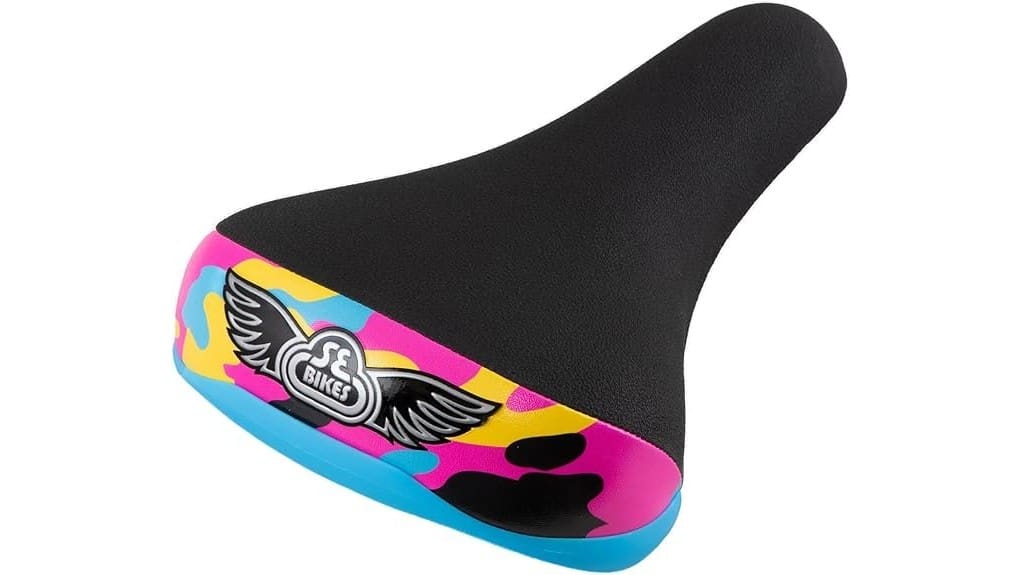
When choosing an Elite BMX, match the wheel size to the rider’s height and age—18″ for kids about 5–7 years (3’4″–4’4″), 20” for most teens and many adults (4’–5’10”), and 26” for larger riders (recommended 16+; 4’2″–5’10”)—so you get correct reach, standover, and control for tricks and street riding. The steel frame and reinforced tubing keep weight manageable; package weight is 13.9 kg, boxed at 42.7 x 21.3 x 8.9 inches. Factor shipping costs into total price. Follow clear assembly tips: torque settings, headset preload, and brake alignment before first ride. Consider also selecting a compatible bike seat designed for comfort and proper support during rides.
Which Model to Pick: Buying Scenarios and Final Recommendation
Having matched wheel size, weight, and packaging to the rider in the previous section, pick a model based on riding goals: choose the PeeWee for younger kids needing lighter handling and a smaller 18” platform, the Outlaw as the versatile 20” option for most teens and street/freestyle riders seeking a balance of durability and maneuverability, and the Destro (available in 20″ and 26“) if you want heavier-duty tubing and a slightly more aggressive setup for larger riders or those focused on advanced tricks; all three share the same steel frame, reinforced high-impact points, and a 3-piece Cro-Mo crankset, so prioritize wheel size and intended use over minor component differences.
For freedom-minded riders, weigh price comparisons against preferred color options and projected resale value. Choose PeeWee for easy handling, Outlaw for all-around fun, Destro for commitment to bigger tricks. Follow basic maintenance tips—regular bolt checks, chain care, and brake adjustments—to protect investment and resale potential. Mountain bike shoes designed for aggressive riding can improve control and comfort for riders of all skill levels, especially when paired with the right pedals and shoe stiffness.
Some Questions Answered
Are Spare Parts or Replacement Frames Available Separately?
Yes — you can source spare parts and replacement frames separately, though Elite BMX sells limited direct spares; you’ll often rely on aftermarket components for specific upgrades or replacements. You should check with retailers or specialty BMX shops for Cro-Mo cranks, seats, or steel frames. Note the manufacturer’s 1-year frame & fork warranty won’t allow warranty transfers, so keep proof of purchase and confirm compatibility before buying non-OEM parts.
Is Professional Assembly or Shop-Tune Recommended After Delivery?
Yes, you should get professional assembly and a shop-tune after delivery to ensure safe alignment, brake adjustment, and bearing preload. A qualified mechanic will spot shipping damage and tighten reinforced tubing joints used for tricks. That service helps preserve performance and reduces risk during freestyle riding. Check whether the shop documents work—some warranties require dealer installation for warranty transfer—so keep receipts and records for future claims.
Do These Models Support Mounting Pegs or Gyro Brakes?
Yes — you can fit pegs and pursue a gyro retrofit, but check specifics. The steel frames accept common peg compatibility at rear axle/standoffs; front peg fit depends on hub width. Gyro retrofit is possible if the fork and top tube clearance match rotor and cable routing; you’ll likely need proper forks or adapters. You’ll want a shop-tune to verify axle specs, brake mounts, and secure installation for safe, liberated riding.
What Maintenance Schedule Is Recommended for Trick-Heavy Use?
You should inspect and service it monthly inspections and after heavy sessions. Check frame, fork, reinforced joints, headset, cranks and welds for cracks; tighten bolts and bearings; inspect tires and brakes. Clean and perform chain lubrication every 2–4 rides or weekly if you ride daily. True wheels, check spokes and peg mounts. Replace worn pads, bearings or damaged tubes immediately. Keep a log so you stay loose and riding free.
Are There Color/Customization or Limited-Edition Options?
Yes—you can get color variations but official limited runs are scarce. Elite offers standard finishes like PW Black Combat and occasional Limited finishes or Signature palettes tied to special releases. You’ll want to check dealer stock or manufacturer drops for exclusive schemes. If you crave freedom, you can also customize aftermarket parts—grips, pads, paint or decals—to create a true signature palette that fits your personal style and riding identity.