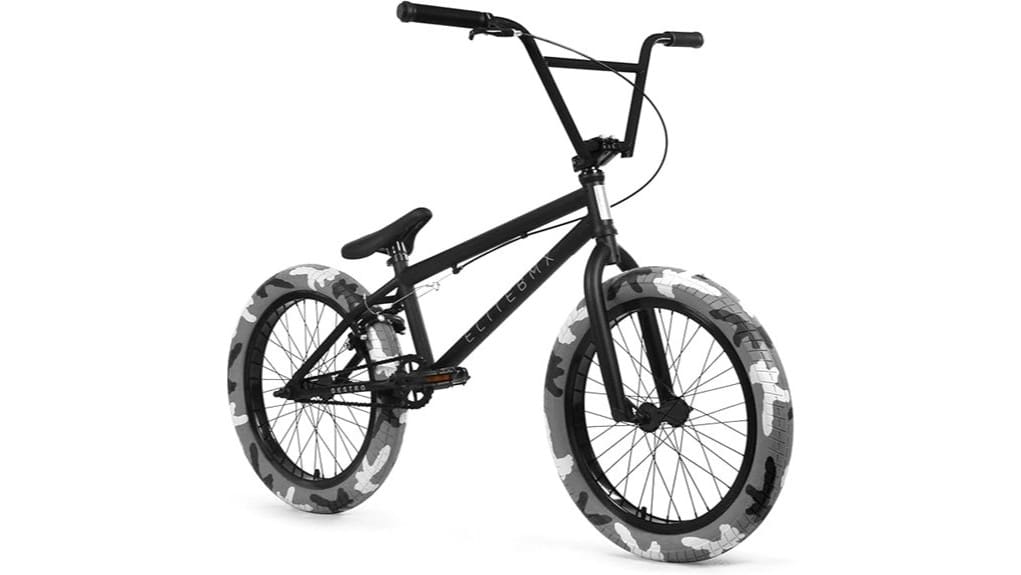
You’ll match size and discipline: the Destro’s 18” nimble platform suits very small kids and tight tricks; the Pee Wee’s 20” balances responsiveness and growth for teens and many adults; the Outlaw’s 26” favors taller riders, commuters, and momentum-based terrain. All three use reinforced steel frames/forks, Cro‑Mo cranks, and a sealed‑bearing 6061‑T6 freecoaster that needs routine service. Inspect wheel clearance, crank engagement, and warranty coverage before purchase—more model-specific tradeoffs follow.
Some Key Takeaways
- Destro (18″) excels for small children, offering nimble handling and early control for tight maneuvers and technical tricks.
- Pee Wee (20″) is the versatile sweet spot for teens and small adults, balancing responsiveness with progression potential for park and street.
- Outlaw (26″) targets taller riders and commuters, prioritizing stability, momentum, and larger-tire clearance for longer runs and dirt.
- All models share reinforced steel frames/forks, 3-piece Cro-Mo cranks, and sealed-bearing freecoasters requiring regular maintenance.
- Choose by height, limb proportion, discipline, and progression goals; verify reinforcement, bearing engagement, and warranty before purchase.
Which Elite BMX Model Fits Your Rider and Riding Style?
When choosing between the Destro (18″), Pee Wee (20″), and Outlaw (26″), match wheel size to rider height, age, and intended discipline to guarantee control and proper geometry. You evaluate rider fit by height and limb proportion: Destro for small children, Pee Wee for most teens/small adults, Outlaw for larger riders seeking stability. Consider terrain preference: park and street favor nimble 20″ responsiveness; dirt and longer urban runs benefit from 26″ momentum and line holding. Frame reinforcement and Cro-Mo components support aggressive use. Choose the model that aligns ergonomic reach, control range, and the freedom to push boundaries. Our catalog focuses on bike pedals specifically designed to complement these BMX setups.
Side-by-Side Specs: Destro (18″), Pee Wee (20″), Outlaw (26″)
Now that you’ve matched wheel size to rider and terrain, compare the Destro (18″), Pee Wee (20″), and Outlaw (26″) side-by-side to spot measurable differences that affect fit and performance. You’ll note wheel clearance scales with diameter: Destro has minimal clearance for small tires and tight maneuvers; Pee Wee balances clearance and agility; Outlaw offers maximum clearance for larger tires and stability. Weight comparison is straightforward: overall package weight (26.2 lb baseline) trends higher on larger wheels due to longer tubes and spokes. Frame geometry and reinforced high-impact points are consistent; choose based on desired stability, maneuverability, and freedom of movement. Consider full suspension compatibility for riders seeking improved traction and comfort with full suspension systems.
Performance Breakdown: Frame, Fork, Drivetrain, and Freecoaster on the Three Models
Although the three Elite BMX models share the same reinforced steel frame and fork construction, you’ll notice performance differences driven by wheel size and component scaling. You get reliable steel durability across Destro, Pee Wee, and Outlaw; frames resist impact, but feel different under load as wheel diameter alters leverage and agility. Fork geometry matches frame strength, tuning responsiveness for park versus roll. The 3-piece Cro-Mo crankset provides consistent power transfer; larger Outlaw spreads torque more predictably. The freecoaster’s 6061-T6 shell with sealed bearings demands routine bearing maintenance to retain fluid slack and prevent play, especially after dirt or street use. Riders who commute on electric-assist bikes often prioritize durability and accessory compatibility for smoother daily rides.
Who Each Model Is Best For: Age, Height, and Riding Scenarios
Having noted how wheel size and component scaling change feel and response, you can match each Elite BMX model to rider dimensions and riding scenarios with objective criteria. Choose the Destro (18″) if you want a nimble platform for kids balance and early control; it’s sized for 5–7 years and low standover. The Pee Wee (20″) suits most youth and beginners practicing beginner tricks and street lines—compact, responsive, scalable. The Outlaw (26″) fits taller teens and riders wanting commuter stability or flow for park specialists who need momentum and bigger wheel roll. Pick by height, intended terrain, and progression goals. Many riders also outfit their bikes with protective gear to match riding style and safety needs.
Buying Checklist and Warranty Details to Finalize Your Decision
When you’re ready to buy, run through a concise checklist that verifies fit, component condition, and return options so you don’t discover issues after the first ride. Use this purchase checklist: confirm model sizing (Destro 18″, Pee Wee 20″, Outlaw 26″), inspect frame/fork reinforcement, test crankset/freecoaster engagement, verify sealed bearings, check seatpost/clamp fit and peg security, weigh package against specs, and confirm ASIN/model match. Review warranty limitations: frame and fork covered one year only; consumables and components excluded. If freedom matters, prioritize fit and modularity; document defects immediately and request dealer remediation or return. Also consider the proper repair stand setup to keep your bike secure while performing inspections and adjustments.
Some Questions Answered
Does the Bike Arrive Fully Assembled or Require Setup?
No, it won’t arrive fully assembled; it ships partly disassembled. You’ll receive the Elite BMX in shipping condition that requires basic setup: install front wheel, handlebars, pedals, seat and pegs. Assembly time is roughly 30–60 minutes for someone with common tools and mechanical familiarity. You’ll want to torque fasteners per spec, check headset alignment and brakes, and test ride to confirm everything’s secure before you push your limits.
Are Replacement Parts Widely Available and Compatible?
Yes — you’ll find many replacement parts available and reasonably compatible. Aftermarket compatibility is strong for standard BMX components (cranksets, sealed bearings, pegs, seats, seatposts), though proprietary fittings (specific hub spacing or axle specs) may need verification. Parts sourcing is straightforward through BMX shops and online retailers; check axle size, driver type, and clamp diameters before buying. You’ll maintain freedom to customize, but confirm measurements to avoid mismatches.
Can the Bike Be Customized With Different Handlebars or Tires?
Yes — you can customize handlebars and tires, though you’ll check handlebar compatibility and tire sizing first. The steel frame accepts standard BMX bars with common clamp diameters; swap to taller or wider bars if your stem matches. Tires follow wheel sizes (18″, 20″, 26″) and width limits for clearances; choose knobby dirt or slick street rubber within recommended diameters. You’ll retain sealed bearings and drivetrain integrity when fitted properly.
Is There a Recommended Maintenance Schedule for Optimal Performance?
Yes — you should schedule seasonal tuneups and routine checks to keep performance at its best. Inspect frame, forks, and welds monthly; tighten bolts and headset weekly if you ride often. Lubricate chain after every wet ride and do chain lubrication every 100–150 miles. Service bearings, freecoaster, and brakes quarterly; replace worn tires and brake pads as needed. Annually perform a full teardown and inspection with torque specs and bearing preload verified.
Does Elite Offer Crash Replacement or Extended Warranty Options?
No — Elite’s standard warranty coverage is limited to a one-year frame and fork warranty; they don’t advertise a crash policy or routine crash replacement program. You’ll need to contact Elite Bicycle support or your retailer to request exceptions or pay-for repairs. If you want extended protection, consider third-party insurance or a shop service plan. You should document damage, retain receipts, and act quickly to maximize any discretionary assistance.