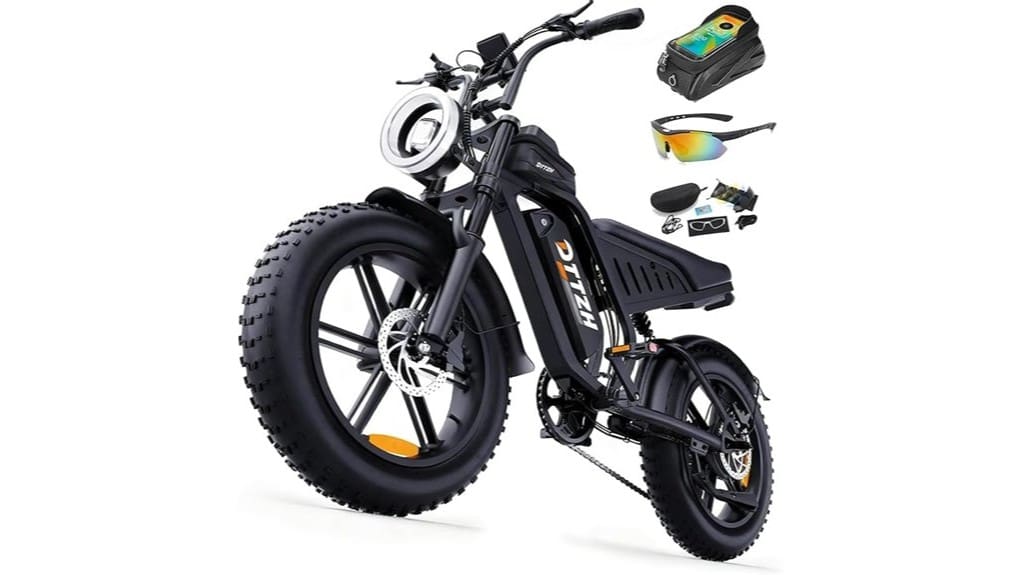
You’ll find the F6 family scales power and range to match needs: the F6 is a budget-friendly commuter with removable battery convenience; the F6S boosts torque and range for longer commutes or hills; the F6PRO adds peak power, heavier components, and higher top speed for off‑road or heavy loads. All use 750W nominal (1500W peak) motors, fat 20″x4″ tires, full suspension, NFC access plus code fallback, and removable battery options—keep going to see specifics.
Some Key Takeaways
- F6: budget-friendly commuter with removable battery, solid performance, and ~24-mile pure-electric range (48V15Ah) for city rides.
- F6S: stronger motor and battery option for longer commutes and hillier routes, extending range and torque versus F6.
- F6PRO: highest power and top speed, robust components for off-road or heavy loads, but heavier and generates more motor heat under sustained climbs.
- Common specs: 750W nominal (1500W peak), top speed up to 33 MPH (default 20 MPH), 20″x4″ fat tires, full suspension, 7-speed drivetrain.
- Security and UX: NFC unlock with 4-digit backup, sunlight-readable color LCD, fast access controls, removable batteries, and recommended portable lock/GPS.
Which Rider Is Each Model Best For
Who should pick which F6 variant depends on your priorities: F6 for budget-minded commuters who want solid performance and removable battery convenience; F6S for riders who need stronger range and torque for longer commutes or hillier routes; and F6PRO for enthusiasts wanting maximum power, top speed, and heavier-duty components for off-road or high-load use. You’ll choose F6 if you’re an urban commuter seeking efficient, low-cost daily mobility with easy swap battery logistics. Pick F6S when range and hill-climb torque matter. Opt F6PRO if you’re offroad adventurers craving top-end speed, heavy-duty build, and aggressive performance tuning. Many riders also benefit from choosing gear and accessories tailored to electric commuter bikes, such as commuter bike essentials to improve ride comfort and safety.
Security, Display, and User Experience: NFC Unlock, 4-Digit Code, and LCD Usability
Choosing between the F6 models also means considering everyday access and interface—how you open, monitor, and control the bike will shape your daily experience. You get NFC convenience for near-instant keyless release and a fallback 4-digit code when your card’s out of range, balancing speed with simple security. The color LCD readability is strong in sunlight, showing speed, battery, mode, mileage, and time in a clear layout so you can scan critical data while riding. Controls are logical and responsive; setup is minimal. Overall, the system prioritizes rapid access, situational awareness, and uncomplicated freedom. Portable bike locks provide complementary security options for riders who want extra protection when parking away from home.
Motors, Speed, and Hill Performance: 750W Nominal (1500W Peak), Top Speed, and Torque Impact
Because the F6 lineup packs a 750W nominal motor with 1500W peak output, you’ll get noticeably stronger acceleration and hill-climbing than typical mid‑range e-bikes. You’ll reach up to 33 MPH (restricted to 20 MPH by default) while the motor’s flat torque curve delivers steady pulling force through low gears. That torque helps you clear steep pitches and rough surfaces without constant shifting. Expect some motor heat under sustained heavy loads; the controller and airflow manage it but prolonged full‑throttle climbs will raise temperatures. Overall, the powertrain trades modest extra weight for confident, freedom‑oriented performance and climb capability. Check our store for compatible electric bike accessories to get the most from your rides.
Battery Options, Range Expectations, and Charging Times for Daily Use
Although the F6 series offers several battery configurations to suit different mileage needs and weights, you’ll most commonly see the 48V 15Ah removable pack and higher-capacity 48V 25Ah or 60V 30Ah options across F6/F6S/F6PRO models. You’ll expect ~24 miles pure electric from 48V15Ah, ~60 miles with PAS depending on load and terrain. Charging with the 3A fast charger takes about 5–7 hours; a 2A charger stretches to 8–10 hours. For reliable battery longevity, avoid full deep discharges, store at partial charge, and follow charging etiquette: regular top-ups, moderate temperatures, and manufacturer-approved chargers only. Riders serious about theft prevention should consider adding a GPS bike tracker to protect their investment.
Ride Comfort and Handling: Full Suspension, 20″x4″ Tires, Drivetrain, and Assembly Considerations
When you ride the F6 series, the full suspension setup—hydraulic front fork paired with a rear shock—soaks up bumps and maintains traction so the 20″ x 4″ fat tires can do their job on pavement, sand, grass, and rough roads. You’ll feel stable confidence from wide tires and a tuned chassis; suspension tuning lets you dial compliance versus responsiveness. The 7-speed drivetrain gives low gears for climbs and high gears for efficient flats, matching motor torque to terrain. Seat ergonomics favor longer rides; saddle height and angle adjust quickly. Assembly is ~20 minutes from 95% pre-built, so you’re free to go. For riders interested in upgrades and accessories, check out our full suspension selection tailored to enhance comfort and handling.
Some Questions Answered
Can I Add Cargo Racks or Child Seats to These Models?
Yes — you can add a rear rack and mount a compatible child seat with a child harness, but you’ll need to check load limits and frame attachment points. Use a sturdy, rated rear rack bolted to the frame and seatpost mount where specified. Verify combined cargo, passenger weight and tire/wheel limits; consider suspension tuning and brake upgrade for safety. Install per manufacturer torque specs and test stability before riding.
Are Replacement Batteries Available Separately and Compatible?
Yes — you can buy replacement batteries separately; official battery swaps are offered and compatible with the bike’s connectors and mounts. You’ll want to avoid third party cells unless they meet specs and certifications, since they may void warranty coverage. Choose OEM swaps for reliability, request recycling options for old packs, and verify voltage/amperage match to preserve performance, range, and safety while keeping your freedom to ride longer.
What Are the Recommended Tire Pressures for Different Terrains?
For pavement, run 30–35 PSI in the 20″x4″ tires for ideal road grip and efficiency. For mixed surfaces, drop to 18–25 PSI to balance comfort and rolling resistance. For sand, snow, or very rough trails, go lower—8–15 PSI—to maximize offroad traction and flotation. Adjust within these ranges by rider weight and cargo; heavier loads need higher pressure toward the top end for safety and puncture resistance.
Do These Bikes Support Smartphone App Integration or GPS?
Yes — you’ll get app integration and basic GPS tracking. The bike pairs via Bluetooth/NFC to a proprietary app for ride data, mode control, and firmware updates; GPS tracking provides route logging and location display rather than continuous theft recovery. You’ll appreciate configurable ride modes, real-time speed/battery readouts, and trip histories. It’s a practical, technical setup that lets you ride freely while monitoring performance and position.
What Maintenance Schedule Is Advised for Long-Term Durability?
You should follow a regular maintenance schedule: weekly routine inspections of tires, brakes, battery contacts, and fasteners; monthly check of drivetrain, suspension, and display calibration; quarterly torqueing, battery health test, and firmware/update checks; annual full service including motor inspection and brake bleed. For seasonal storage, charge battery to ~50–70%, remove if possible, clean and lubricate, store indoors at moderate temperature. Keep records and act on wear signs promptly.