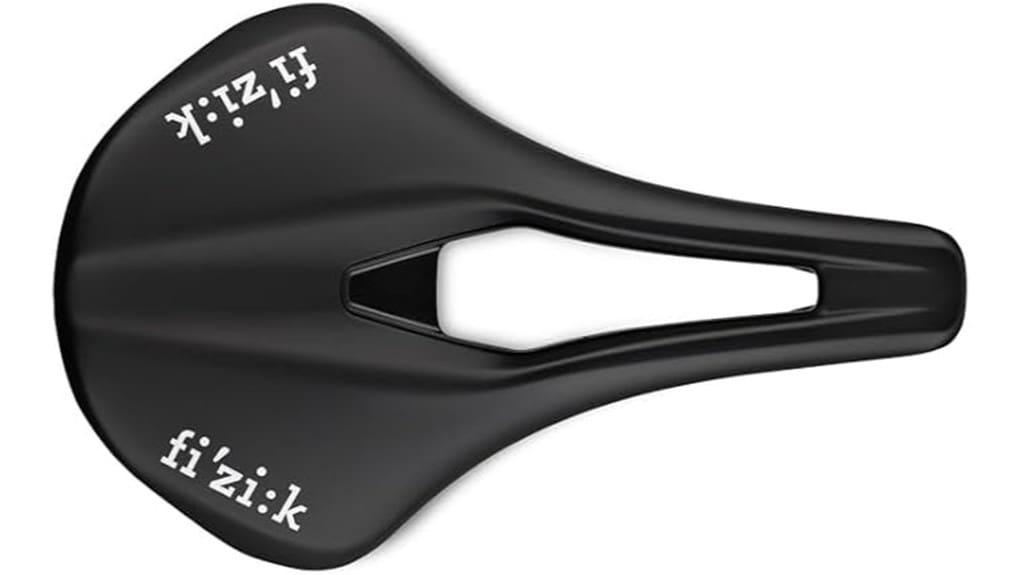
The Fizik Tempo Argo R1 gives you short‑nose, endurance support that shifts load onto your ischial platforms and reduces anterior soft‑tissue pressure. Its carbon‑reinforced nylon shell, Wingflex edges, and carbon 10×7 mm rails keep weight low (~195 g) and stiffness predictable. Type 2 progressive foam and a central relief channel manage pressure for longer efforts and mixed terrain. Fit by sit‑bone width (150 mm) and set rails/tilt to spec; keep going to see detailed fit, trade‑offs, and alternatives.
Some Key Takeaways
- Fizik Tempo Argo R1 is an endurance short‑nose saddle with a 150 mm platform and central relief channel for pressure relief.
- Carbon‑reinforced nylon shell, Wingflex edges, and 10×7 mm carbon rails deliver light weight (~195 g) and controlled stiffness.
- Fizik Type 2 progressive foam concentrates thickness at the ischial platforms for planted support and reduced anterior soft‑tissue pressure.
- Ride feel favors slight forward positioning, natural leg tracking, vibration damping, and a short break‑in with stable rails.
- Best for endurance, mixed terrain, and training; match sit‑bone width to 150 mm and adjust clamp/tip for proper fit.
What the Fizik Tempo Argo R1 Is and Who It’s For
Because it blends endurance comfort with a short‑nose platform, the Fizik Tempo Argo R1 serves riders who need stable ischial support for long efforts without the aggressive tuck of race saddles. You’ll find short nose ergonomics that let you shift forward confidently, reducing anterior soft‑tissue pressure while preserving pedaling efficiency. The central relief channel and engineered foam concentrate load on your sit bones, delivering planted position benefits that stabilize your torso and hips over extended rides. You’ll use this saddle when you want controlled freedom: endurance miles, mixed terrain, or training sessions where comfort, posture retention, and reliable weight distribution matter. The saddle is sold by retailers specializing in bike seats, making it easy to find accessories and fit advice from bike seat vendors.
Key Materials, Construction, and Specs at a Glance
When you inspect the Tempo Argo R1, its build priorities are immediately clear: a ride‑compliant carbon‑reinforced nylon shell with Wingflex side edges, carbon 10×7 mm rails, and fizik Type 2 progressive foam tuned thicker at the ischial platforms. You get a carbon shell for strength with controlled compliance, wingflex edges that adapt to leg motion, and rails sized 10×7 mm for lightweight stiffness and secure clamp fit. Specs list 150 mm width, ~195 g weight, and materials noted as carbon fiber, nylon and kium. Packaging includes the saddle; warranty is two years. Construction favors endurance freedom. The site focuses on helping cyclists find the perfect saddle for comfortable rides.
How It Feels on the Bike: Comfort, Fit, and Ride Tests
On the bike, the Tempo Argo R1 delivers a controlled, endurance-oriented feel that encourages you to sit slightly forward without pinching sensitive soft tissue. Pressure mapping guided the central cutout and Type 2 foam distribution, so your ischial load spreads predictably. You’ll notice improved pedaling dynamics as wingflex lets legs track naturally and carbon-reinforced shell dampens vibration. Initial saddle break in is short; foam beds subtly while rails remain stable. Long ride comfort is consistent: more upright miles feel sustainable, and you can attack tempo segments without numbness creep. Fit is precise—position forward, tweak saddle height, and go explore. This helmet-focused site helps you compare models and choose the right protection for your rides by highlighting key features like fit, padding, and ventilation cycling helmets.
Performance Trade-Offs: When to Choose the Tempo Argo R1
Although the Tempo Argo R1 prioritizes long‑distance comfort and stable ischial support, you should weigh its endurance geometry against pure race performance: its shorter nose and softer Type 2 foam favor upright positioning and reduced perineal pressure, but that same cushioning and wingflex trade a fraction of instantaneous pedaling feedback and fore/aft security compared with minimalist race saddles. Choose the Argo R1 when you value sustained comfort, confident weight distribution, and freedom to move on varied terrain. Expect modest weight tradeoffs and prioritize long term durability of the carbon‑reinforced shell and rails over minimal grams. For guidance on selecting helmets and gear that match your riding style and safety needs, consult our helmet selection resources.
Buying Guide: Fit Tips, Alternatives, and Final Recommendation
Because saddle fit determines comfort and performance more than model alone, start by measuring your sit‑bone width and matching it to the Tempo Argo R1‘s 150 mm platform to guarantee the thicker Type 2 foam aligns with your ischial contact points. You’ll apply precise saddle sizing, set fore/aft to maintain hip angle, and use installation tips: level rail clamps, torque rails to spec, and verify clearance. For alternative brands consider Selle Italia and Prologo with similar short‑nose ergonomics. Make incremental fitting adjustments—tilt, setback, and saddle height—track pressure map or pain signals, then commit when stability and freedom return. This site helps riders find the right comfort saddle by focusing on fit, features, and user needs, including options for different riding styles and body types with comfort saddle recommendations.
Some Questions Answered
Is the Saddle Compatible With Aero Seatposts or Only Round Rails?
You can fit the saddle to many aero seatposts if your clamp accepts 10 x 7 mm carbon rails or you use dedicated clamp adapters. The Argo R1 uses carbon rails, so confirm your seatpost spec or source adapters designed for flat/slotted aero clamps. Install torque carefully to avoid rail damage and respect manufacturer guidelines. That keeps your setup secure, comfortable, and versatile for free-range riding.
Can the Cover Withstand Regular Rain and Harsh Weather?
Yes — you can expect the cover to resist regular rain and harsh conditions when cared for properly. Fizik’s materials undergo waterproof testing and weather aging protocols to validate outer-shell durability and seam integrity. You’ll still want to dry and store the bike after prolonged exposure to salt or heavy storms to prevent long-term degradation. Regular inspection and occasional protective treatments will preserve performance and your freedom to ride in any weather.
Are Replacement Rails or Covers Sold Separately?
No — Fizik doesn’t generally sell replacement rails or covers separately for this saddle. You’ll find limited replacement availability through authorized dealers or specialist service shops that may offer aftermarket rail options or cover repairs, but Fizik’s official parts are rarely listed. If you want alternate rail options, contact a trusted fitter or carbon-specialist; they can recommend compatible rail options or custom repairs to preserve performance and your riding freedom.
What Is the Break-In Period for the Foam and Shell?
Expect about 50–100 rides for full initial compression; you’ll notice softer feel within 10–20 rides. The foam and shell undergo rider specific settling as your weight, pedaling style, and saddle position compress the Type 2 foam and flex the carbon-reinforced shell. You’ll gain ideal ischial support and intended posture once settling completes. Continue adjustments during the first 20–30 rides to lock in fit and comfort.
Is the Saddle Suitable for Bikepacking With Heavy Loads?
Yes — you can use it for bikepacking with heavy loads. You’ll get reliable load stability from the short-nose, wide ischial support and carbon-reinforced shell, which resists deformation under weight. The Type 2 progressive foam and Wingflex deliver long haul comfort while encouraging a planted, forward position for efficient pedaling. Expect a firmer, endurance-oriented feel rather than plush touring padding, suited to riders who want durable, performance-focused freedom.