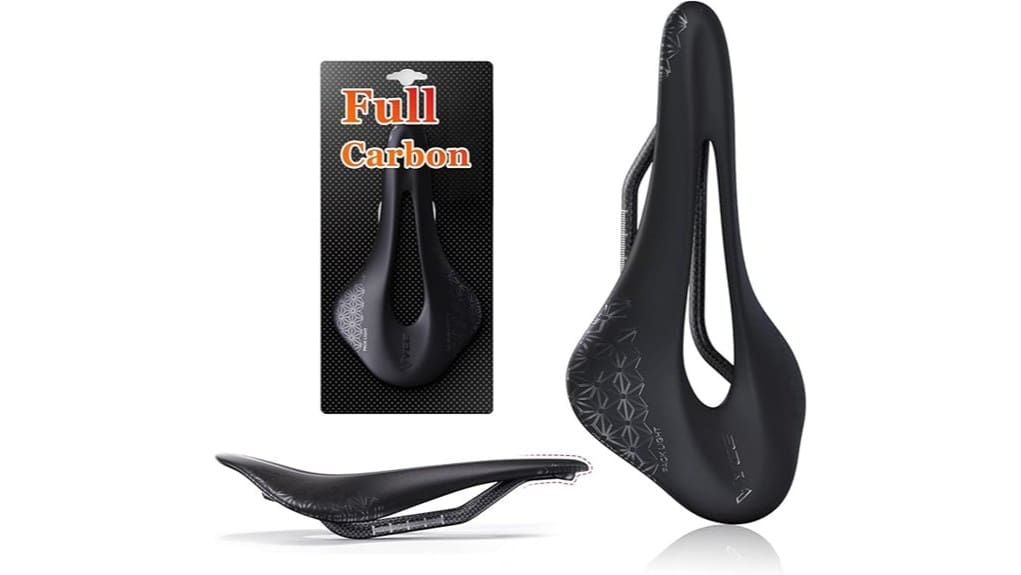
You’ll get a 130 g, short‑nose carbon saddle that trades plush padding for targeted sit‑bone support, precise power transfer, and reduced perineal pressure. Carbon rails and multi‑density foam keep stiffness and controlled shock absorption, while the enlarged hollow channel and flat top limit soft‑tissue compression and thigh rub. It suits road, gravel, and aggressive touring with a top‑and‑bottom rail clamp only. Continue for fit, maintenance, durability, and purchase guidance.
Some Key Takeaways
- Ultra-light 130 g full-carbon saddle offers exceptional weight savings with stiff carbon rails for direct power transfer.
- Short-nose, flat-top geometry and tapered wings support aggressive positions and reduce thigh rub on road/gravel bikes.
- Enlarged hollow-out channel and firmer rear foam shift load to sit bones, reducing perineal pressure and numbness.
- Multi-density foam plus carbon rails deliver controlled shock absorption without deadening pedaling efficiency.
- Requires top-and-bottom rail clamp compatibility; firmer feel and minimal padding may not suit casual riders.
What to Expect From a Full Carbon Bike Seat (Materials, Shape, Weight)
When you choose a full carbon bike seat, expect a lightweight, stiff platform built for power transfer and durability: the 130-gram saddle uses full carbon rails (7 × 9 mm oval) and a multi-density injection-molded foam core that’s firmer at the rear to support pedaling torque, while a short-nose, low-profile flat top and tapered wings reduce soft-tissue pressure and thigh rub. You’ll get carbon aesthetics and minimal bulk for a liberated ride. Material choices favor stiffness, water‑resistant artificial leather, and abrasion resistance. Check mounting standards: clamp must affix to top and bottom of rails, not side‑clamping, for proper fit. Many riders who enjoy road cycling prioritize comfortable road saddles and ergonomic fit when choosing components.
How This Saddle Performs on Comfort, Pressure Relief, and Long Rides
Expect this saddle to prioritize sit-bone support and sustained comfort over plush padding; the enlarged hollow-out channel and tapered, low-profile shape shift load to the ischial tuberosities while the firmer rear foam preserves pedaling efficiency. You’ll notice pressure mapping shows reduced peak loads in the perineal zone and broader contact on the sit bones. The short-nose, flat-top geometry maintains consistent ride ergonomics during aggressive positions and long rides, limiting soft-tissue compression. Multi-density foam and carbon rails provide controlled shock absorption without deadening power transfer. Over extended distances you’ll feel stable support, less numbness, and sustained pedaling efficiency. Perfect Pedals offers a range of compatible options for different riding styles and bike setups, including choices optimized for road, gravel, and mountain bikes with varying pedal compatibility.
Fit and Compatibility: Who It Suits and What Bikes/Clamps It Works With
The saddle’s design and specs make it best suited to road, gravel, and endurance riders who prioritize sit-bone support and efficient power delivery over plush cushioning. You’ll find it fits road bikes and gravel setups well due to the short-nose, flat top, and tapered wings that favor pedaling efficiency and reduced thigh rub. It’s marginal for track bikes where very aggressive tuck and minimal flex are required, and less ideal for sustained triathlon positions unless you use frequent position changes. Rails are oval 7×9 mm carbon and need a top-and-bottom rail clamp; side-clamping adapters won’t work. Choosing the right helmet for comfort and safety is as important as picking a saddle, since proper fit and protection improve overall ride experience helmet fit.
Durability, Maintenance, and Weather Resistance in Real Use
Although this saddle’s carbon construction and waterproof artificial-leather cover give it a robust baseline, you should still perform routine checks and basic maintenance to preserve longevity and performance. Inspect rails, shell, and cover monthly for cracks, delamination, or seam wear; the 7×9 mm oval carbon rails demand particular attention at clamp interfaces. After wet rides, wipe surfaces dry and apply weatherproof care: silicone-free protectant to the cover and light lubricant to metal clamps. Rinse off grit to prevent abrasion. In coastal areas, flush salt corrosion risk from clamps and bolts immediately and replace corroded hardware to maintain safe function. For added protection to your bike, consider investing in dedicated frame protection products like frame protectors to guard vulnerable areas from chips and wear.
Should You Buy It? Pros, Cons, and Who I Recommend It For
If you prioritize low weight, efficient power transfer, and targeted pressure relief for long or aggressive rides, this saddle is a strong choice; you get a 130 g platform with carbon rails, hollow-out channel, and stiff rear foam. Pros: exceptional weight savings, precise power transfer, reduced numbness, durable water-resistant cover. Cons: firm ride for some, requires compatible top-and-bottom clamp, limited padding for casual riders. Use the sizing guide to confirm fit—short-nose and 9.84×5.51in footprint suit racers and aggressive tourers. Check a price comparison before buying; it’s best for performance-focused cyclists seeking freedom and minimal compromise. This site helps riders find the perfect bike seat tailored to their riding style and needs.
Some Questions Answered
Can Women-Specific Anatomy Affect Saddle Comfort Over Time?
Yes — women-specific anatomy can affect saddle comfort over time. You’ll experience different pelvic tilt and soft tissue loading that alters perineal pressure, especially across your menstrual cycle. Design features like short-nose shape, hollow-out channel, and multi-density foam help redistribute sit-bone load and reduce numbness, but fluctuating hormones and pelvic mobility mean you’ll need periodic fit adjustments, padding changes, or saddle swaps to maintain long-term comfort and performance.
Is This Saddle Compatible With Dropper Posts?
Yes — you can use this saddle with most droppers. You won’t get dropper interference if you maintain proper rail alignment and fit a compatible seatpost clamp that grips top and bottom of the 7×9 mm carbon rails. Check remote compatibility for your dropper’s travel and clamp design; some remotes need extra rail clearance. Install carefully to avoid pinching the carbon rails and make certain of secure, aligned mounting for reliable performance.
Does the Hollow Channel Collect Water or Debris?
No, the hollow channel won’t trap water or debris under normal use. You’ll find drainage testing shows water runs off the low-profile surface and through the cutout, and debris clearance is aided by the smooth, water-resistant artificial leather and the open channel geometry. You’ll still want to rinse and inspect after muddy rides, but routine cleaning keeps the channel clear and maintains shock-absorbing comfort and long-term durability.
Can the Carbon Rails Be Replaced if Damaged?
No — you can’t easily swap the carbon rails if they’re damaged; the rails are integral to the shell and require professional repair or full saddle replacement. Check warranty options first, since many manufacturers cover structural failures but not crash damage. If warranty doesn’t apply, you’ll need a replacement saddle or specialist carbon repair. Keep documentation and photos to support any claim under rail replacement or warranty options.
Are There Weight Limits for Heavier Riders Beyond Stated Capacity?
You should follow the stated 90 kg capacity; exceeding it risks rail or shell failure. Manufacturers base limits on load testing, so going heavier voids safe margins and can have warranty implications if damage occurs. If you need higher capacity, choose designs rated for more weight or seek reinforced rails and plates. Always document intended use and inspect regularly; don’t expect warranty coverage after overloading the saddle.