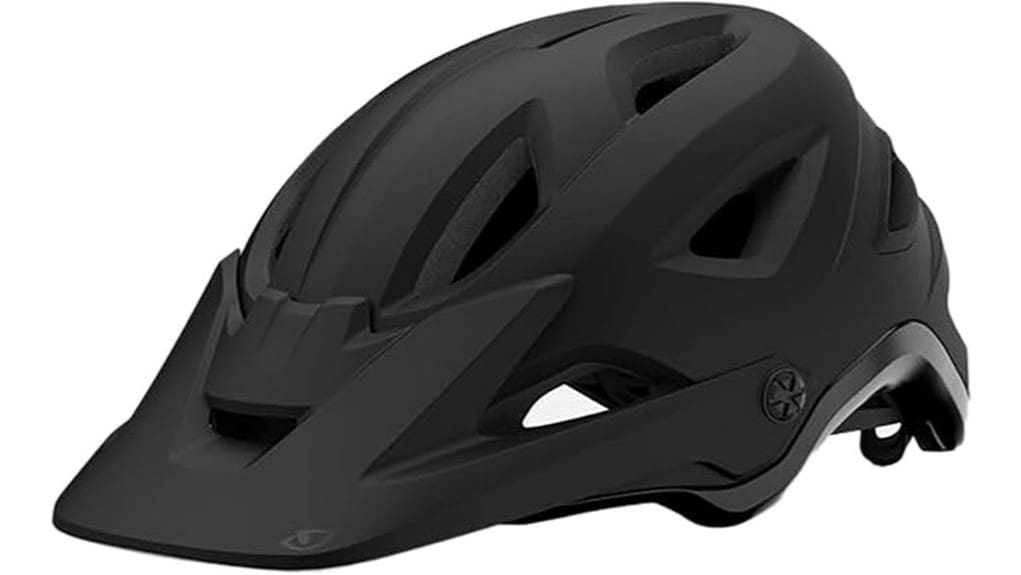
You’ll get a ventilated, impact-tested trail helmet that balances MIPS rotational protection, an EPS liner tuned for strike zones, and a full hardbody wrap to guard EPS integrity. The micro-adjustable retention and rear fit let you dial stability without constraining movement, while the P.O.V. Plus visor and goggle compatibility suit mixed light conditions. Sixteen Wind Tunnel vents and internal channels manage heat on long efforts. It’s a durable, mid-to-upper range pick—keep going to see detailed performance and fit notes.
Some Key Takeaways
- MIPS rotational protection and EPS liner absorb rotational and linear forces for certified impact mitigation.
- Polycarbonate hardbody wrap preserves EPS integrity, enhancing durability after repeated knocks.
- Sixteen Wind Tunnel vents and internal channels offer controlled cooling and consistent sweat management.
- Micro-adjustable retention, rear-adjustable fit, and P.O.V. Plus visor deliver precise stability, balance, and goggle compatibility.
- Lightweight yet rugged build suits long rides, technical trails, and enduro missions at a mid-to-upper price point.
What the Giro Montaro MIPS II Is and Who It’s For
Though it keeps a relatively low weight, the Giro Montaro MIPS II is a rugged trail helmet engineered for riders who want all-day comfort without sacrificing impact protection. You’ll find a polycarbonate shell paired with EPS liner construction and 16 Wind Tunnel vents that balance durability and airflow. Fit systems and a P.O.V. Plus visor tune fit for goggle compatibility, so you’ll move freely over varied terrain. It suits trail beginners seeking confidence and experienced riders using urban commuting to reach trailheads. Overall, it’s a pragmatic choice: lightweight yet robust, designed for freedom of movement and reliable performance. Designed for a variety of riders, it also incorporates MIPS rotational protection to reduce rotational forces in certain impacts.
Crash Protection and Safety Tech: MIPS, EPS Liner, and Hardbody Wrap
Because crashes involve both linear and rotational forces, the Montaro MIPS II layers protection to address multiple impact vectors. You get MIPS for impact redirection, a proven low-friction layer that reduces rotational loading during oblique impacts. The EPS liner absorbs linear energy; its density and placement prioritize liner integrity across strike zones. A full hardbody wrap captures the EPS, preserving structural cohesion and protecting against environmental degradation and secondary impacts. Tested in Giro’s lab, the polycarbonate shell integrates these components without excess mass. Overall, you benefit from a system that balances energy management, durability, and the freedom to push limits safely. This helmet is designed for cyclists who want reliable crash protection without sacrificing comfort.
Fit, Comfort, and Ventilation: P.O.V. Visor, Goggle Compatibility, and 16 Vents
Having covered how the Montaro MIPS II manages impact forces, we now assess how that protective architecture pairs with user-facing fit and ventilation features. You’ll find the P.O.V. Plus visor offers precise visor adjustability for trail sightlines and goggle stowage; it locks securely yet repositions quickly on the fly. The fit system conforms with micro-adjustable retention, so you dial in stability without restriction. Sixteen Wind Tunnel vents and internal channeling deliver directed airflow; you’ll notice reduced heat buildup and reliable sweat management during hard efforts. Overall, the helmet balances freedom of movement with controlled ventilation and secure accessory integration. If you’re equipping a helmet for mixed daytime and low-light riding, consider adding a helmet light to enhance visibility and safety.
Ride Performance and Durability: Weight, Rugged Build, and Real-World Use Cases
Weighing in as a lightweight yet robust option, the Montaro MIPS II pairs a polycarbonate shell and EPS liner with Giro’s hardbody wrap to keep mass down while resisting trail abuse; you’ll notice nimble handling on climbs and stable balance on descents without a bulky feel. You’ll appreciate precise weight distribution—rear-adjustable fit centers mass over your head, reducing rotational inertia and improving steering feedback. Durability tests translate to trail longevity: the hardbody encapsulation resists scuffs and preserves EPS integrity after repeated knocks. In real-world use, it’s versatile for all-day epics, technical singletrack, and committed enduro missions where freedom matters. It’s an excellent match for riders focused on full suspension mountain bike performance.
Buy or Skip? Pricing, Competitors, and Final Recommendation
You’ve seen how the Montaro MIPS II balances low weight, rugged construction, and practical venting for long, technical rides; now assess whether its price and alternatives justify buying. You get MIPS protection, hardbody wrap, and goggle-ready fit in a durable, lightweight package. For price comparison, it’s mid-to-upper range: you pay for tested protection and vents. Competitor analysis points to similarly featured models from Smith and POC that may offer marginally lighter shells or different fit systems at comparable cost. If you prioritize certified protection, ventilation, and freedom to ride hard, buy; if budget constrains you, skip. The site covers tips on choosing the right helmet for comfort and safety, including matching fit and ventilation to your riding style with helmet fit guidance.
Some Questions Answered
Does the Helmet Come in Women-Specific Sizing or Colorways?
No — there aren’t women specific sizes listed; sizing follows standard unisex ranges, though fit works well for many head shapes. Colorways availability is moderate: Giro offers several finishes but not a dedicated women’s palette. You’ll evaluate fit by trying sizes and adjusting the retention system. If you value freedom in choice, prioritize fit and venting over assumed gendered options; options exist but aren’t explicitly women-specific.
Is There an Audio or Camera Mount Compatibility?
No, it doesn’t include a dedicated audio or camera mount, but you can fit a mount adapter or camera attachment with caution. You’ll attach third-party systems to the hard polycarbonate shell or strap areas; verify compatibility and avoid compromising the EPS liner or MIPS layer. Test fit and secure fasteners before riding. You’ll maintain freedom of movement, but accept added weight and potential impact on helmet safety ratings when using aftermarket mounts.
Can I Replace the Visor With Aftermarket Options?
Yes — you can swap the stock visor, but visor compatibility is limited by the helmet’s mounting points and P.O.V. Plus adjuster. You’ll want aftermarket visors that match Giro’s screw pattern, clip geometry, and goggle clearance; otherwise fit, retention, and safety could be compromised. Choose visors designed for full hardbody-wrap shells and confirm compatibility before buying. If in doubt, test-fit or consult the vendor for verified aftermarket visors.
What Is the Expected Lifespan Before Helmet Replacement?
You should replace the helmet every 3–5 years under normal use; inspect annually for damage and shorter service intervals if exposed to heavy UV, salts, or sweat. After any crash replacement is mandatory even if exterior looks intact because EPS compression and MIPS integrity can be compromised. You’ll appreciate the lightweight, rugged build, but treat service intervals as conservative safety margins to preserve protection and your freedom to ride confidently.
Are There Ventilation Adjustments for Cold-Weather Use?
Yes — you’ll find ventilation adjustments suited for cold-weather use: adjustable vents let you restrict airflow, and internal channeling balances warmth and breathability. You can add thermal liners to increase insulation without compromising fit or goggle compatibility. The EPS liner and hardbody wrap maintain protective integrity while you tune vent openings. Overall, the system’s technical simplicity gives you control to optimize warmth, ventilation, and performance for freeride freedom.