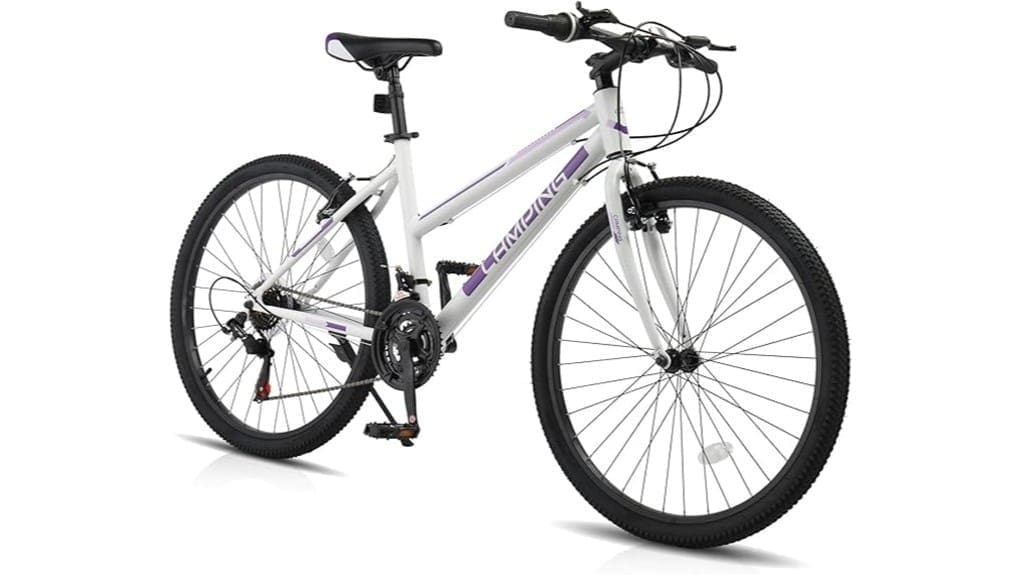
You’ll pick 20“, 24″, or 26″ wheels based on your height, terrain and handling goals: 20″ gives nimble control for smaller riders and tight trails, 24″ balances cornering precision and agility for mid-height riders, and 26” rolls steadier over rough ground and suits taller riders. Expect 7–21 speeds, lock‑out forks or full suspension on higher models, and dual‑disc brakes for safety. Scroll down to see fit checks, terrain tips, and budget tradeoffs.
Some Key Takeaways
- 20″ wheels offer the most nimble handling and easier tight-maneuver control, ideal for smaller riders and storage-limited use.
- 24″ wheels balance cornering precision and agility, suiting mid-height riders and mixed trail/commute use.
- 26″ wheels give better roll-over, stability, and speed on rough terrain, fitting taller teens and adults.
- Choose drivetrain (7 vs 21-speed), suspension quality, and dual-disc brakes based on intended terrain and budget.
- Verify fit via standover height, leg extension, and a test ride to ensure comfort and proper handling.
How Wheel Size Affects Fit and Handling for 20″, 24″, and 26″ Bikes
Although wheel size isn’t the only factor that determines fit and handling, the difference between 20“, 24″, and 26″ wheels has clear, predictable effects you should consider. You’ll find 20” wheels boost wheel agility and make tight maneuvers easy, suiting smaller riders and compact frames. 24″ offers a balance: improved cornering precision over 20″ while retaining nimbleness. 26″ increases ground contact and roll-over ability, giving steadier tracking and better ride clearance on rough terrain. Choose based on your height, preferred terrain, and desire for freedom—smaller for quick responses, larger for momentum and obstacle negotiation. For riders comparing options, consider how wheel size interacts with mountain bike wheels and frame geometry when selecting components.
Drivetrain, Suspension, and Brakes: What to Expect on 20″, 24″, and 26″ Mountain Bikes
Wheel size affects more than handling— it also guides what drivetrain, suspension, and brake setups you’ll find on 20″, 24″, and 26″ mountain bikes. You’ll see 7- or 21-speed drivetrains with professional front and rear derailleurs and trigger levers, so gear ratios suit varied riding and ease shifts. Suspension varies: lock-out forks, thickened front forks and cushions give measured suspension travel for comfort without excess. Braking uses dual-disc systems with larger rotors for predictable brake modulation. Choose models requiring straightforward drivetrain maintenance and adjustable components, so you can ride freely with reliable stopping power and tuned comfort. Full suspension platforms are especially common on higher-end models, offering improved traction and control through rear shock integration.
Performance Differences by Terrain: Commuting, Trails, and Rough Off‑Road
Pick the right 20″, 24″, or 26″ mountain bike and you’ll feel how terrain changes the ride: for commuting, the lighter wheels, adjustable seat/handlebar, and 7-speed setups prioritize efficiency and nimble handling; on park trails, the lock-out suspension fork and thicker front fork cushions smooth jumps and berms while 21-speed options give tighter cadence control; on rough off‑road routes, the thicker suspension, double shock absorption, all‑terrain anti-skid tires, and dual‑disc brakes with larger rotors deliver the traction and stopping power you need for unpredictable surfaces. You’ll notice gear range affects cadence, ride comfort varies by fork tuning, tire traction dictates line choice, and braking modulation matters most where surfaces change rapidly. Essential touring gear like panniers and racks can help adapt these bikes for longer rides and mixed-terrain trips with load-carrying stability.
Age, Body Size, and Adjustment Guide to Pick the Right Wheel Size
Match your wheel size to your height, age, and riding goals to get a comfortable, efficient fit. You’ll choose 20“, 24″, or 26″ based on age ranges and body proportions: smaller riders and younger teens often prefer 20″ for control; mid-height riders fit 24″; adults and taller teens suit 26”. Use adjustable seat and handlebar to fine-tune reach and posture. Check standover height, leg extension, and arm comfort while seated. Consider intended terrain and mobility needs—shorter wheels boost maneuverability, larger wheels smooth obstacles. Test ride to confirm fit before committing. For the best results, use a bike fit system to fine-tune saddle height and handlebar position for comfort and efficiency.
Quick Checklist: Choosing Between 20″, 24″, and 26″ Based on Needs and Budget
When you’re choosing between 20“, 24″, and 26” wheels, focus on how height, riding goals, and budget interact to affect control, comfort, and cost. Decide if nimble handling (20″), balanced versatility (24″), or rolling efficiency and stability (26″) suits your routes and freedom to explore. Consider drivetrain options and gearing needs for terrain, plus suspension and braking performance for safety. Weigh budget tradeoffs: smaller wheels often cost less and store easier, while larger wheels demand higher spend but improve speed and comfort. Factor storage considerations, portability, and adjustable fit to match lifestyle and long-term value. Also evaluate tire tread patterns and compound for trail conditions to optimize grip and durability, especially when choosing mountain bike tires.
Some Questions Answered
Are Replacement Parts Universally Compatible Across 20″, 24″, and 26″ Models?
No — you won’t find universal replacement parts across 20″, 24″, and 26″ models. Wheel compatibility, brake standards, axle types, and frame fittings vary, so you’ll need to match size and spec. Derailleurs, shifters, and brakes may fit across some versions if speeds and mounting match, but always check measurements and standards. You’ll preserve freedom by confirming part specs or consulting the manufacturer before buying replacements.
How Heavy Is Each Bike Size on Average?
Average weight varies by size: 20” ~11–13 kg, 24″ ~12–14 kg, 26″ ~13–16 kg. You’ll notice frame materials (typically steel or aluminum) drive most differences; aluminum frames are lighter, steel heavier but tougher. You’ll trade a bit of weight for durability or cost. If you want more freedom on trails and commutes, choose aluminum for lower average weight and easier handling, or steel for rugged longevity.
What Assembly Tools Are Required Out of the Box?
You’ll typically need an allen wrench set and a tire pump out of the box, plus a few common extras. Expect to use an adjustable wrench or spanner to tighten pedals and bolts, a screwdriver for accessories, and the allen wrench to mount handlebars, seat, and brakes. Inflate tires with the tire pump to recommended pressure. These tools let you assemble, adjust, and enjoy your ride independently and confidently.
Is There a Warranty and What Does It Cover?
Yes — you get a limited warranty; the warranty duration is typically one year from purchase. It covers manufacturer defects in frame, drivetrain, suspension, and brakes under normal use. Coverage exclusions include wear-and-tear parts (tires, brake pads, cables), damage from crashes, improper assembly, or modifications, and cosmetic rust from misuse. You should keep your receipt and register the bike to make claims and preserve your rights.
Can These Bikes Accommodate Child Seats or Cargo Racks?
Yes — you can fit a child seat or cargo rack on these bikes. You’ll mount most child seats to a sturdy rear rack or directly to the frame if it has compatible attachment points; a dedicated cargo rack bolts to standard rack mounts or seatstay braze-ons. Make sure the chosen seat or rack matches the bike’s wheel size and weight limits, and verify secure mounting, proper balance, and braking clearance before each ride.