You’ll pick wheels by height, terrain, and ride goals: 24” suits shorter riders (48–53″) and gives fast acceleration and nimble handling but less rollover; 26” fits mid-height adults, balancing agility and obstacle clearance; 27.5″ favors taller riders (56–63″), maximizing momentum, smoothing rocks, and stabilizing at speed. Tire choice, fork setup, and gearing tune performance and comfort. Check frame compatibility and maintenance needs, and continue for more specific recommendations and fit tips.
Some Key Takeaways
- 24″ wheels suit shorter riders (48–53″) offering nimble handling and quick acceleration but reduced obstacle clearance.
- 26″ wheels balance rollover and agility, fitting riders ~56–63″ for versatile trail performance and easier climbs.
- 27.5″ wheels maximize rollover and momentum, smoothing rough terrain and offering high-speed stability with slightly slower handling.
- Tire choice, suspension setup, and fork compatibility strongly influence traction, comfort, and braking across all wheel sizes.
- Gear range, cadence feel, and maintenance needs change with wheel size; check chain, derailleur alignment, and cable condition regularly.
Which Wheel Size Fits Your Height and Riding Style?
While wheel size affects handling and fit, choose based on your height and riding goals: the 24-inch variant suits shorter riders (recommended 48–53 inches) and younger teens, offering quicker handling and easier maneuvering, whereas 26- and 27.5-inch wheels better match taller riders (recommended 56–63 inches) and adults, providing greater rollover ability and stability on rough terrain. You’ll consult height charts to align frame size and wheel diameter with your ergonomic needs. Assess riding preferences — agility for tighter trails or stability for longer, rougher rides. Match wheel choice to intended terrain, control expectations, and personal fit metrics. Consider tire selection too, since choosing the right bike tire can greatly affect traction and ride quality.
How 24″, 26″, and 27.5″ Wheels Handle Terrain and Obstacles
After matching wheel diameter to your height and riding goals, consider how each size negotiates obstacles and terrain: a 24” wheel accelerates quickly, offers nimble handling, and reacts sharply to tight roots and switchbacks but drops into ruts more readily and requires higher cadence to maintain momentum; a 26″ wheel balances rollover and agility—it clears small to medium obstacles with less input than a 24″, holds speed better on punchy climbs, and remains responsive for trail maneuvers; a 27.5″ wheel provides the best rollover capability of the three, smoothing out rocks and holes, maintaining momentum over uneven surfaces, and offering higher stability at speed, though it feels slightly less quick to change direction and may require more effort to accelerate from a stop.
You’ll judge sizes by obstacle clearance and rolling resistance: 24″ gives lowest rolling inertia but reduced clearance; 26″ is moderate both ways; 27.5″ minimizes rolling resistance and maximizes clearance. Pick the wheel that matches your terrain mix and desire for nimble control versus sustained momentum. Additionally, consider wheel and tire choices as part of the overall mountain bike wheels system to get the best performance for your rides.
Ride Comfort, Suspension, and Braking Differences to Expect
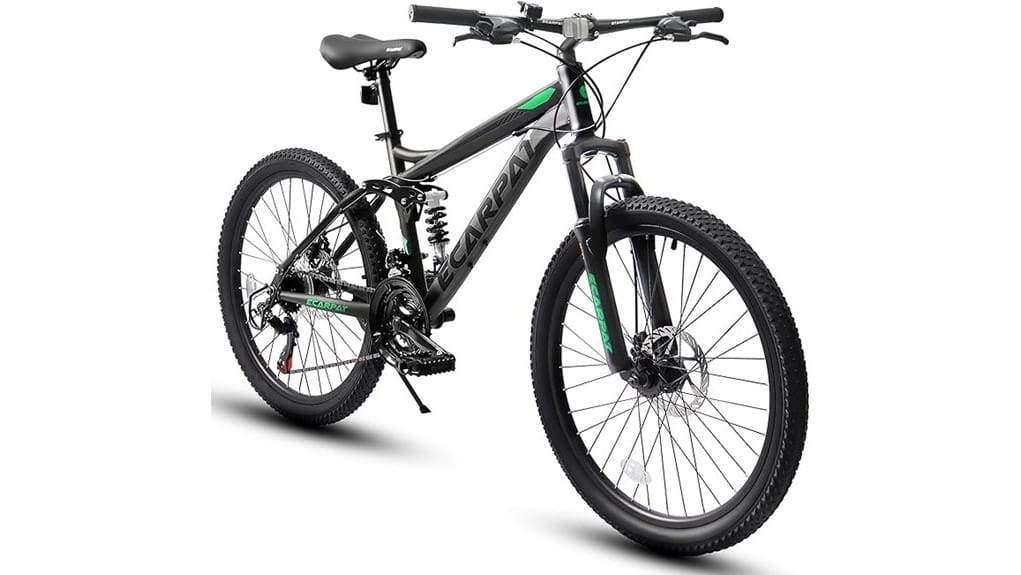
When you compare the 24“, 26“, and 27.5″ wheel options on this Ecarpat frame, expect measurable differences in how the suspension and brakes deliver ride comfort and control. You’ll notice the 24” yields quicker suspension response, firmer feel, and more pronounced feedback through parallel bars; saddle ergonomics matter more since smaller wheels magnify body position changes. The 26″ balances compliance and agility, easing shock absorber duty and stabilizing brake modulation under varied loads. The 27.5″ smooths impacts best, reduces frequency of fork travel, and lets mechanical dual disc brakes offer steadier modulation during high-speed descents, enhancing freedom to push limits. Consider choosing a fork that matches wheel size and riding style to optimize handling and comfort, especially when selecting components like bike forks for your setup.
Drivetrain, Gears, and Maintenance: What Changes Between Sizes?
Shifting focus from how wheel size affects suspension and braking, you’ll find that drivetrain behavior and maintenance demands also change with 24″, 26″, and 27.5″ wheel options. You’ll notice gear ratios feel different: smaller wheels accelerate quicker, requiring less extreme gear ranges; larger wheels smooth cadence at speed. Adjustments matter—gear tuning must account for chain wrap and effective cassette spacing. Expect slight variations in chain wear rates due to torque and cadence differences. Routinely inspect shift cables and maintain lubricant. Check derailleur alignment after transport or impacts. These procedures preserve performance and keep your ride liberating and reliable. Regular chain lubrication and correct tensioning are key to smooth, reliable rides and longer chain life.
Buying Checklist and Quick Recommendation for Common Riders
Start by matching wheel size, frame dimensions, and rider proportions to your typical riding use: choose 24” if you need quicker acceleration and a tighter handling feel for younger or shorter riders, 26” for a balanced mix of maneuverability and speed for most teens and adults, and 27.5″ if you prioritize roll-over capability and smoother cadence at higher speeds. Use this fit checklist: verify frame material and size against height, confirm max weight capacity, assess suspension setup, inspect tire width/grip, check 21-speed drivetrain and thumb shifter function, test mechanical disc brakes, and note assembly level. Quick recommendation: pick the size that matches terrain and freedom goals. Consider also having essential accessories like a helmet fit and basic maintenance tools on hand.
Some Questions Answered
Are Replacement Tires and Tubes Readily Available for All Wheel Sizes?
Yes — you’ll find replacement tires and tubes readily available for all listed wheel sizes. You can match tire compatibility by choosing 24, 26, or 27.5-inch tires with the specified 24 x 2.125 profile. Check valve types (Presta or Schrader) on your current inner tubes before buying; most shops stock both. You’ll value the freedom to swap tires for terrain, puncture protection, or performance upgrades without sourcing specialty parts.
Can This Bike Fit Child Seats or Cargo Racks?
Yes — you can fit a child seat and mount a rack if you verify frame and mounting points. Child seatcompatibility depends on rear rack presence or seat-tube clamp strength; use a frame-mounted or rear-rack-mounted child seat rated for the bike’s max 250 lb load. Cargo rackmounting requires rear rack eyelets or a heavy-duty seatpost rack and torque-appropriate hardware. Confirm fork and brake clearance for added cargo or child-seat weight before riding.
What Warranty and After-Sales Support Does the Manufacturer Provide?
The manufacturer offers a limited warranty covering frame and factory defects; warranty duration is typically 12 months from purchase. You’ll get parts and labor support via their customer service; service centers locations vary by region and are listed on the Ecarpat website or provided through support. You’ll need proof of purchase for claims. You can also access replacement parts, manuals, and troubleshooting assistance directly from customer support for efficient after-sales service.
How Long Is Estimated Assembly Time for Non-Experienced Riders?
Expect about 45–75 minutes assembly time for non-experienced riders. You’ll follow clear steps to install the handlebar, saddle, front wheel and pedals, then adjust brakes and gears. The bike ships 85% pre-assembled and includes beginner friendly tools and a manual, so you won’t need specialist equipment. Work methodically, keep components organized, and allow extra time for initial brake/gear tuning to guarantee safe, reliable performance before you ride.
Are the Pedals and Saddle Replaceable With Standard Parts?
Yes — you can replace the pedals and saddle with standard parts. The bike uses common pedal threads and saddle rails, so compatibility standards align with typical MTB components; you’ll fit most 9/16″ pedals and standard saddle clamps. Swapping lets you pursue comfort upgrades like ergonomic saddles or lighter pedals. You’ll need basic tools for removal/installation and should check thread type and rail clamp width to make certain proper fit and safe riding.