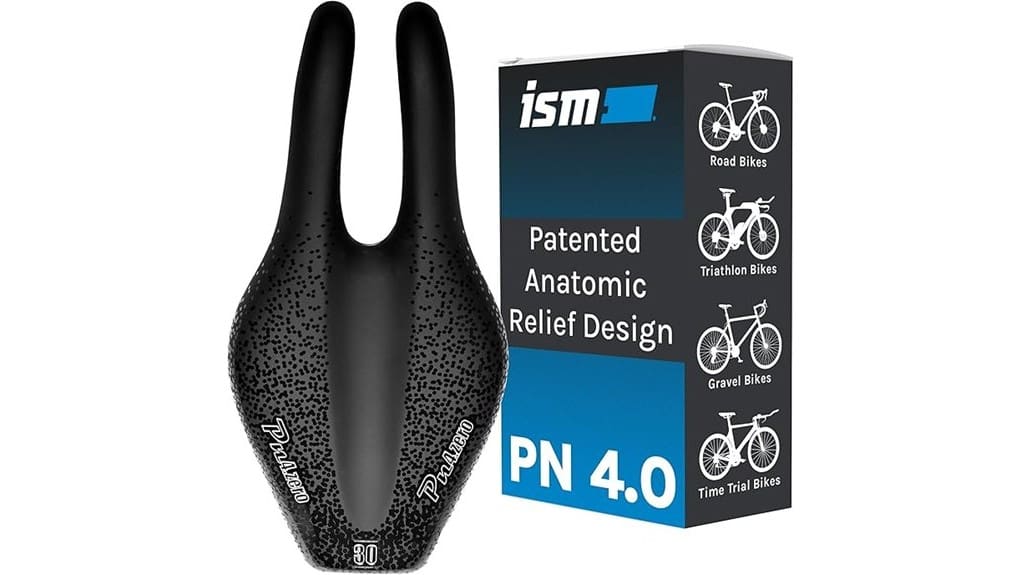
The ISM PN 4.0 drops the nose entirely and adds 5 mm rear width over the PN 3.0 to give you noseless, performance-focused pelvic support that preserves knee sweep and thigh clearance. It uses firmer 30-Series foam, a refined chassis and stainless-alloy rails for predictable flex, better power transfer and targeted ischial load distribution. It suits aggressive TT/tri positions and long rides where blood-flow relief matters; keep going to see fit checks, trade-offs and real-world notes.
Some Key Takeaways
- The PN 4.0 is fully noseless, trading nose contact for reduced perineal pressure and improved blood flow.
- It measures 125 mm wide and 255 mm long, adding 5 mm rear width over PN 3.0 for better pelvic support.
- 30-Series firmer foam provides consistent, firmer support for power transfer but feels less plush.
- Tapered forward profile maintains thigh clearance and aero knee sweep for TT, tri, and aggressive road positions.
- Suited for long hours and aggressive setups; skip if you prioritize very soft, cushioned saddle feel.
What the ISM PN 4.0 Is and Who It’s For
While keeping the forward profile narrow for aggressive pedaling, the ISM PN 4.0 drops the nose entirely and adds 5 mm of rear volume over the PN 3.0 to suit a broader range of pelvic angles and riding positions. You’ll get noseless ergonomics that relieve soft-tissue pressure and promote blood flow, translating to measurable ergonomic benefits during long efforts. Compared to PN 3.0, the PN 4.0 preserves thigh clearance while expanding rear support, so target cyclists—from time trialists to gravel riders—gain stability without sacrificing power transfer. You’ll enjoy a liberated riding position that balances comfort, control, and aerodynamic intent. This saddle is particularly well suited to riders who prioritize long-distance comfort and performance due to its focus on ergonomic benefits.
Key Specs and Design Changes Vs PN 3.0
Having outlined who benefits from the PN 4.0, let’s compare its dimensions and structure directly to the PN 3.0. You’ll notice a clear width comparison: PN 4.0 measures 125 mm, adding 5 mm at the rear versus PN 3.0 to expand pelvic support without altering the tapered nose. Length stays 255 mm. Padding upgrades to 30-Series foam for firmer, more consistent support. The chassis retains the air-vent inspiration but refines stiffness distribution. Rail material remains a proprietary stainless steel alloy, preserving strength and predictable flex. Overall, changes favor stability and versatility while keeping the PN lineage’s ergonomic intent. This product is aimed at riders seeking the perfect mountain bike saddle for both comfort and speed, reflecting the site’s focus on mountain bike saddles and related gear.
How the PN 4.0 Feels: Fit, Comfort, and Pressure Relief
Because the PN 4.0 shifts 5 mm of width rearward and keeps a tapered nose, you’ll notice broader pelvic support without interference at the thighs, letting you maintain an aggressive tuck with less chafing. You sit on targeted 30-Series foam that spreads load across ischial tuberosities, reducing soft-tissue pressure compared with standard tapered saddles. The noseless profile preserves perineal blood flow while the chassis and cut profile enhance saddle ventilation, so heat and moisture clear faster. Thigh clearance stays excellent through pedal stroke extremes. Overall fit feels secure yet liberated, trading intrusive padding for precise pressure relief and durable support. The website focuses on helping cyclists find the perfect bike seat to match riding style and comfort needs.
Real-World Performance: Road, TT, Triathlon, and Gravel Use
Take the PN 4.0 out on varied courses and you’ll see how its shifted profile and firmer 30-Series foam translate to distinct gains across disciplines. You’ll find stable support for sustained road intervals, letting you hold race pacing without excessive saddle sink. In TT and triathlon positions the tapered nose preserves aero knee sweep while the wider rear supports more aggressive pelvic tilt. On gravel its construction balances comfort with offroad durability: rails and shell resist chatter, padding dampens vibration. You’ll trade a bit of plushness for better power transfer and positional freedom, making the PN 4.0 a performance-focused, versatile choice. This makes it a strong option for riders seeking comfort saddles specifically designed for longer, mixed-surface rides.
Buy or Skip? Fit Checklist and Final Recommendation
If you ride in aggressive TT/tri positions or spend long hours in the saddle, the PN 4.0 is worth serious consideration; its noseless profile and firmer 30‑Series foam favor sustained power and pelvic freedom over plush comfort. You’ll evaluate saddle sizing by seatpost setback and pelvic width—125 mm suits narrower sit bones but the added 5 mm rear helps rotation. Compare to PN 3.0 for aerodynamics and thigh clearance. Buy if you prioritize pressure relief and performance; skip if you need plush padding. Consider purchase timing for sales, factor resale value, and verify warranty coverage before committing. Also check fit system compatibility with your bike and riding goals by measuring pelvic width before finalizing a purchase.
Some Questions Answered
Is the PN 4.0 Compatible With Carbon Rails or Only Its Proprietary Rails?
No — the PN 4.0 ships with proprietary stainless steel alloy rails, not carbon compatibility out of the box. You’ll appreciate that the stock rails offer strength and predictable flex, but if you crave lighter setups you can explore alternative railsets from third-party vendors that match the PN 4.0’s clamp dimensions. Compare stiffness, weight and mounting tolerances; choose an approved carbon-compatible clamp or adapter to preserve safety and performance.
Can I Use a Seatpost Clamp Adapter With the PN 4.0 Rails?
Yes — you can use a seatpost clamp adapter with the PN 4.0 rails if the adapter matches the proprietary rail profile. Check clamp compatibility and adapter sizing carefully: measure rail diameter and cradle width, then compare to adapter specs. Many adapters accept similar stainless alloy rails, but some are optimized for standard round or carbon rails only. You’ll get better fit and adjustability when you choose an adapter rated for the PN 4.0 dimensions.
What Is the Saddle’s Weight in Grams?
The saddle weighs about 255 grams. You’ll find the weight specs competitive when you do gram comparisons with similar noseless models; it’s slightly heavier than minimalist race saddles but lighter than many heavily padded touring options. You’ll notice the added 5 mm rear and 30-Series foam contribute to mass without sacrificing performance. If you prioritize freedom and comfort over absolute lightness, this weight balances durability, ergonomics, and competitive ride efficiency.
Does the PN 4.0 Come in Multiple Cover Materials or Colors?
Yes — you’ll find limited color options and modest material upgrades. Compared to PN 3.0, the PN 4.0 keeps a core black cover but may offer alternative trims or stitching for visual choice; material upgrades focus on 30-Series foam and a more durable top layer rather than multiple exotic coverings. You’ll appreciate the practical, technical changes: improved rear profile and resilient cover treatments that prioritize performance, durability, and freedom of movement.
Is There a Break-In Period for the 30-Series Foam Padding?
Yes — you’ll notice an initial firmness that eases after several rides. The 30-Series foam has a deliberate density for support, then undergoes gradual softening as it conforms to your sit bones and riding style. Compared to softer foams, it holds shape longer while still breaking in predictably. Expect meaningful change over 20–50 hours; after that the saddle balances comfort and performance, giving you freer, more confident positioning.