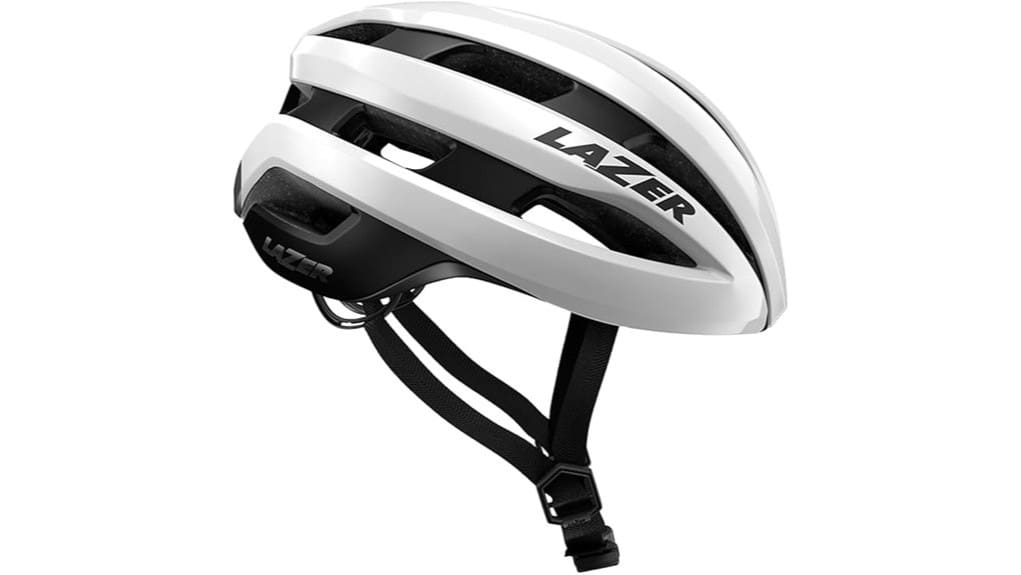
You’ll find the LAZER Sphere MIPS is a lightweight, road‑focused helmet that suits daily riders prioritizing fitness, commuting, and long miles. It uses a Progressive Fit System and secure cradle to cut hot spots and micro‑movement while adjustable straps and replaceable liners manage comfort and moisture. Eighteen vents deliver controlled airflow and cooling, MIPS adds predictable rotational mitigation, and an optional aeroshell trades cooling for aero gains—keep going to see detailed fit, venting, safety, and value notes.
Some Key Takeaways
- Lightweight road helmet with MIPS offering effective rotational-impact mitigation without significant bulk.
- Excellent ventilation via 18 vents and internal channels for sustained cooling on climbs and flats.
- Progressive Fit System and secure cradle deliver predictable, comfortable fit across varied head shapes.
- Optional aeroshell improves aerodynamics and weather protection but reduces ventilation.
- Durable construction, easy maintenance, and good accessory compatibility for long-term value.
Who the LAZER Sphere MIPS Is Best For
If you ride daily for fitness, commuting, or long weekend road miles and prioritize lightweight protection with strong ventilation, the LAZER Sphere MIPS fits that use case well. You get a commuter friendly option that balances low weight, 18 vents for sustained cooling, and MIPS rotational impact mitigation. You’ll appreciate its road-focused geometry and optional aeroshell for speed or foul weather. It suits mixed-surface use—its structure supports gravel suitability for fast, smoother gravel rides but isn’t aimed at aggressive mountain tracks. Choose it if you want efficient ventilation, low mass, and versatile everyday performance without excess features. The helmet is especially well suited to riders seeking a balance of comfort and safety with lightweight protection.
Fit, Comfort, and the Progressive Fit System Tested
When you put the LAZER Sphere MIPS on, the Progressive Fit System immediately reduces hot spots by distributing pressure across the crown and temples, so longer rides stay comfortable without constant readjustment. You’ll notice a secure cradle that clamps evenly, minimizing micro-movement while still allowing natural head rotation. Adjustable straps cinch cleanly without slipping; buckles sit low and don’t chafe. Liner materials balance moisture-wicking and padding density, durable yet replaceable after heavy use. Overall, fit is predictable across sizes, forgiving for varied hair and head shapes, and engineered to let you ride freely with confidence and low fatigue. This helmet is a strong choice for mountain bikers seeking optimal protection and comfort thanks to its integration of helmet safety features.
Ventilation and Cooling Performance (18 Vents in Real Rides)
Typically, you’ll feel the LAZER Sphere MIPS move air efficiently through its 18 vents, translating to noticeable cooling on rides from cool mornings to hot afternoons. You’ll notice directed airflow patterns that channel air from front intakes to rear exhausts, reducing hot spots. The vent sizing balances pressure drop and throughput, so you get cooling without excessive noise. Sweat management is effective: internal channels guide moisture away from contact points and the liner wicks efficiently between washes. On sustained climbs the helmet vents maintain temperature control, and on flats you retain airflow continuity—practical, liberating ventilation for everyday road use. The helmet’s design reflects commuter-focused priorities like commuter bike helmets, emphasizing comfort and practical protection for daily riders.
Safety, MIPS Protection, and Optional Aeroshell Benefits
Because the Sphere integrates MIPS you get measurable rotational-impact mitigation without adding bulk, and the hard-shell plus EPS liner deliver predictable linear-energy absorption for direct strikes. You’ll notice controlled deceleration in independent impact testing, with forces routed away from the skull via the low-friction MIPS layer. Shell materials resist scuffing and spread load across the liner, maintaining structural integrity after minor impacts. The optional aeroshell seals vents for improved aerodynamics and protects finish against abrasion and UV, trading some cooling for speed. For riders who value freedom and risk management, the system balances protection, weight, and real-world performance. Helmet Picks for better bike helmets helps riders find products related to bike helmets and informed purchasing decisions.
Value Verdict : Durability, Accessories, and Whether to Buy
The Sphere’s protective performance and optional aeroshell lead directly into how it holds up over time and what you actually get for the price. You’ll appreciate robust build quality: tough shell, clean seams, and a durable retention system that resists daily wear. Accessory compatibility is good — the aeroshell fits securely, and common mounts don’t interfere. Maintenance costs stay low if you rinse and replace pads periodically; no proprietary service required. Resale value should remain reasonable for a well-kept unit. Buy if you want lightweight, reliable protection with modest long-term expense and adaptable accessories. This helmet is also a sensible match for cyclists who pay attention to chain checker maintenance and want gear that complements their overall bike care routine.
Some Questions Answered
What Sizes Are Available and How Do I Measure for the Right Fit?
Sizes typically follow a size chart: Small, Medium, Large. You’ll measure head circumference to choose between them. Wrap a soft tape around the widest part of your head, about 1 cm above eyebrows, keeping tape level. Compare that measurement to the size chart and pick the closest match; if you’re between sizes, opt for the larger and use fit pads or the Progressive Fit System to fine-tune. Try before you ride.
Is the Helmet Compatible With Bike Lights or Cameras?
Yes — you can attach lights and cameras, but check mounting options. You’ll find a rear mount interface for many rear lights and the helmet’s accessory compatibility supports low-profile mounts and an optional aeroshell. You’ll want lightweight mounts that won’t disturb fit or balance; avoid heavy action cameras unless you confirm secure attachment points. Overall, you’re free to run essential lights/cameras, just prioritize approved mounts for safety and comfort.
How Much Does the Aeroshell Add to Weight and Storage Size?
The aeroshell adds roughly 30–50 grams to overall weight and modestly increases storage footprint by about 20–30% when packed. You’ll feel a small weight penalty (aeroshell weight) but gain aerodynamic and protective benefits. The storage footprint expands because the shell’s rigid profile prevents tight nesting; you’ll need slightly larger bag space or dedicated pocket. Overall, it’s a compact trade-off that preserves mobility while improving performance.
Can I Wash the Helmet Pads and How Do I Clean It?
Yes — you can remove and machine wash the helmet pads, but follow manufacturer temp and cycle limits to avoid shrinkage or foam degradation. For the shell and foam, wipe with mild soap and water; don’t submerge or use solvents. For persistent sweat smells, use odor elimination methods like diluted vinegar or baking-soda sprays, then air-dry fully in shade. You’ll maintain fit, function, and freedom to ride without lingering odor.
Does the Helmet Come With a Warranty and What’s Covered?
Yes — you get a manufacturer warranty; it typically lists a warranty duration (often 2 years) covering defects in materials and workmanship. You’ll need proof of purchase to start the claim process; follow the maker’s online form or dealer route, describe the defect, and include photos. Cosmetic wear and crash damage usually aren’t covered. You’re free to verify exact terms with your retailer or the manufacturer before riding.