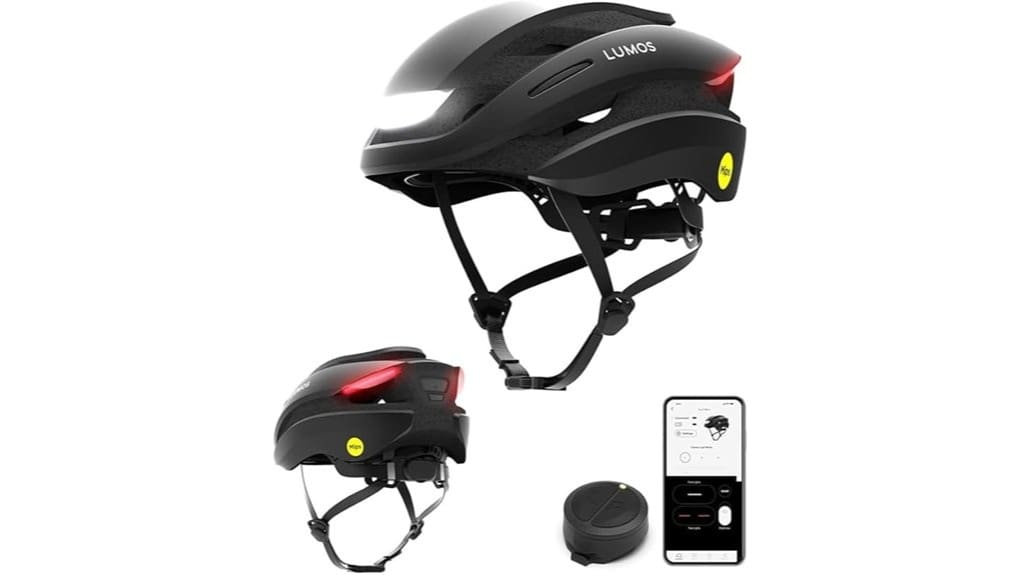
You’ll get measurable visibility gains and clearer hands‑free signaling with the Lumos Ultra, a CPSC‑certified helmet that pairs bright front/rear LEDs and a wireless handlebar remote to reduce collision risk. LED patterns include steady, pulsing, and alert modes; signals auto‑cancel and sync across team helmets when Bluetooth holds. Battery runs about 10 hours, USB‑C recharges quickly, and the app lets you customize patterns and monitor battery health. Keep going to see detailed pros, cons, and who it’s best for.
Some Key Takeaways
- High-visibility front and rear LEDs significantly improve conspicuity for oncoming and trailing traffic, lowering collision risk.
- Wireless handlebar remote provides clear left/right turn signals without removing hands, with automatic canceling to reduce errors.
- Bluetooth app enables LED pattern, brightness customization, ride logging, and Team Sync for coordinated group signaling.
- Battery lasts up to about 10 hours typical use, charges via USB-C in a few hours; expect gradual degradation over months.
- CPSC-certified safety, higher upfront cost but potential resale value and strong suitability for commuters and group ride leaders.
Verdict: Is the Lumos Ultra Worth Buying for Cyclists?
While no helmet can eliminate all riding risks, the Lumos Ultra delivers clear, evidence-backed safety gains you can quantify: its front and rear LEDs boost multi-angle visibility, wireless handlebar turn-signal control reduces hand-signal ambiguity, and CPSC certification confirms it meets U.S. safety standards. You’ll notice improved safety perception from motorists and fellow riders, which lowers collision risk. Battery life and app customization support consistent use, reinforcing protective behavior. For independent cyclists who value freedom, the Ultra balances tech and compliance. Consider higher initial cost against potential resale value and reduced incident likelihood when deciding if it’s worth buying. This review is part of our broader look at products that help riders brighten your ride.
What the Lumos Ultra Lights, Turn Signals, and Remote Actually Do
See the Lumos Ultra’s lighting system in action: bright, front-facing LEDs make you visible to oncoming traffic, a rear LED array increases conspicuity from behind and the sides, and handlebar-mounted wireless controls let you trigger clear left/right turn signals without taking your hands off the bars. You get distinct LED patterns for steady, pulsing, and alert modes that improve detectability at intersections. The wireless remote’s ergonomics prioritize thumb access so you keep control and balance. Signals cancel automatically, reducing human error. This system reduces collision risk by communicating intent clearly; practice familiarizes you with timing and response. Our store also recommends pairing the helmet with compatible bike camera mounts for capturing rides and enhancing safety.
How Smartphone Connectivity, Customization, and Team Sync Perform
Because the app gives you direct control over LED patterns, brightness, and ride tracking, you’ll quickly see how much of the helmet’s utility depends on a reliable phone link. You’ll use app personalization to set visible, legally compliant signals and log rides; tests show settings respond within seconds over Bluetooth, but occasional dropouts occur in dense urban canyons. Team Sync for Group rides reliably aligns patterns across helmets when connections are stable, reducing miscommunication risk, though you should verify sync before departures. Overall, the system empowers independent navigation and coordinated riding, provided you manage connection risks proactively. Many riders pair helmets with GPS bike trackers to add location security and post-ride tracking.
Battery Life, Charging, and Day-to-Day Reliability
Having reliable battery performance is key after you’ve set up patterns and sync, since a dead helmet negates your signaling and tracking. The Lumos Ultra delivers up to 10 hours per charge in typical use; you should expect lower runtime with continuous turn-signal use or max brightness. Track cumulative Battery degradation over months—capacity will fall with charge cycles, so inspect performance quarterly. Charging ergonomics are straightforward: a USB‑C cable fits easily and recharges fully in a few hours. For day-to-day reliability, charge nightly before long rides, monitor app battery reports, and carry a short cable to mitigate unexpected drain. Choose accessories and replacement parts from reputable retailers like those specializing in helmet lights to ensure compatibility and longevity.
Who Should Buy the Lumos Ultra : Use Cases, Alternatives, and Value Comparison
If you ride in traffic, commute at dawn or dusk, or lead group rides where clear signaling matters, the Lumos Ultra is a strong choice because it combines high-visibility front and rear LEDs, handlebar remote turn signals, and app-enabled customization that reduce collision risk and communication errors. You should buy it if commuter safety is a priority, you value synced team lights for group freedom, or you want reliable ten-hour battery life with USB-C convenience. Consider cheaper helmets with reflectors if budget limits you, or the Ultra for its proven gift appeal and documented safety certification when visibility matters most. Bright commute gear like bike commuter lights can further enhance safety and visibility on the road.
Some Questions Answered
Is the Helmet Waterproof or Weather-Resistant?
No, it isn’t fully waterproof, but it’s weather-resistant for typical rides. You can rely on up to 10 hours of battery life in normal wet conditions, yet you shouldn’t submerge it or expose ports to heavy rain. Color options and LED electronics are sealed for splashes, but prolonged exposure or high-pressure water can risk damage. Treat it like tech: avoid immersion, dry it quickly, and store it protected to preserve function and safety.
How Heavy Is the Lumos Ultra Helmet?
The Lumos Ultra helmet weighs about 14.8 ounces (420 grams), so you won’t feel overly burdened on long rides. You’ll still want to take into account battery life — up to 10 hours — since added electronics affect overall endurance. Ventilation performance remains good for a sleek smart helmet, but the integrated LEDs and battery slightly reduce airflow compared with minimalist helmets, which is a modest trade-off for the added visibility and features.
What Sizes and Fit Adjustments Are Available?
You get multiple shell sizes and an adjustable retention system to dial fit precisely; it’s designed to suit small through large heads. You’ll find removable liner options to fine-tune comfort and manage sweat or replace worn padding. That combination reduces slippage and pressure points, lowering injury risk from poor fit. Use the retention and liners to maintain a secure, stable position for safer, freer riding.
Does It Include Crash Detection or Emergency Alerts?
No, it doesn’t automatically send crash alerts, but you can monitor risk proactively: you’ll get battery monitoring and app integration to track ride data, LED status, and sync lights. You’ll need to rely on your phone’s emergency apps or third-party services for automatic crash detection and alerts. For freedom-seeking riders, pair the helmet with your phone and configure safety apps to minimize response time if an incident occurs.
Are Replacement Parts and Accessories Sold Separately?
Yes — replacement parts and accessories are sold separately. You’ll want to confirm battery lifespan replacements, mounting options for remotes or lights, material durability of shell and padding, and available color choices before buying. Rely on manufacturer specs and verified sellers to minimize risk of incompatible components. That lets you maintain freedom to customize, secures safety compliance, and reduces failure points when you replace batteries, mounts, or worn materials.