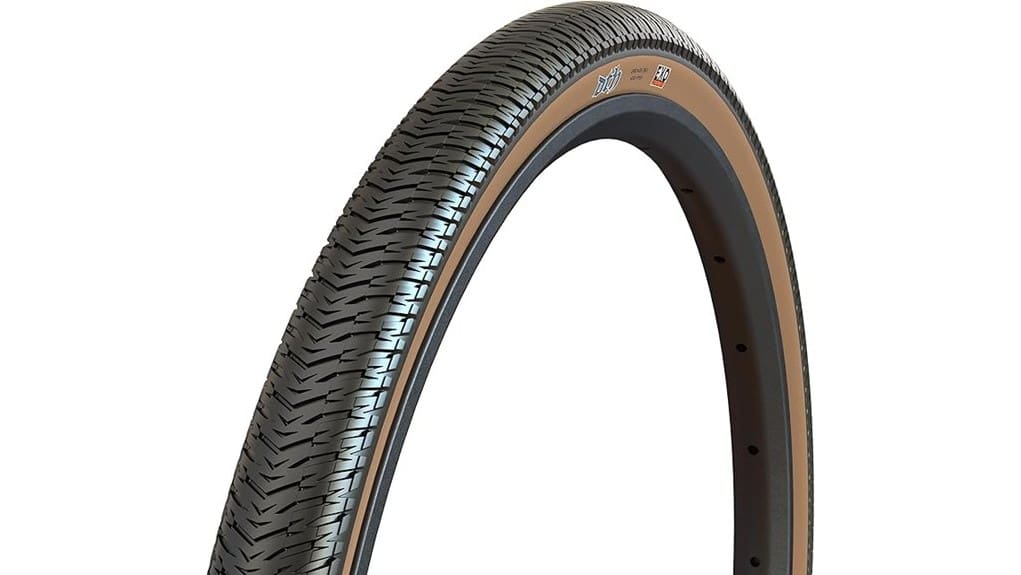
You’ll get a compact 26×2.15 tire that’s built for BMX and dirt jumps, weighing about 315 g with a tan sidewall and EXO protection. It uses a single-compound grooved slick tread for low rolling resistance, crisp acceleration, and predictable cornering on groomed dirt and pump tracks. It favors momentum and pop over raw bite and trades some longevity for lightness. If you want agility and straightforward performance, this is a smart pick — keep going to see full specs and fitment tips.
Some Key Takeaways
- Lightweight 26×2.15 tire (315 g) designed for low rotating mass and quick acceleration on pump tracks and jumps.
- Grooved slick tread and single-compound rubber deliver predictable cornering and minimal rolling resistance.
- EXO sidewall protection improves sidecut and pinch resistance for aggressive landings and street use.
- Prioritizes speed and nimble handling over maximum bite; less traction than knobbier options on loose dirt.
- Best for riders valuing agility and momentum; consider heavier, dual-compound tires for extra durability and grip.
What the Maxxis DTH Is and Who It’s For
As a compact, purpose-built BMX and dirt-jump tire, the Maxxis DTH (Drop the Hammer) pairs a grooved slick tread and single-compound rubber to deliver predictable, low-rolling-resistance performance on pump tracks and jump lines. You’ll recognize it as a focused tool: 26×2.15 sizing, tan sidewall, EXO protection, 315 g item weight—optimized for aerial precision and quick pump-track shifts. It suits aggressive riders seeking maneuverability and minimal drag; rider demographics skew toward male BMX and dirt-jump enthusiasts who value simplicity and reliability. The aesthetic appeal is clean and purposeful, matching bikes built for freedom and controlled flight. This tire is a strong fit for riders shopping on a mountain bike gear site looking to gear up.
Key Specs and Construction That Matter for BMX and Dirt Jumps
Because every gram and millimeter counts on jumps and pump tracks, the DTH’s 26×2.15 size, 315 g weight, and single-compound grooved slick tread work together to prioritize low rolling resistance, predictable grip, and quick direction changes. You get EXO sidewall protection without tubeless complexity, so sidecut and pinch resistance improve confidence on aggressive landings. The tan aesthetics signal classic BMX style while keeping weight minimal. Construction choices favor simplicity: uniform compound for consistent feedback and a slick groove pattern that represents tread evolution toward low-drag, high-faithfulness steering. For freeriders seeking purist control, these specs deliver focused performance. The tire’s design ethos aligns with products often sold by retailers specializing in full suspension mountain bike gear, catering to riders who value both performance and simplicity with focused product selection.
How the DTH Performs on Pump Tracks, Dirt Jumps, and Street
When you push the DTH on pump tracks it accelerates with minimal drag, the slick grooved tread and single compound delivering crisp, predictable roll and quick lateral shifts. You’ll notice sustained pump track speed through berms; the low rolling resistance lets you keep momentum without fighting grip chatter. On dirt jumps the carcass tracks cleanly, offering consistent landing control and a predictable rebound that’s easy to time. Street riding feels efficient—firm ride, direct feedback, and nimble steering for manuals and gaps. The EXO sidewall reduces bite risk on curbs, keeping you committed when you choose to push harder. The tire’s design complements a rider’s pedal setup, making it a solid match for riders focused on mountain bike pedals and performance.
How It Compares to Other BMX/Dirt-Jump Tires (Grip, Weight, Durability)
Although it’s aimed at speed and predictability, the DTH trades a bit of ultimate bite for lower rolling resistance compared with knobbier BMX and dirt-jump tires; its grooved slick and single compound give you fast, predictable cornering on groomed dirt and pump tracks but won’t match the hooked edges of sticky, multi-compound tires on loose or technical exits. You get a light 315g casing and low profile tread that favors momentum and pop over raw traction. Durability is solid thanks to EXO sidewall protection, though single compound wears faster than dual compounds. For weight-conscious riders seeking freedom, competitive pricing seals the deal. This tire is a great pick for riders shopping for bike tires who prioritize speed and predictability over ultimate bite.
Fitment, Installation Tips, and Final Buying Recommendation
Having covered how the DTH balances speed and grip, let’s look at fitment and installation so you get its light, low-profile performance on your wheel. Use this fitment guide: confirm 26×2.15 rim clearance and check hub spacing; EXO sidewall needs straight beads to avoid pinching. For installation tricks, warm the tire in sun or with a light heat source, seat one bead, inflate slowly, and re-seat the bead manually before final inflation. You’ll accept tradeoffs: minimal padding for low weight. Buy the DTH if you prioritize agility and track freedom; otherwise pick a bulkier, more protective tire. For removing and installing cassettes or other hub work, keep essential tools like a chain whip and cassette lockring tool handy and know how to use them; see cassette removal tools for guidance.
Some Questions Answered
Is This Tire Compatible With Tubeless Setups?
No — it’s not tubeless compatible. You can’t rely on a tubeless conversion with this non-tubeless Maxxis DTH tire; its single-compound, non-tubeless casing and EXO sidewall aren’t designed for airtight bead seating. While you could experiment with tubeless conversion and air sealant compatibility, expect poor bead seal and higher failure risk. If you want tubeless reliability and freedom from flats, choose a tire explicitly rated for tubeless-ready setups.
Can I Use the DTH on E-Bike or Motorized BMX?
No — you shouldn’t use the DTH on e-bike or motorized BMX. The tire’s single-compound, non-tubeless construction and BMX-oriented 26×2.15 spec aren’t designed for sustained higher speeds, torque, or continuous motor heat; EXO sidewall helps, but motorized compatibility is limited. You’ll need a tire rated for e-bike speeds and load. Also check local legal considerations and manufacturer recommendations to guarantee safety and compliance before converting or riding.
Does the Tan Sidewall Discolor With Cleaning Products?
No — the tan sidewall generally won’t discolor with mild cleaners, but you should test first. You’ll want to perform simple colorfast testing: apply a small amount of your cleaner to an inconspicuous spot, let it sit, then blot. If no transfer or fading appears, it’s compatible. Avoid harsh solvents, aggressive bleach, or petroleum-based degreasers; they can degrade rubber and finish. Stick to pH-neutral bike cleaners for safe cleaning compatibility.
Are Replacement Parts or Spare Sidewalls Available?
No — you won’t find replacement parts or spare sidewalls for this tire. The DTH is a single-piece, non-tubeless construction with integrated EXO sidewall protection, so Maxxis sells whole tire units only. If the tan sidewall or casing gets damaged, you’ll need to replace the tire. That limits field repairs, but keeps the design simple and predictable for riders who prefer swapping complete tires rather than patching components.
Is There a Performance Difference in Colder Climates?
Yes — you’ll notice some performance change in colder climates. Rubber hardening reduces grip and makes the single compound feel stiffer; you’ll get less traction on landings and corners. Compensate with lower pressure adjustments to regain compliance and cushioning, but don’t go so low you pinch or destabilize the wheel. Overall, the tire still works, but expect slightly reduced bite and a firmer ride until temperatures rise.