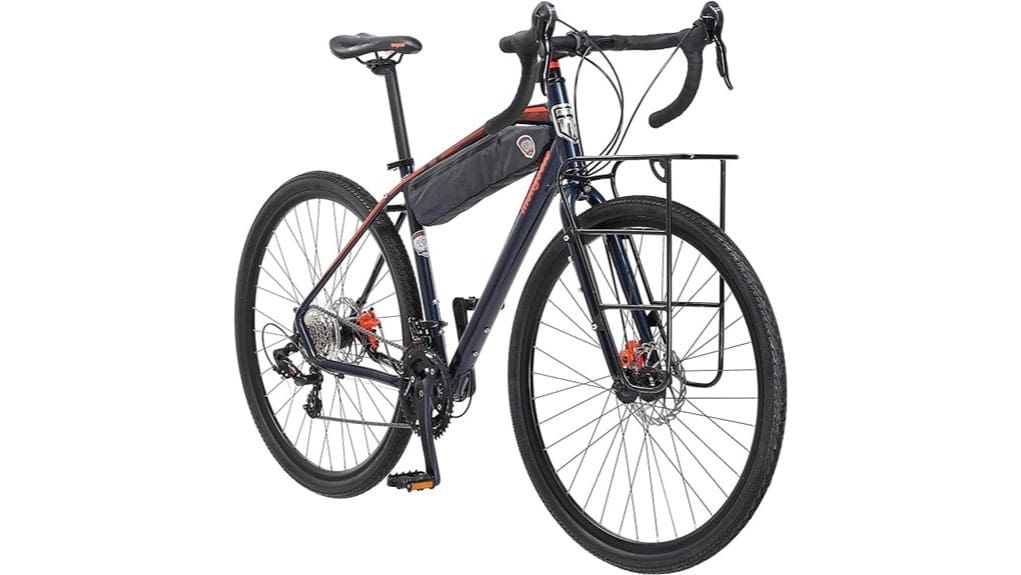
You get a stable, budget-friendly adventure bike that favors low-maintenance reliability over race speed. The 54 cm alloy frame and slacker geometry keep you comfortable and composed on rough gravel and urban roads, while the steel fork soaks vibration without feeling mushy. A 2×7 Shimano Tourney setup with MicroSHIFT levers is durable and serviceable, and mechanical discs offer predictable stopping under load. Plenty of rack, bag, and bottle mounts boost its touring utility—keep going to see specifics and comparisons.
Some Key Takeaways
- Stable alloy frame and slacker geometry prioritize control on rough gravel and urban roads.
- Steel fork and upright fit improve vibration damping and long-ride comfort without mushy handling.
- 2×7 drivetrain with Shimano Tourney and MicroSHIFT shifters offers durable, low-maintenance gearing.
- Mechanical disc brakes provide reliable, modulated stopping for loaded touring and descents.
- Large front rack, rear mounts, and ample bottle mounts make it well-suited for self-reliant multi-day touring.
Real-World Ride Summary: How the Mongoose Elroy Adventure Bike Handles Trails and Commutes
Hit the trail or roll through the city and the Mongoose Elroy feels composed and purposeful: its alloy frame and adventure-touring geometry keep you stable on rough gravel and confident during tight urban maneuvers. You notice immediate control—precise steering, predictable suspension feedback from the steel fork, and firm braking that lets you modulate speed into corners. Trail handling is balanced: it absorbs chatter without wandering. Urban agility shows in quick direction changes and steady hauling with racks loaded. Gear range covers steep climbs and fast flats, and shifting stays functional under load. You get dependable, liberated performance for mixed-route riding. The site also offers a selection of gear for adventure bikes, including accessories and parts for riders looking to gear up.
Frame, Fork, and Geometry: What the 54 Cm Alloy Frame and Steel Fork Mean for Fit and Comfort
Because the 54 cm alloy frame pairs a relatively light, stiff chassis with an adventure-touring geometry, you’ll get a ride that balances efficiency and stability: the frame keeps pedaling energy well-directed for longer efforts while the slacker head tube and longer wheelbase tame twitchiness on rough surfaces. You sit slightly upright compared with race bikes, so your riding posture stays comfortable for long days and better for visibility and cargo control. The steel fork adds controlled compliance, improving vibration damping through your hands and shoulders without mushy handling. Together they deliver predictable steering, confident load-bearing, and long-distance comfort. This setup is ideal for riders seeking adventure-touring frames that blend on-road efficiency with off-road capability.
Drivetrain, Shifting, and Brakes: 2×7 Setup, Shimano Tourney, MicroSHIFT, and Mechanical Discs Explained
While the Elroy’s 2×7 setup keeps things straightforward, it gives you a broad, dependable gear range for loaded touring and mixed-surface riding without unnecessary complexity. You get simple ratios suited to climbs and flats; chainline and cadence stay predictable when loaded. The Shimano Tourney rear derailleur is durable and easy to service, though precise gear indexing can be basic compared with higher-tier groups. MicroSHIFT integrated shifter/brake levers are ergonomic and intuitive, pairing well with the mechanical disc brakes. Expect reliable stopping power and clear brake modulation for controlled descents and heavy loads—practical, low-maintenance, freedom-focused. This setup is ideal for riders who value bike cassettes knowledge and straightforward maintenance.
Cargo and Hydration Features: Front Rack, Rear Mounts, Frame Bag, and Multiple Bottle Options
Having dependable gearing and brakes makes it easier to carry real loads, and the Elroy answers with thoughtful cargo and hydration provisions built for multi-day travel. You get a large front rack rated for twin panniers and a rear rack mount for extra gear, letting you balance weight front-to-rear for stable handling. The integrated frame bag uses space efficiently for tools and snacks; it’s low and central for predictable packing strategies. For hydration placement, three frame mounts plus two on the fork let you carry ample water and fuel long days. This setup favors self-reliant riders who prioritize range and resilience. The bike pairs well with panniers and racks commonly recommended for touring gear.
Should You Buy One? Price-Fit-Use Recommendations and Comparable Alternatives
If you want a budget-friendly adventure bike that prioritizes cargo capacity and practical mounting options, the Mongoose Elroy is worth considering — especially if your rides lean toward loaded touring rather than fast gravel or aggressive singletrack. You’ll get sturdy alloy frame, roomy front rack, rear mount and three bottle bosses for a low cost. Price recommendations: buy new if you need warranty and parts support; consider used if you inspect drivetrain and fork. It won’t satisfy high-speed racers; look to alternative brands like Surly or Kona for steel touring rigs, or Specialized and Giant for faster gravel options. Consider adding essential touring gear like racks, panniers, and lights to fully outfit the bike for longer trips and cargo-focused riding.
Some Questions Answered
Does the Bike Come With a Warranty and What Does It Cover?
Yes — you get a limited manufacturer warranty; warranty duration typically covers the frame for one year and components for 90 days, though exact terms vary by seller. You’ll want to confirm coverage specifics for wear items (tires, brake pads), crashes, and misuse. Keep receipts and register the bike; that preserves claims. If you want broader protection, consider third-party insurance or an extended plan to safeguard your freedom to ride without unexpected costs.
Can I Fit Wider Tires Than Stock 700C Sizes?
Yes — you can fit wider tires, but you’ll need to check frame clearance and consider wider rims for proper support. Measure existing tire width and available fork and chainstay gaps; add ~6–10mm per side for safe clearance. Wider rims change tire profile and rolling resistance, so choose tires rated for your rim width. If clearance’s tight, opt for narrower increases or swap to a rim with compatible width to avoid rubbing.
Are Replacement Parts (Racks, Bag) Proprietary or Standard?
They’re mostly standard: the front rack and rear rack mount accept third party mounts and universal panniers, so you won’t be locked into proprietary gear. The integrated frame bag is stitched to fit the frame but can be swapped for common frame bags or aftermarket alternatives using existing mounts. You’ll want to check bolt spacing and clearances, but you can freely choose most racks and bags without being constrained to proprietary replacements.
What Is the Bike’s Total Weight With Front Rack Installed?
About 32–34 pounds with the front rack installed. You’ll appreciate that cargo capacity is balanced by the bike’s adventure-touring frame geometry, so added weight won’t destabilize long rides. You’ll still want to mind load limits and distribution—use panniers low and centered. If you plan heavy touring, you’ll swap components or adjust packing to keep handling crisp. This weight gives you freedom to carry gear without sacrificing predictable control.
Is Assembly Required at Purchase or Delivered Pre-Assembled?
You’ll typically receive the bike partially assembled; you’ll need to finish assembly. Follow a concise pre ride checklist and use clear assembly tips: torque stem and handlebars, install front wheel and rack, align brakes, adjust shifting, inflate tires, and secure bolts. Tighten pannier mounts and check rack stability. You’ll want a final safety check and short test ride. If you’re unsure, get a pro tune-up before loaded touring.