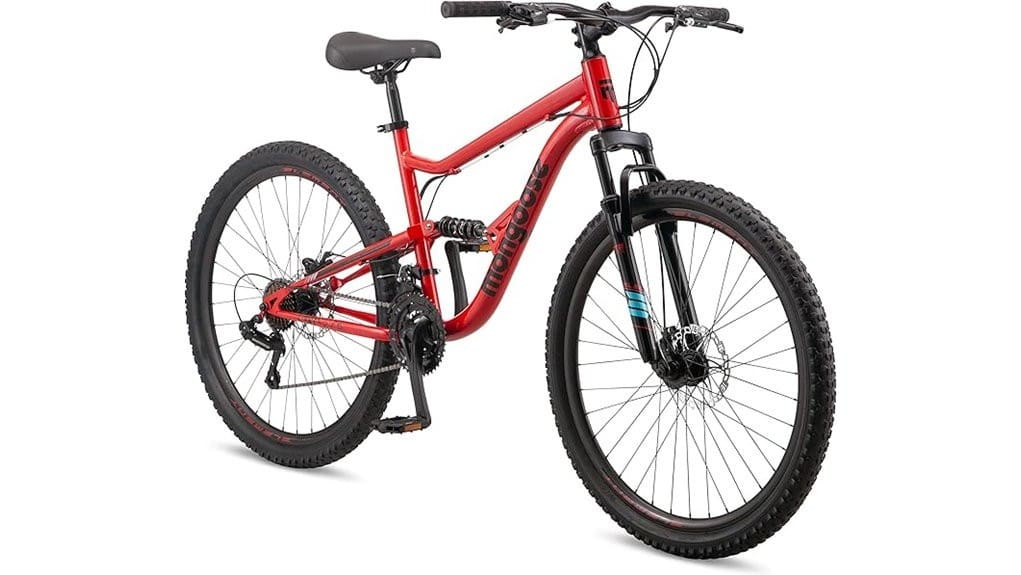
The Mongoose Status gives you a confidence-first, comfort-oriented full‑suspension ride that favors stability over aggressive handling. Its aluminum front triangle and steel rear add durability but a bit of weight; the fork and rear shock soak bumps well for rolling singletrack. The 21-speed drivetrain and mechanical discs are functional but benefit from initial tuning, and the 2.3-inch tires trade pavement speed for traction. It’s great for weekend trails and rough commutes — keep going to see detailed tradeoffs and upgrade tips.
Some Key Takeaways
- Stable, confidence-oriented full-suspension bike with aluminum front triangle and steel rear triangle, best for casual trail riding.
- Comfortable 27.5-inch geometry and 2.3-inch knobby tires absorb rough terrain but add weight and pedal bob.
- 21-speed drivetrain and mechanical disc brakes deliver reliable performance; initial gear tuning and brake modulation recommended.
- Durable construction suits weekend trails and rough commutes, though rear steel triangle may need maintenance.
- Consider tubeless tires, lighter wheels, and commuter accessories if you want better rolling efficiency and daily practicality.
Mongoose Status at a Glance: Specs, Sizing, and Who It’s For
While it keeps a confidence born from Mongoose’s 50‑year action-sports pedigree, the Status is built for practical trail use: an aluminum full‑suspension frame with a steel rear triangle, a suspension fork up front and a rear shock give you true 27.5‑inch full‑suspension geometry, 2.3‑inch knobby tires on lightweight alloy rims give traction on mixed terrain, and a 21‑speed drivetrain with trigger shifting and mechanical disc brakes covers common trail challenges. You’ll appreciate sensible wheel diameter choice and compact rider fit (53–60 inches). Frame geometry and weight distribution favor stability over aggression, ideal if you prize confidence and range. Consider upgrading to lighter alloy wheels for improved rolling efficiency and responsiveness on road-to-trail rides with road bike wheels.
How the Status Rides: Frame, Suspension, and Handling on Trails
Because the Status pairs an aluminum full‑suspension front triangle with a steel rear triangle and a compliant rear shock, you get a balanced ride that favors stability and confidence over aggressive pop. You’ll notice planted cornering thanks to the rear’s forgiving compliance and the fork’s controlled travel; the bike holds lines without twitchy reactions. On rolling singletrack its pedaling efficiency is respectable for casual climbs, though the mixed materials and softer rear dampen snappy sprinting. Handling feels predictable and reassuring if you prize freedom over race aggression. Expect durable, user-friendly behavior rather than cutting-edge responsiveness. For riders choosing the right frame, matching your riding style to the bike’s construction helps ensure the best fit and satisfaction.
Component Deep Dive: Drivetrain, Brakes, Wheels, and Tires Performance
Settling into the Status’s confident yet forgiving chassis, you’ll next want to judge whether its component kit matches that temperament. The 21-speed drivetrain shifts predictably with the trigger shifter, but expect initial gear tuning to smooth index clicks and prevent chain rub. Mechanical disc brakes offer firm stopping power; work on brake modulation to avoid abrupt bite on mixed surfaces. Alloy rims are light but check wheel trueing after rough rides—spoke tension can settle. Knobby 2.3-inch tires grip well; consider tire tubelessing for fewer punctures and better traction. Overall, capable kit that benefits from slight setup. Also consider choosing the right mountain bike tires for your ride by prioritizing tread pattern and puncture resistance mountain bike tires.
Real-World Pros and Cons for Casual Riders and Commuters
Frequently, you’ll find the Status strikes a practical balance for casual riders and commuters: its full-suspension frame and 2.3-inch knobby tires give a comfortable, confidence-inspiring ride on mixed surfaces, while the 21-speed drivetrain and mechanical disc brakes handle varied terrain and stops without fuss. You’ll appreciate comfort vs. efficiency trade-offs—suspension soaks bumps but adds weight and pedal bob on long flats. Tires grip grit but slow you on pavement. Commuting gear isn’t integrated; you’ll need racks, lights, and fenders for daily use. Overall, it’s freeing for weekend freedom and rough commutes, but not optimized for fast, light city rides. For city riders looking to adapt it for daily use, consider adding commuting accessories to improve practicality and visibility.
Should You Buy It? Price, Alternatives, and Final Recommendation
You’ve seen how the Status balances comfort and trail-ready features with compromises in weight and commuting convenience, so now ask whether it’s worth buying given price and alternatives. If you want weekend freedom on dirt, its full-suspension aluminum frame and 21-speed drivetrain deliver solid feel at a modest price. Do a price comparison with alternative brands—brands offering lighter frames or better brakes may cost more. Consider long term value: expect maintenance on rear steel triangle and mechanical discs. Buying tips: test-ride for fit, check warranty, and compare component upgrades. Buy if trail comfort beats commuter needs. For wheel-focused upgrades, consider choosing mountain bike wheels that match your riding style and frame compatibility.
Some Questions Answered
Does It Include a Warranty and What Does It Cover?
Yes — the bike typically includes a warranty; you’ll want to confirm the exact warranty duration with the seller. It generally covers manufacturing defects in frame, fork, and components, but it excludes damage from crashes, misuse, normal wear, and unauthorized modifications. You’ll need proof of purchase for claims, and labor or shipping may not be covered. Check manufacturer terms for precise coverage exclusions so you’re not surprised.
Can I Fit Wider Tires or Different Wheel Sizes?
Yes — you can fit slightly wider tires, but you’ll need to check tire clearance and wheel compatibility first. Measure the frame and fork spacing and guarantee the 2.3-inch knobbies have room for mud and flex. Switching wheel sizes is more complex: hub spacing, brake rotor alignment and frame geometry must match. You’ll want compatible rims and possibly new shims or adapters; otherwise you’ll limit performance and safety.
Is Assembly Required and How Difficult Is It?
Yes — some assembly’s required. You’ll unpack the box contents, mount the front wheel, handlebars, seat, pedals and connect brakes/shifter. It isn’t rocket science, but you shouldn’t wing it: follow the manual and tighten to the listed torque specs, especially on stem, seatpost and pedals. If you crave freedom, do it yourself for satisfaction; otherwise a bike shop can finish it quickly and guarantee safe setup.
Are Replacement Parts Widely Available Locally?
Yes — you’ll usually find replacement parts locally, though availability can vary. Local dealers stock common items like tires, tubes, brake pads and cables, and you’ll often rely on aftermarket compatibility for shocks, rims and specific drivetrain pieces. You should expect to shop both dealer inventory and online suppliers for harder-to-find components. Stay flexible, check specs, and prioritize parts that maintain ride freedom and durability.
What Is the Bike’s Weight and Portability for Transport?
You’ll find the bike’s overall weight modest but not ultralight; its aluminum frame weight helps keep it rideable for lifting and loading, though the steel rear triangle and full-suspension bits add heft. It doesn’t offer folding options, so you’ll need a rack or trunk space for transport. If you crave freedom, plan for a sturdy carrier and expect a bit more bulk than a dedicated folding or minimalist trail rig.