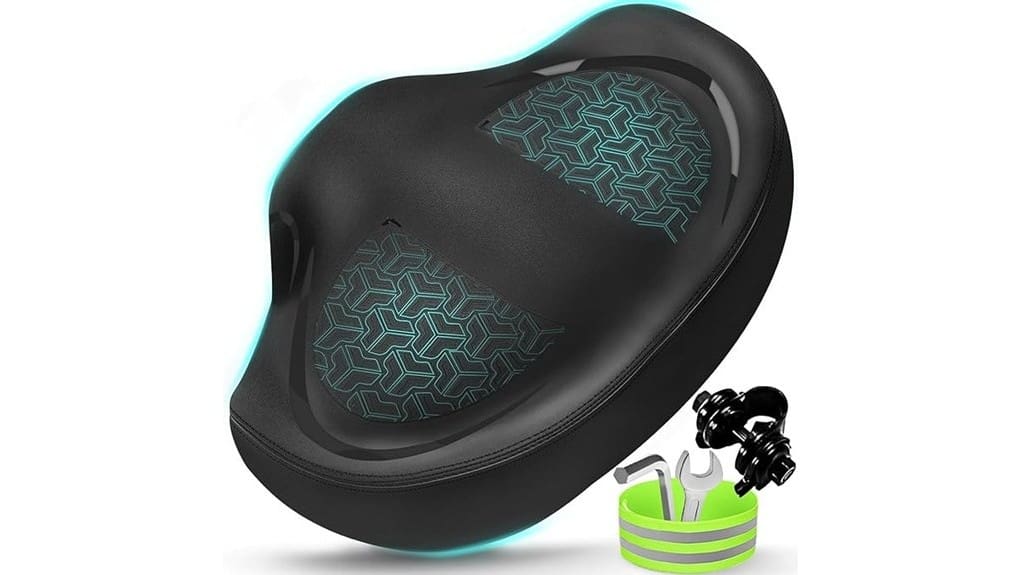
You’ll find this noseless bike seat cushion shifts load to your sit bones, easing perineal pressure with a wide, concave pad and cooling-gel memory foam. It’s best for hips ~11–15″ and pairs with most road, e‑bike, cruiser, and many exercise bikes (adapters may be needed). Dual springs and silicone damping absorb bumps but can warm on long rides and may tire over time. It’s a strong choice for comfort-focused riders—keep going to see fit, install, and use tips.
Some Key Takeaways
- Noseless, concave design shifts weight to sit bones, reducing perineal pressure and numbness for many riders.
- 12.2″ width suits hip widths ~11–15″; measure hips to avoid edge hotspotting or poor support.
- Memory foam with cooling gel plus silicone layers and springs offers good shock absorption and pressure relief.
- Universal adapter fits most bikes; UNI-3/UNI-4 extensions may be required for some exercise/spin bike linkers.
- Shorter length can change posture and pedaling feel; springs may fatigue over heavy, prolonged use.
Verdict Up Front: Should You Buy This Noseless Bike Seat Cushion?
If you’re seeking a wide, noseless cushion that prioritizes sit-bone support and reduces perineal pressure, this seat is worth considering: it’s roomy (8.6″×12.2″) for hips about 11–15″, uses memory foam with cooling gel and silicone damping to cut impact, and installs quickly with a universal adapter—though you may need a separate UNI-3/UNI-4 adapter for some exercise bikes. You’ll appreciate clear build specs, a waterproof PU surface, and strong springs. Expect reasonable long term durability from dense foam and composite layers, but note spring fatigue after heavy use. Aesthetic options are limited; function outweighs style here. This product is ideal for riders who value sit-bone support and overall comfort on long rides.
How the Noseless Shape and Sizing Affect Comfort for Different Riders
Because the noseless, concave shape removes the traditional nose and widens the contact area, it shifts load onto your ischial tuberosities (sit bones) and away from the perineum, reducing numbness and soft-tissue compression for many riders. You’ll notice comfort depends on fit: the 12.2-inch width suits hip width roughly 11–15 inches, so wider hips get full sit-bone support while narrower hips may need some adjustment. Pressure distribution improves when the sit bones align with the cushion’s widest zone; otherwise you’ll feel hotspotting at edges. Check hip width, trim rails or add risers to optimize alignment and freedom. Our site helps riders compare different comfort saddle options and measurements to find the right match for their anatomy and riding style, including detailed guides on comfort saddle sizing.
Materials, Damping System, and Real-World Shock and Heat Performance
Examine the cushion’s construction and you’ll see a layered approach: a breathable, waterproof PU leather top covers cooling gel and high-density memory foam, while two upgraded shock springs and high-density composite silicone damping layers sit beneath to manage impacts. You’ll feel controlled rebound from the springs and progressive, vibration-absorbing response from the silicone layers. In real rides the silicone converts much impact into warmth—effective heat dissipation but expect surface temperature rise on long efforts. Memory foam cushions pressure, conforms to sit bones, and supports sustained comfort. Overall materials balance cushioning, impact management, and durability for varied road and indoor use. For maintenance and longevity, periodic application of proper bearing grease can help keep suspension components and any metal interfaces moving smoothly.
Installation, Bike Compatibility, and Tips for Adapters or Tricky Exercise Bikes
When you unpack the cushion, you’ll find everything needed for a quick rail-post installation: the universal adapter, two mounting bolts, and simple tools that let you secure the seat in about two minutes. You’ll measure your rail spacing and frame measurements first; confirm hip-width and available seat area to avoid interference. Most road, mountain, cruiser, and e‑bike rails fit directly. For exercise or spin bikes with triangular linkers, source UNI-3/UNI-4 style extensions. If alignment feels off, follow adapter troubleshooting steps: tighten, re-seat, and check bolt torque. Keep the reflective armband accessible and test ride before longer trips. Also consider pairing the cushion with compatible bike repair stands to aid installation and adjustments, especially when working on repair-stand compatible bicycles.
Pros, Cons, and Final Buying Recommendations by Use Case (Peloton, E‑Bike, Cruiser, Spin)
If you ride a lot, this noseless cushion gives clear benefits—wide, concave padding and cooling gel relieve sit-bone pressure and cut thigh friction, while silicone damping and dual springs absorb most road or studio shocks. Pros: robust damping, breathable cover, fits many bikes, good pressure mapping outcomes for wider hips. Cons: shorter length may alter ride posture, springs lose some elasticity over long use; saddle tradeoffs include reduced aerodynamic fit and altered pedaling feel. For Peloton or spin you’ll want firm setup; for e‑bike or cruiser enjoy cushioned comfort. Consider gender differences in hip width when choosing size. This product pairs well with other summer cycling accessories like breathable cycling gloves to keep you cool and comfortable on long rides.
Some Questions Answered
Does This Seat Fit on Children’s Bikes or Youth Frames?
Probably not; youth compatibility is limited because the saddle sizing (8.6″ x 12.2″) suits hip widths ~11–15″. You should measure the child’s seat rail spacing and available seat platform before buying. If the youth frame uses standard rail posts and fits those dimensions, it can work, but many children’s bikes have smaller seats or different mounts. Consider a smaller, youth-specific saddle or confirm adapter fit to guarantee safe installation.
Is the Cover Machine-Washable or Removable for Cleaning?
No — the cover isn’t listed as machine washable, and the product doesn’t advertise a removable cover. You’ll wipe the waterproof PU leather surface clean with a damp cloth and mild soap. Because the padding contains memory foam and cooling gel with integrated silicone layers and springs, you shouldn’t submerge or machine-wash it. If you want a fully removable, machine washable option, consider buying a separate slip-on washable cover compatible with the seat.
Does the Cushion Interfere With Clip-In Cycling Shoes or Pedals?
No, it won’t interfere with clip-in cycling shoes or pedals. The noseless, shortened front and widened base preserve pedal clearance and clipless compatibility for most setups, especially on spin and exercise bikes. You’ll still want to check saddle-to-pedal distance on road bikes with aggressive fits. If your bike uses a triangular seat linker or nonstandard rails, measure before buying and consider an adapter to guarantee proper clearance and secure clipping motion.
Are Replacement Springs or Parts Available Separately?
Yes — you can get replacement springs and spare parts. The manufacturer offers separate replacement springs and other spare parts through their customer service and listed adapters; contact them with your order details. They’ll verify compatibility (spring model, adapter type) and ship parts under lifetime support where applicable. You’ll keep riding without compromise by ordering the needed components, and they’ll assist if you’re unsure which parts match your seat.
Is There a Warranty for Damage From Crashes or Misuse?
No — crash damage or misuse typically isn’t covered. You’ll have a lifetime support policy for defects and fit issues, but warranty exclusions usually bar crash coverage and intentional misuse. You should document damage promptly and contact support; they’ll evaluate options within 24 hours. If you want broader protection, consider separate accident insurance or ask the seller about paid repair/replacement parts or service plans before riding aggressively.