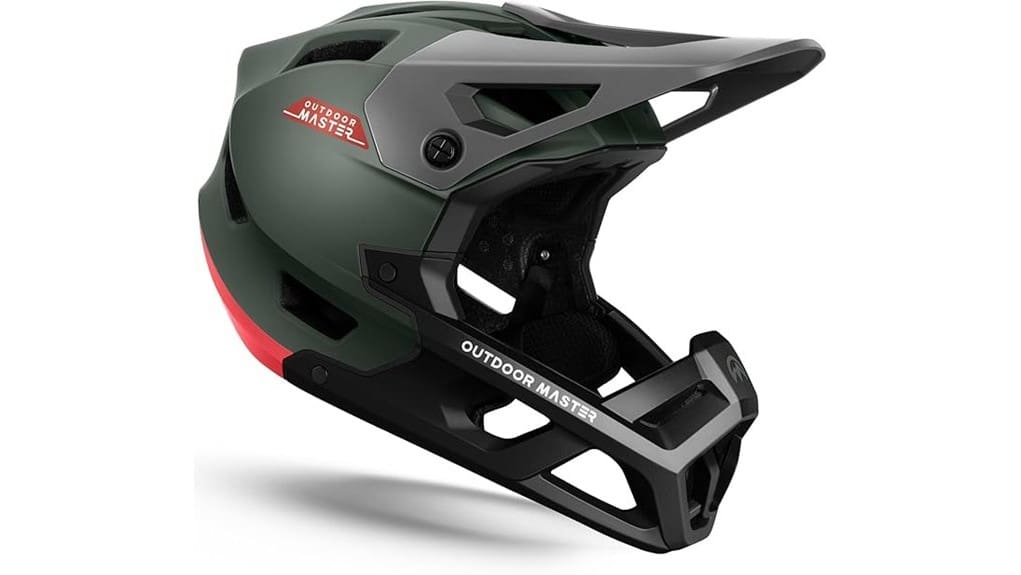
You’ll get near–full-face protection with the Outdoormaster Grizzly: a tough injection-molded shell, chinbar pads, and an EPP collarbone system that spreads impact forces. Venting is effective—27 channels keep air moving without weakening structure. Fit’s adjustable for 57–62 cm heads, with a removable washable liner and two strap thicknesses for secure closure. It’s a solid value for aggressive trail riders who don’t want pro-level price or weight, and the rest of the review covers fit, upkeep, and alternatives.
Some Key Takeaways
- Provides full-face protection with chinbar pads and EPP collarbone impact system for improved shoulder/torso force distribution.
- Well-ventilated with 27 vents and vent routing that reduces eye tear-up while keeping riders cool.
- Typical adult fit covers 57–62 cm, with an adjustable system and removable, washable liner for fit tuning.
- Weighs just under 750 g, balancing protection and manageable weight with even distribution to reduce neck fatigue.
- Best for aggressive trail riders and budget-conscious buyers; alternatives include ultra-light, pro-ventilated, or MIPS models.
Exterior Protection and Ventilation: How the Grizzly’s Full-Face Shell, Chinbar Pads, EPP Collarbone System, and 27 Vents Perform
Although it keeps a low profile, the Grizzly’s full-face shell and chinbar pads deliver solid, confidence-inspiring protection whether you’re charging rough singletrack or nailing a drop. You’ll notice the EPP collarbone impact system spreads forces outward, improving impact distribution across the shoulders and torso. The injection-molded shell resists penetration while staying light. Vent flow testing shows the 27 vents channel air efficiently, keeping you cool on long rides without compromising structure. You’ll appreciate the goggle-strap channel and pivoting visor integration—practical touches that let you ride freer, faster, and with clear-headed confidence. The review also highlights how choosing the right helmet fits into the broader process of selecting mountain bike safety gear, including considerations like fit, protection standards, and intended use helmet selection.
Fit, Comfort, and Sizing: Head Circumference Range, Fit System for Adults, Liner, Strap Options, and Real-World Fit Tips
Typically, the Grizzly fits adults with 57–62 cm head circumferences and uses an adjustable fit system to dial in stability without fuss. You’ll consult size charts and use simple measuring methods—wrap a tape around the brow—to confirm fit before buying. The removable, washable liner offers padding options for firmer or roomier feel; swap inserts to tune contact points. Two D-ring strap thicknesses give secure closure choices and straightforward adjustment tips: snug under the chin, one finger clearance at the jaw. In practice, ride a few minutes, tweak the dial, and trust the fit that lets you move freely. This helmet is aimed at riders who prioritize commuter bike helmets designed for everyday urban use.
Visibility and Accessory Features: Goggle-Strap Channel, Pivoting Visor, and How the Helmet Handles Sun, Wind, and Rain
When you mount goggles, the Grizzly’s recessed goggle-strap channel locks the band in place so your lenses don’t ride up on rough sections, and the pivoting visor gives predictable coverage you can angle to cut sun glare or deflect wind and rain without obscuring your line of sight. You’ll appreciate solid goggle retention during aggressive runs; the channel keeps straps aligned and reduces bounce. Visor ergonomics are tuned for adjustment with gloved hands, offering repeatable positions that won’t shift under impact. Wind routes through vents to limit tear-up, and the visor sheds rain while keeping your view clear and unobstructed. For riders prioritizing safety and fit, choosing the right helmet with proper ventilation and comfort features helps prevent fatigue and injury helmet fit.
Weight, Durability, and Maintenance: Actual Weight (~750 G), Construction Quality, Washable Liner, and Long-Term Care
Shifting from how the Grizzly handles goggles and weather to its build and upkeep, you’ll notice the helmet packs solid protection without excess bulk — just under 750 g on our scale — so it stays manageable on long rides and during technical maneuvers. You’ll appreciate even weight distribution that reduces neck fatigue and keeps the helmet responsive when you move. The injection-molded shell and reinforced chinbar promise material longevity if you avoid crashes. Follow a simple maintenance schedule: wash the removable liner regularly, air-dry fully, and inspect for cracks. That keeps odor control effective and extends service life. As a reminder, choosing helmets designed for kids and families can improve safety and fit for younger riders kids bike helmets.
Who Should Buy the Grizzly and Alternatives to Consider: Ideal Rider Profiles, Value Assessment, and Comparable Helmets to Weigh Before Purchasing
If you ride aggressive trails, bike park laps, or want full-face protection without hauling extra weight, the Grizzly is a smart choice—you’ll get robust coverage, decent ventilation, and manageable mass for long sessions. You should buy it if you value protection, a washable liner, and fit flexibility without overspending—budget buyers and trail commuters who occasionally push boundaries will appreciate it. If you prioritize ultra-lightness, pro-level ventilation, or MIPS, consider alternatives like lightweight carbon or MIPS-equipped models from higher-tier brands. Compare fit (57–62 cm), ventilation, and safety features to match your riding style and freedom needs. For mounted illumination options, consider helmet-compatible bike helmet lights to enhance visibility on low-light rides.
Some Questions Answered
Is the Helmet DOT or CE CErtified for Impact Standards?
No — it isn’t clearly DOT certified or CE certified testing according to provided specs. You’ll want to check the package or seller for explicit DOT certified or CE certified testing labels before relying on it for regulated impact standards. If you demand certified protection, insist on documented certification numbers and lab reports. Otherwise, treat this helmet as offering engineered features (chinbar pads, EPP collar protection, vents) but not confirmed regulatory certification.
Can the Chinbar Be Removed or Replaced?
No, the chinbar isn’t removable—you can’t perform chinbar removal or swap it out with aftermarket replacement parts. You’re limited to the helmet’s integrated full‑face design and its built‑in chinbar shock pads and EPP collarbone impact system. If you want modular flexibility or replaceable components, choose a different model that supports detachable chinbars and readily available replacement parts so you can adapt protection to your riding style and maintenance needs.
What Color and Size Options Are Available?
You get several color options and a single adult size range. The helmet comes in multiple color options (matte black, camo, army green and gray tones depending on retailer). For sizing, consult the size chart: it’s built for adults with a head circumference of 57–62 cm (22.44–24.40 in), so you’ll pick by your measured cm. You’ll find adjustable D-ring padding to fine-tune the fit.
Does the Helmet Include Emergency Quick-Release Cheek Pads?
No, it doesn’t include emergency quick-release cheek pads. You’ll find removable liners for easy washing and comfort swaps, and a retention system designed for adult fit (57–62 cm) with two D-ring thickness options. That combo gives you practical adjustability and simple upkeep, but you’ll need an aftermarket solution if you want quick-release cheek pads for rapid helmet removal in emergencies. Keep freedom and safety balanced.
Is There a Warranty and How Long Does It Last?
Yes — the helmet comes with a limited warranty; the warranty duration is typically one year from purchase, covering manufacturing defects. You’ll want to register the product and keep your receipt to claim it. Dealers often have a return policy (usually 30 days) for exchanges or refunds if it’s unused. If you need a repair or replacement, contact the seller promptly and review their specific return policy and warranty terms for details.