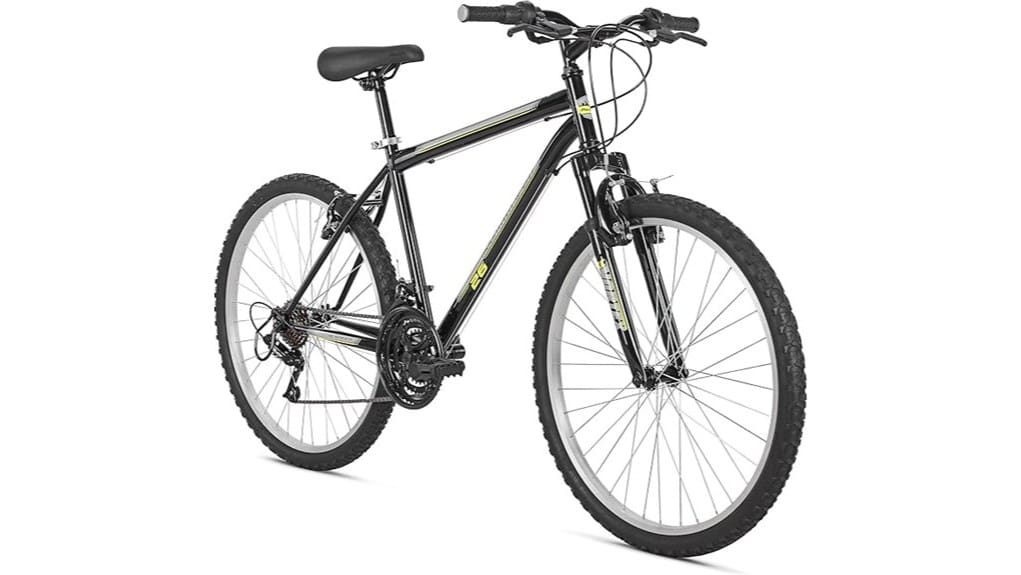
The Pacific Mountain Sport Bike gives you a tough, no-frills ride: a steel frame, 50 mm front fork, and knobby 26″ (or 24″) wheels that soak up bumps and track well on loose trails. Its 18-speed drivetrain with twist shifters shifts reliably for casual climbs, while linear-pull brakes are easy to maintain. It’s heavier and basic compared with sport models, but it’s affordable and durable—keep going and you’ll find specifics on fit, upkeep, and warranty.
Some Key Takeaways
- Solid value for casual riders: durable steel frame, 18 speeds, and front suspension for dependable, low-maintenance fun.
- 26″ wheels with knobby tires suit adults and varied terrain; choose 24″ for smaller teens or tighter handling.
- Twist shifters and 18-speed drivetrain offer reliable, predictable shifts, though not race-grade rapid performance.
- Linear-pull brakes provide straightforward stopping power with easy modulation but require routine maintenance.
- Five-year frame warranty and modest resale value reinforce budget-friendly durability for neighborhood trails and commuting.
Quick Verdict: Is the Pacific Mountain Sport Bike Worth Buying?
Bottom line: the Pacific Mountain Sport Bike delivers solid value for casual riders—you’ll get a durable steel frame, front suspension, 18 speeds, and knobby tires that handle neighborhood cruises and light trails without fuss. You’ll appreciate the clear trade-offs: sturdy but heavier steel, basic twist shifters, and reliable linear-pull brakes. An affordability analysis shows strong price-to-feature balance for teens and adults seeking freedom on mixed terrain. User testimonials highlight durability and comfort for daily rides, with occasional notes about weight. If you want dependable, low-maintenance fun rather than high-performance racing, this bike’s a smart buy. Consider how a carbon frame comparison can help you understand the weight and performance trade-offs between steel and carbon options.
What the Bike Is Made Of and How It Rides (Frame, Fork, Wheels)
Although it’s built from steel rather than lighter alloys, the Pacific Mountain Sport’s frame gives you a dependable, rugged platform that soaks up punishment on rough streets and light trails. You’ll appreciate the steel frame’s durability and predictable flex as you push through roots and curbs. The 50 mm front fork prioritizes suspension comfort over racing stiffness, smoothing chatter and extending ride time. Paired with 26-inch wheels and knobby tires, the bike tracks steadily and grips loose surfaces without fuss. Overall, the chassis favors confidence and longevity, freeing you to explore neighborhood paths and mellow singletrack. The site specializes in products for full suspension mountain bikes and related accessories, making it easy to find compatible components and gear.
How the 18-Speed Drivetrain, Twist Shifters, and Brakes Perform on Trails
Shift through the 18-speed setup and you’ll find a practical range that tackles neighborhood hills and light singletrack without fuss. You’ll notice predictable gear feel from the twist shifters—indexed steps that let you find cadence quickly while staying focused on the trail. Shifts are not race-grade rapid, but they’re reliable under normal pedaling loads. Linear-pull brakes deliver straightforward stopping power; modulation is intuitive, and braking consistency holds up on dirt and gravel if you manage lever pressure. Together the drivetrain and controls give you confidence to explore, trade a bit of speed for durable, low-maintenance freedom. For routine upkeep, consider having the cassette removed occasionally to clean and inspect the freehub body and sprockets cassette removal.
Who Should Buy This Bike and Which Wheel Size to Choose (24″ Vs 26″)
If you want a dependable, low-maintenance mountain bike for family rides, neighborhood cruising, and light trail work, the Pacific Mountain Sport is a solid choice—now the main decision is choosing the wheel size that best matches your height, riding style, and intended terrain. You’ll pick 24” if you’re a smaller teen or approaching the 54″–61″ lower range; it’s nimble, easier to maneuver, and boosts confidence on tight trails. Choose 26” for taller teens riders or adults seeking rollover capability, smoother commuting suitability, and more stable forward momentum. Match size to reach and preferred terrain for best freedom. Our site also helps riders find the perfect training wheels to build confidence while learning.
Real-World Durability, Warranty, and Value for the Price
While the Pacific Mountain Sport isn’t a high-end race bike, it gives you durable, practical performance for everyday riding thanks to its steel frame and simple components. You’ll appreciate how the robust frame and basic fork tolerate bumps and knocks, reducing long term maintenance compared with lightweight, complex rigs. The five-year limited frame warranty and one-year parts coverage back that reliability, though wearables have only 30 days. For freedom-seeking riders on a budget, this bike balances upfront cost and dependable use; resale value projections are modest but reasonable, making it a smart, low-stress choice for daily trail fun. Consider pairing it with appropriately sized mountain bike wheels to match the bike’s intended use and terrain.
Some Questions Answered
Does This Bike Come Pre-Assembled or Require Assembly at Home?
It requires some assembly at home: the bike ships with a factory setup but you’ll need to finish assembly. You’ll use basic assembly tools—wrenches, allen keys, and a screwdriver—to attach the front wheel, handlebars, pedals, and adjust brakes and gears. The factory setup aligns major components for easier home finishing, so you’ll be riding quickly. If you want full freedom, the quick home assembly gives control and satisfies basic mechanical instincts.
Can I Add a Rear Rack or Fenders for Commuting?
Yes — you can add accessories, but check mounting points: the bike’s rear rackless compatibility means you’ll rely on seatpost-mounted racks or aftermarket adapters if there are no frame eyelets. Quick release fenders can work for commuting if your frame clearance suits them and your wheel size (24″ or 26″) matches. You’ll want sturdy attachment hardware for daily use; choose components rated for cargo and rough-terrain freedom.
Is the Saddle Adjustable or Replaceable for Taller Riders?
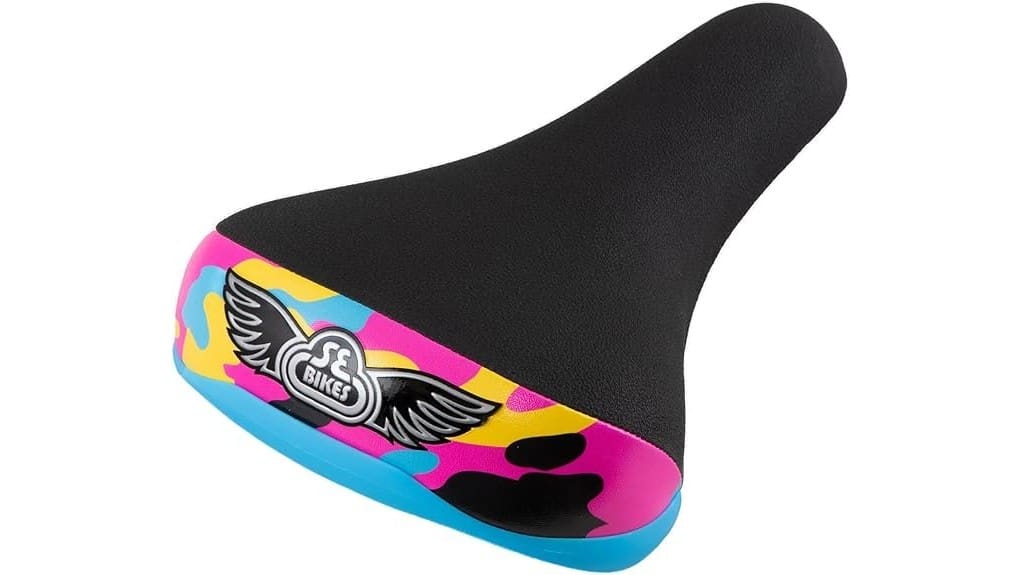
Yes — the saddle’s adjustable and you can replace it for taller riders. You’ll use saddle heightening by raising the included seatpost within its clamp limits; measure to guarantee safe insertion depth. If you need more rise or comfort, a seatpost upgrade (longer or setback, or a suspension post) gives extra adjustability and ride freedom. Choose a compatible diameter and torque the clamp correctly so your setup stays secure on trails.
Are Replacement Parts Readily Available Locally?
Yes — you’ll usually find replacement parts through local dealers and general bike shops, and many components have good aftermarket compatibility. Frame and suspension repairs will need authorized service, but tires, tubes, brake pads, cables, saddles and wheels are commonly stocked or easily swapped with aftermarket equivalents. You’ll want to call nearby dealers for stock and check part numbers for compatibility so you can keep riding with minimal downtime.
Is This Bike Suitable for Bike-Path Commuting in Wet Weather?
Yes — you can commute on bike paths in wet weather, but with caveats. You’ll get traction from knobby tires and some bump absorption from the front suspension, yet waterproof components are limited, so expect faster wear and occasional corrosion. Braking performance with linear-pull brakes drops in heavy rain, so you’ll need longer stopping distances and frequent maintenance. Ride confidently, but plan for extra care, slower stops, and routine component checks.