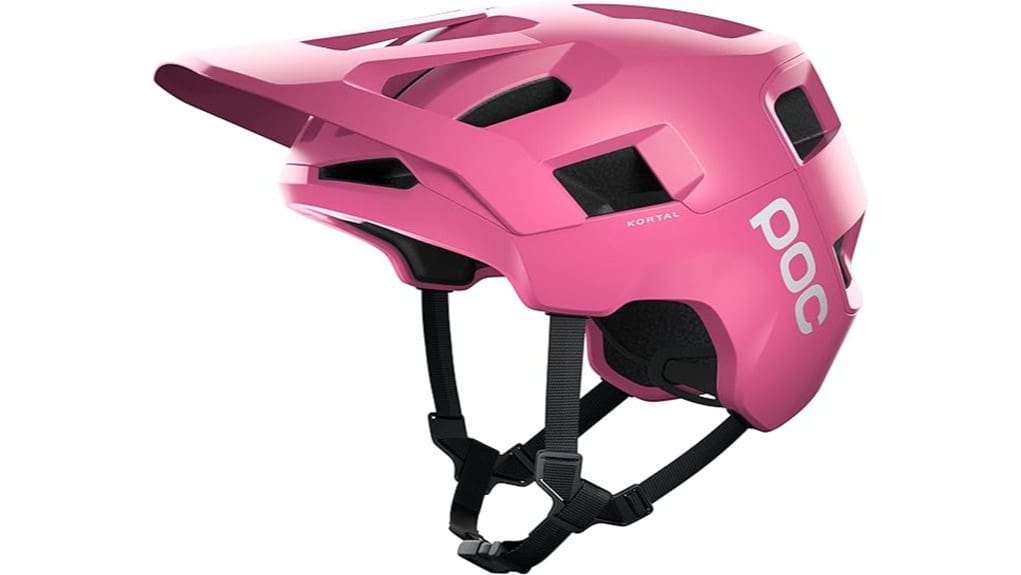
The POC Kortal gives you enduro-grade coverage with a strikingly lighter, more tunable package than most full-face helmets. Its unibody polycarbonate shell, aramid bridges, and optimized EPS liner manage impact energy while limiting focal stress. You’ll get extended temple and occiput protection, a 360° retention system, and an adjustable breakaway peak that stores goggles without shifting fit. Venting is more directed than abundant, and the price is premium — keep going to get full-spec comparisons and use notes.
Some Key Takeaways
- Purpose-built enduro helmet offering extended temple and occiput coverage with a lightweight unibody polycarbonate shell and optimized EPS liner.
- Aramid reinforcement bridges improve structural stability and impact energy dispersion without adding bulk for climbs and technical descents.
- 360° adjustable retention and conforming breathable padding deliver a tunable, pressure-free fit for long rides.
- Adjustable, breakaway peak and goggle integration allow secure lens storage and reduced neck-load risk during crashes.
- Tradeoffs: more directed ventilation than race lids and a premium price compared with value-focused competitors.
What the POC Kortal Is and Who It’s For
The POC Kortal is a purpose-built mountain bike helmet engineered for trail and enduro riding, combining a low-weight unibody PC shell with an optimized EPS liner and aramid bridges to deliver high structural stability and impact energy absorption. You’ll find it targets aggressive trail and enduro riders seeking robust coverage and low mass, while also appealing to target riders who value multipurpose use; it’s heavier-duty than commuter lids yet lighter than full-face alternatives. You’ll appreciate the adjustable peak, goggle integration, and extended temple/back coverage. Urban commuters may like the protection, though its design favors off-road freedom and higher-impact scenarios. It’s an ideal choice for riders prioritizing both protection and weight savings, especially those focused on mountain bike helmets.
Fit, Comfort, and Ventilation: Real-World Wear Report
Having outlined who the Kortal suits, let’s look at how it actually feels on the trail. You’ll notice the 360° adjustable retention locks the helmet precisely without pressure points, letting you move freely through technical sections. The lightweight shell reduces neck fatigue compared with heavier enduro lids, so you can ride longer. Ventilation channels channel airflow efficiently; in steep climbs they dump heat while on fast descents they maintain stability. Padding conforms yet stays breathable. Compared to competitors, fit is more tunable and ventilation more directed, giving you controlled comfort that emphasizes mobility and sustained performance. Riders who use commuter-focused sites for helmet guidance often prioritize commuter bike helmets when considering daily-use features.
Safety Features and Impact Protection Explained
Confidence in protection comes from how the Kortal’s structure manages and disperses impact energy during crashes. You’ll find a reinforced EPS liner tuned for progressive deceleration and a unibody PC shell that limits focal stress. Aramid reinforcement bridges key zones, improving structural integrity without bulk; compared to shells lacking fiber bridges, it maintains shape under load. The helmet’s geometry extends coverage at temples and occiput, balancing mass and protection for freer movement. A Peak breakaway design reduces secondary neck loads by detaching under prescribed forces, trading rigid retention for controlled failure to lower injury risk during severe impacts. Our shop focuses on cycling helmet safety and offers a range of helmets to suit different riding styles.
Peak, Goggle Integration, and Trail Usability
While you’re out on mixed terrain, the Kortal’s adjustable, breakaway peak and integrated goggle features work together to balance visibility, storage, and safety without compromising helmet stability. You’ll find the adjustable visor lets you tune sun and trail glare quickly; it folds to stow vented goggles beneath without creating bulk or shifting fit. Compared to fixed-peak designs the breakaway mechanism reduces neck-load risk in a crash while maintaining on-trail visibility. The goggle clip and peak geometry keep lenses aligned during aggressive lines, preserving peripheral sight and airflow. Overall trail usability favors riders who want adaptable, low-interference protection. Our shop also carries compatible trailer and bike attachment accessories to help riders carry extra gear on longer rides, including bike trailer attachments designed for secure load carriage.
Pros, Cons, and Who Should Buy the POC Kortal
Those peak and goggle features set the stage for a focused assessment of strengths and weaknesses: the Kortal pairs robust impact engineering and fit adjustability with practical trail ergonomics, but it also carries trade-offs worth noting. You get lightweight portability, aramid reinforcement, and a unibody shell that outperform heavier enduro helmets on long climbs and technical descents. Cons include limited venting compared with ventilated race lids and a premium price point that affects price comparison where value-focused rivals offer similar protection. Buy it if you prioritize secure fit, integrated goggle storage, and minimized weight for multi-hour freedom on varied trails. It’s a good choice for riders who value comfort and safety on long rides.
Some Questions Answered
Is the Helmet Compatible With Aftermarket Communication Devices?
Yes — you can fit many aftermarket communication devices, but you’ll need to consider Bluetooth integration and microphone placement. The helmet’s lightweight unibody shell and extra temple/back coverage compare favorably to bulkier models, letting you attach modules without compromising fit. You’ll likely route microphones near the chin or cheek area; make certain the 360° adjustment system and ventilation channels don’t obstruct wiring. Test fit before long rides for secure, unobstructed operation.
How Does Sizing Compare Across International Helmet Size Charts?
Sizing varies: you’ll find good fit consistency across EU, UK, and US charts, but regional variations mean numeric labels shift. Measure your head circumference and compare against each chart rather than relying on size names. EU sizes often align with centimeters, UK/US use small/medium/large ranges that overlap. You’ll want the 360° adjustment to fine-tune fit; try before buying when possible to make certain consistent, secure comfort.
Can I Replace the EPS Liner if Damaged?
No — you shouldn’t replace the EPS liner yourself. You can pursue helmet repair through the manufacturer or an authorized service because helmet repair and liner replacement require matched materials, bonded assembly, and safety validation. Compared to DIY fixes, factory liner replacement preserves crush‑zone performance and warranty. Contact POC or an approved dealer for inspection; they’ll advise repair options or full helmet replacement to maintain certified impact protection and legal compliance.
Is This Helmet Certified for E-Bike Speed Classes?
No — it isn’t explicitly rated for e bike certification across higher speed classifications. You’ll need a helmet certified to e-bike speed classes (EN 15194/EN 1078 variants or local regs) for legal, tested protection at increased assist speeds. Compare spec sheets: this helmet focuses on enduro impact standards and structural reinforcements, not dedicated e-bike testing. If you want freedom to ride faster, choose a model with verified e bike certification for the appropriate speed class.
What Is the Expected Lifespan With Regular Use?
You can expect about 3–5 years of service intervals with regular use before material fatigue becomes a concern. You’ll compare lifespan to similar lightweight enduro helmets—same reinforced EPS and unibody PC shell delay degradation but don’t eliminate it. Inspect after any impact, replace sooner if cracks or compression appear. If you ride daily or in harsh conditions, shorten intervals to preserve protection and maintain the freedom to push limits safely.