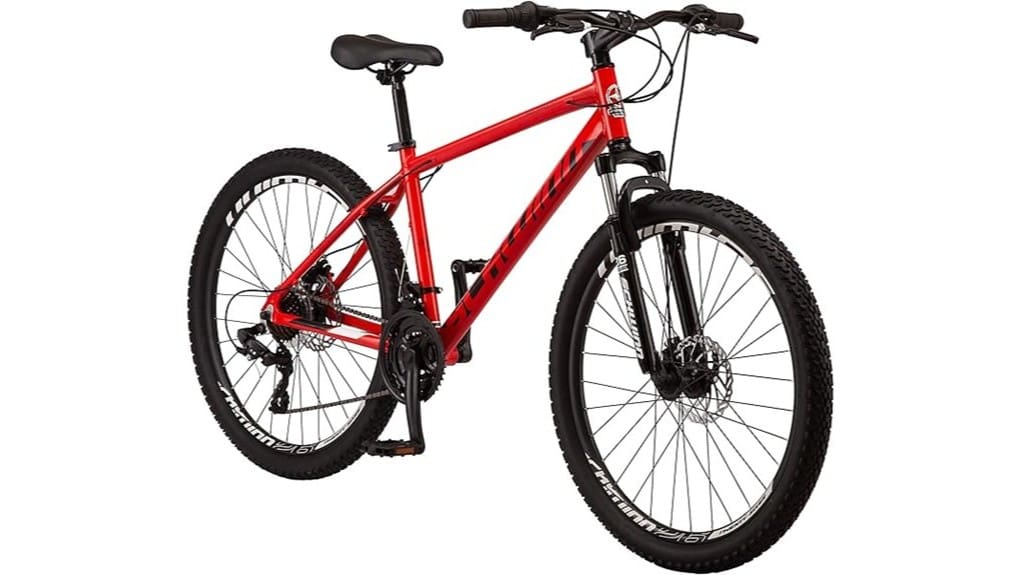
You’ll find the Schwinn High Timber is a budget-friendly trail bike that gives you front suspension, mechanical disc brakes, and 7- or 21-speed twist-shift drivetrains across 20–29″ wheel and aluminum or steel frame options. Aluminum models feel lighter and climb quicker; steel is tougher and more forgiving. Maintenance is straightforward—chain care, brake pad checks, and basic cable adjustments—and the bike suits casual trails, commuting, and learning off-road skills; continue for specifics on fit, parts, and tradeoffs.
Some Key Takeaways
- The Schwinn High Timber is an entry-level trail bike available in youth (20″) and adult (24–29″) wheel sizes for various rider heights.
- Frame options include aluminum (lighter, faster climbs) or steel (heavier, more durable, smoother ride).
- It ships about 80% assembled and requires basic tools and mechanical skill for final setup.
- Drivetrain choices are 7- or 21-speed with twist shifters, alloy cranks, and routine chain/cable maintenance needed.
- Features include front suspension fork and mechanical disc brakes, offering budget-friendly trail performance with limited upgrade potential.
Quick Specs and Model Options for the Schwinn High Timber
Explore the Schwinn High Timber’s core options to match your riding needs: the model comes in 20-inch youth sizing with a lightweight 10.5-inch aluminum frame and in adult wheel sizes ranging from 24 to 29 inches, offered in both aluminum and steel frames. You’ll find 7- and 21-speed drivetrains, alloy cranks, twist shifters, alloy wheels, mechanical disc brakes, and a front suspension fork. Color options include teal and other finishes to suit your taste. Price tiers vary by wheel size and materials, letting you choose economy steel or lighter aluminum builds for greater freedom on trails. Schwinn also offers guidance on choosing the right mountain bike tires for different trail conditions, including suggestions for tire tread patterns.
Frame, Wheels, and Suspension: What to Expect on Trail
When you’re riding the High Timber on mixed trails, its frame and wheel options determine how the bike handles: aluminum frames (available on the 20-inch youth and larger adult sizes) keep weight down for quicker acceleration and easier climbs, while the steel option trades a bit of weight for added durability and a smoother, more forgiving ride; pair those with 24–29 inch wheel choices and you’ll notice that larger wheels roll over roots and rocks more smoothly, whereas smaller wheels accelerate and maneuver quicker in tight singletrack. You’ll feel frame flexility under load; aluminum offers snappier response, steel absorbs chatter. The Schwinn suspension fork needs basic suspension tuning to balance comfort and control for freeride confidence. Our shop also carries a range of parts and accessories to help you optimize full suspension performance on varied terrain.
Drivetrain, Brakes, and Components: Performance and Maintenance
Although the High Timber keeps things straightforward, its 7- or 21-speed drivetrains give you the gearing range to tackle climbs and flats without fuss, using twist shifters, an alloy crank, and a rear derailleur that require only routine attention to stay crisp. You’ll perform regular chain maintenance—cleaning and lubing—to prolong life and preserve shifting. Check lever alignment and adjust cable tension to prevent poor shift indexing. Mechanical disc brakes are reliable; monitor pad wear and keep calipers centered, and perform brake bleeding if hydraulic conversion ever occurs. Components are practical, serviceable, and designed for independent trail freedom. For those who enjoy riding, consult bike maintenance manuals to learn proper service intervals and repair techniques.
Fit, Sizing, Assembly, and Who This Bike Is Best For
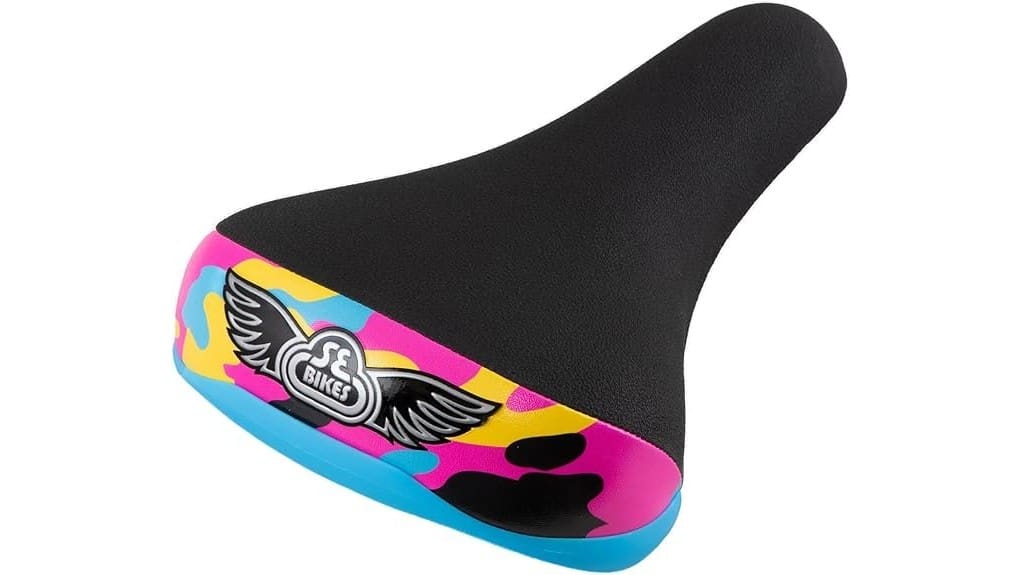
Because the High Timber comes in wheel sizes ranging from 20-inch youth options up through 24–29 inch adult sizes, you can match frame and wheel combo to rider height for a confident fit and proper leg extension. You’ll find quick-release seat post and adjustable handlebars let you dial saddle comfort and riding position quickly. Assembly arrives about 80% complete; you’ll need common tools (Phillips, 2.5–8 mm Allen wrenches, adjustable wrench, pliers with cutters) and basic mechanical skill. Choose the 20-inch for a reliable kid fit; 24–29-inch sizes suit teens and adults seeking a versatile, entry-level trail bike. The site offers a range of youth bike accessories and sizing guides to help customers select the right model.
Real Pros, Cons, and Should You Buy the High Timber?
If you want a budget-friendly, do-it-all entry-level mountain bike, the Schwinn High Timber delivers a lot of useful equipment for the price: alloy or steel frames across wheel sizes, a front suspension fork, 7- or 21-speed drivetrains with twist shifters and an alloy crank, and mechanical disc brakes that give predictable stopping power in varied conditions. You’ll get strong price value and reliable brand reputation; the bike suits casual trails, commuting, and learning off-road skills. Downsides: heavier steel options, basic components that limit long-term upgrades, and modest resale potential. If you seek freedom on a budget, buy it. The wheels and related components make choosing the right mountain bike wheels important for optimizing ride performance.
Some Questions Answered
Does the Bike Come With Reflectors and a Bell Installed?
No, it doesn’t arrive with reflectors or a bell preinstalled. You’ll add reflective lighting and safety signals yourself during final assembly; the bike ships about 80% assembled and needs a few tools. Install wheel and frame reflectors, a rear light or reflector, and attach a bell to meet local safety preferences. You’ll also set up mechanical disc brakes, suspension, and quick-release seat height before hitting the trail.
Is the Seat Compatible With Child-Seat Mounts?
Yes — the seat generally works with many child seat mounts, but you’ll need to check child seat and seat post compatibility. The High Timber’s quick-release seat post and standard-diameter post let you mount many rear child seats or use an adapter clamp. You’ll want to confirm the child seat’s weight limit, attachment method, and that the bike frame and rear rack (if required) are rated for the load before riding.
Can I Add a Rear Rack or Fenders Easily?
Yes — you can add a rear rack and fenders with relative ease. The frame offers rear rackability via mounting eyelets and enough fender clearance around the 24–29 inch wheel options, though specific clearance depends on tire size. You’ll need basic tools and possibly longer bolts or rack-specific hardware. Install’s straightforward if you value freedom to customize; just confirm your tire width and mounting points before buying accessories.
What Tools Are Included in the Box for Assembly?
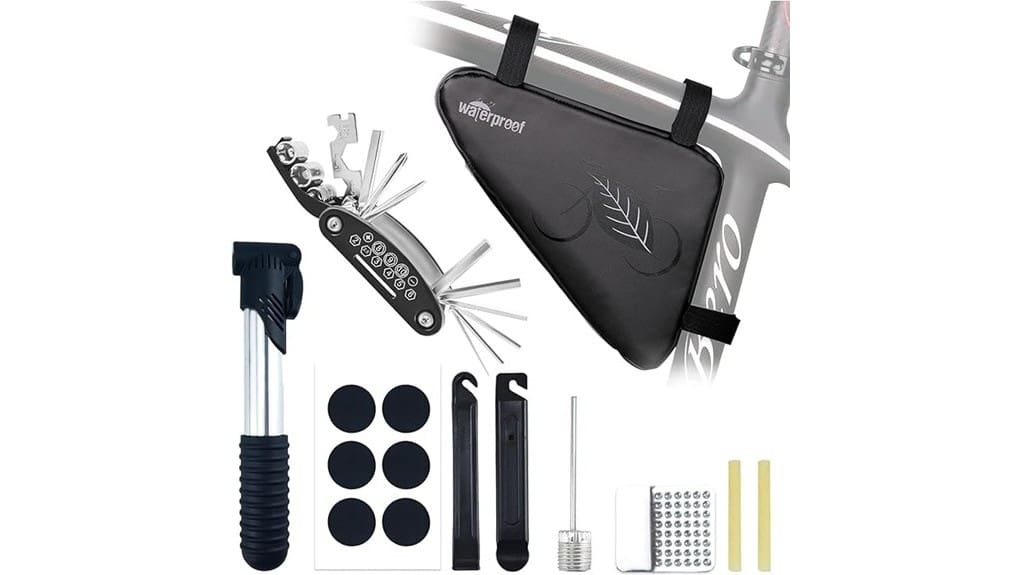
You get a basic hex wrenchset and an assembly guide in the box, plus a few small tools to finish setup. You’ll typically find one or two Allen keys, a 15mm wrench or adjustable wrench insert, and sometimes a small Phillips screwdriver. The hex wrenchset handles most bolt sizes; the assembly guide walks you step-by-step. You’ll still need pliers and larger Allen keys (2.5–8 mm) for complete adjustments and cable trims.
Is There a Recommended Tire Pressure for Different Terrains?
For mixed trails you should run 30–40 psi; for loose or rocky terrain drop to 20–30 psi; for smooth pavement push 40–60 psi. You’ll monitor tire carcass behavior and pressure mapping to balance grip versus rolling resistance. Check pressures cold, adjust in 5 psi steps, and use a reliable gauge. You’ll lower psi for more traction and comfort, raise it for speed and puncture resistance—always within tire and rim limits.