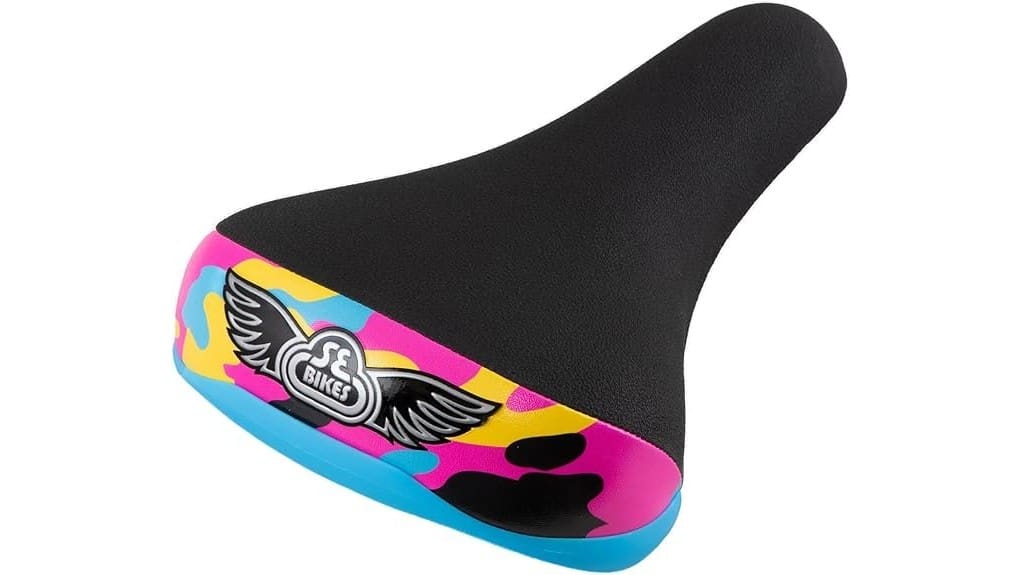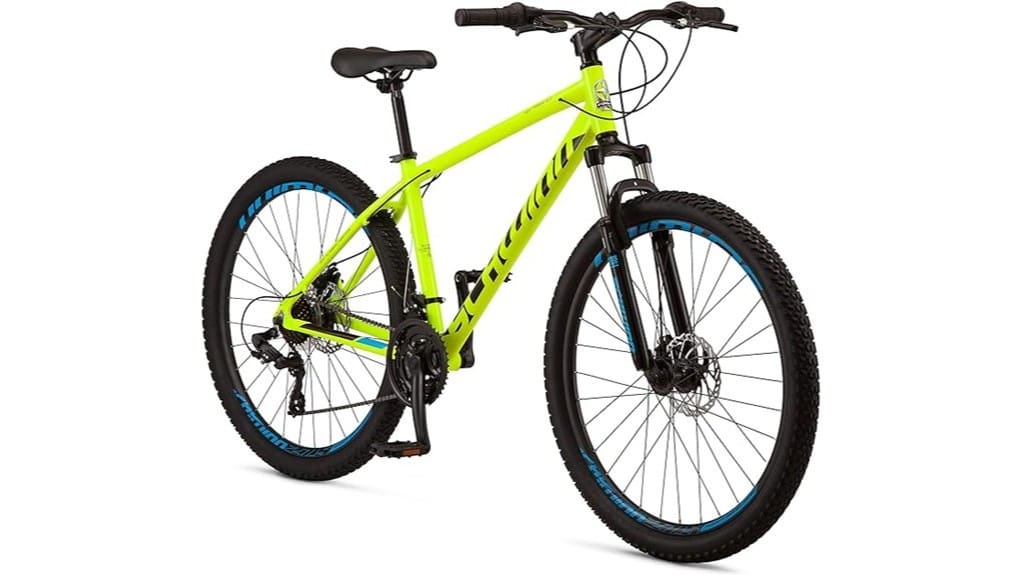
You’ll find the Schwinn High Timber is a budget-friendly, durable mountain bike that favors ease of use over race-level performance. It offers multiple aluminum and steel frame sizes, wheel options from 20″ to 29″ to fit riders, and basic front suspension with wide knobby tires for mixed-terrain traction. Shifting is simple with twist shifters and 7- or 21-speed setups that need occasional tweaks. It’s great for casual trails and commuting—keep going to learn specifics and fit tips.
Some Key Takeaways
- Affordable, durable mountain bike suited for light trail riding and mixed-surface commuting.
- Available in multiple frame materials and sizes, with 20–29″ wheel options to match rider height.
- Basic front suspension and wide knobby tires offer traction and simple trail dampening for roots and small drops.
- 7- and 21-speed alloy drivetrain with twist shifters provides reliable, low-maintenance gear range.
- Ships ~80% assembled; requires common tools for final setup and routine cable/drivetrain tweaks for best performance.
Core Schwinn High Timber Specs and Frame/Wheel Options
The Schwinn High Timber comes in multiple frame and wheel configurations to suit different riders and uses: lightweight 10.5-inch aluminum frames for smaller riders, larger aluminum and steel frame options for adults, and wheel sizes ranging from 20 inches (for riders 40–50 inches tall) up through 24–29 inches depending on the model. You’ll appreciate the Lightweight frame choices and Wheel variety that let you match ride feel and handling to terrain and freedom goals. Frames balance strength and weight; wheel sizes change confidence, clearance, and rolling speed. Choose based on rider height, intended terrain, and desired maneuverability. Consider how frame material affects ride quality and durability.
How the Drivetrain, Shifting, and Gearing Perform on Trails
Expect the High Timber’s drivetrain and shifting to be straightforward and low-maintenance on most trails. You’ll enjoy smooth shifting from the alloy crank paired with twist shifters and a reliable rear derailleur, so changes feel predictable when you need them. The available 7-speed and 21-speed setups give a usable gear range for climbs and flats without complexity. You can focus on choosing lines and enjoying open trails rather than fiddling with components. Routine tweaks and occasional cable adjustment keep performance honest; the design favors durability and freedom over race-level precision. For riders concerned about wheel compatibility and options, consider checking out resources on mountain bike wheels to match tires and rims to your riding style.
Ride Comfort and Handling: Suspension, Tires, and Fit Considerations
Shifting and gearing work reliably, but ride comfort and handling matter just as much once you’re on rougher trails. You’ll notice front suspension provides basic trail dampening, smoothing roots and small drops so you can ride bolder. Wide knobby tires add traction and stability across varied terrain and wet conditions, helping you pick lines confidently. Quick-release seat posts let you set a freer riding position for descents or climbs. Ergonomic grips reduce hand fatigue and improve control during long outings. Frame size and wheel choice must match your height so handling feels natural and liberating. Consider upgrading to a full suspension setup for improved trail performance and enhanced comfort.
Assembly, Maintenance, and Tools You’ll Need
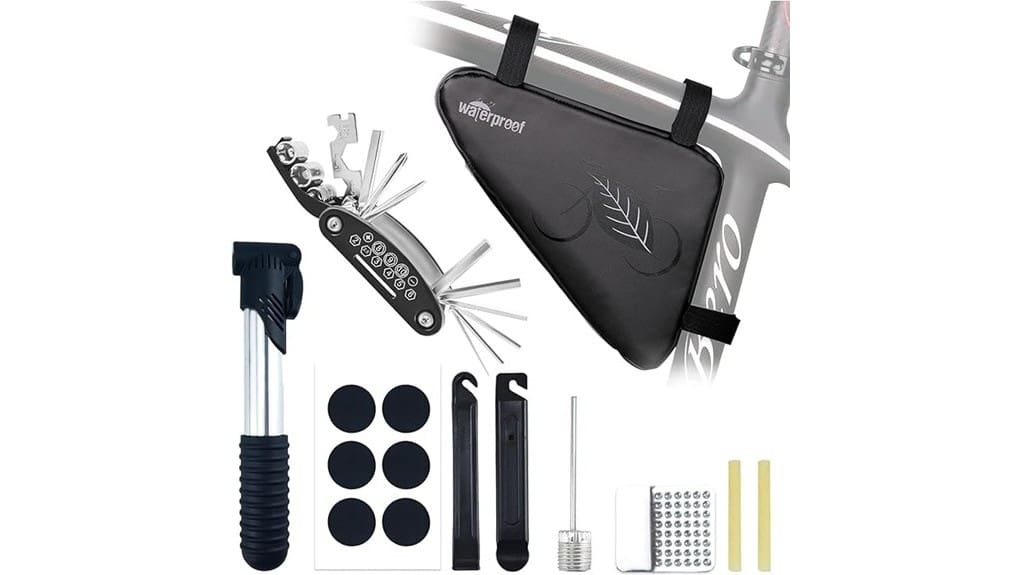
While you’ll get the bike roughly 80% assembled, you’ll need a few common tools to finish setup and keep it running smoothly. You’ll tighten handlebars, attach front wheel, and adjust brakes using Phillips and 2.5–8 mm Allen wrenches, an adjustable wrench, and pliers with cable cutters. Check dialed cable routing for smooth shifting and minimal wear. Grease threads and inspect quick-release seat post action. For home maintenance, carry a multi-tool, chain lube, spare tube, and tire levers. Battery powered tools can speed assembly but aren’t required. Regular inspections and basic upkeep keep the High Timber ready to roam. Many riders find an all-in-one essential multi-tool invaluable for trailside repairs and adjustments.
Who Should Buy the High Timber (Use Cases, Size Fit, and Alternatives)
After you’ve finished assembly and basic checks, think about whether the High Timber matches how and where you’ll ride. You’ll like it if you want an affordable trail and light off-road bike that’s also a practical commuter option for mixed surfaces. Choose wheel size to fit height: 20-inch for 40–50 in riders, 24–29 in models for taller riders; 10.5-inch and steel frame variants suit different weight and feel preferences. If you crave more aggressive terrain, plan for downhill upgrades to suspension and brakes or consider higher-end mountain models. It’s best for riders valuing versatility and freedom. Our shop carries a range of essential touring gear that complements multi-surface bikes like the High Timber.
Some Questions Answered
Does It Include a Warranty and What Does It Cover?
Yes — you get a Limited warranty covering frame and factory defects for a set period; Coverage details typically include structural frame flaws and faulty components from manufacturing, while normal wear (tires, brake pads), misuse, and improper assembly aren’t covered. You’ll need proof of purchase and may handle minor adjustments yourself. Check the specific warranty period and terms with the seller so you know your rights and what repairs or replacements are allowed.
Are Replacement Parts Easily Available Locally?
Yes — you’ll usually find replacement parts easily at local shops, and many components are generic parts that fit common drivetrains, wheels, and brakes. You can get alloy cranks, twist shifters, tires, tubes, and quick-release posts from bike shops or online. Smaller items like cables and chainrings are widely stocked; specialty frame pieces may need ordering. You’re free to choose local service or mix-and-match generic parts for repairs.
Can It Accommodate Child Seats or Bike Racks?
Yes — you can fit a child seat or rack on many models. You’ll find child seatmount compatibility varies by frame and wheel size, so check for rear seatpost or frame mounting points. Rear rackability options are often possible on aluminum frames with eyelets or via universal rack clamps; use a compatible rack for 24–29 inch wheels. You’ll enjoy freedom hauling gear or a small passenger with proper mounting and weight limits.
Is It Compatible With Tubeless Tire Setups?
Not directly—many High Timber models use pre-built rims that aren’t tubeless-ready, so tubeless conversion usually needs upgraded rims or specific sealing work. You’ll want to inspect the rim profile and hub compatibility, apply proper rim tape, and use tubeless valves and sealant. If you crave fewer flats and more freedom, consider swapping to tubeless-ready alloy wheels or consult a shop to confirm compatibility and perform a safe tubeless conversion.
What Is the Bike’s Total Weight for Shipping Concerns?
The bike’s shipping weight is about 35–45 pounds, depending on model and frame material; boxed dimensions typically measure roughly 48″ x 8″ x 28″. You’ll want to plan for the higher end if you chose aluminum or added accessories. That range covers packaging, partial assembly, and protective materials. You can lift it alone if you’re fit, but having a second person or dolly makes unpacking and positioning much freer and safer.