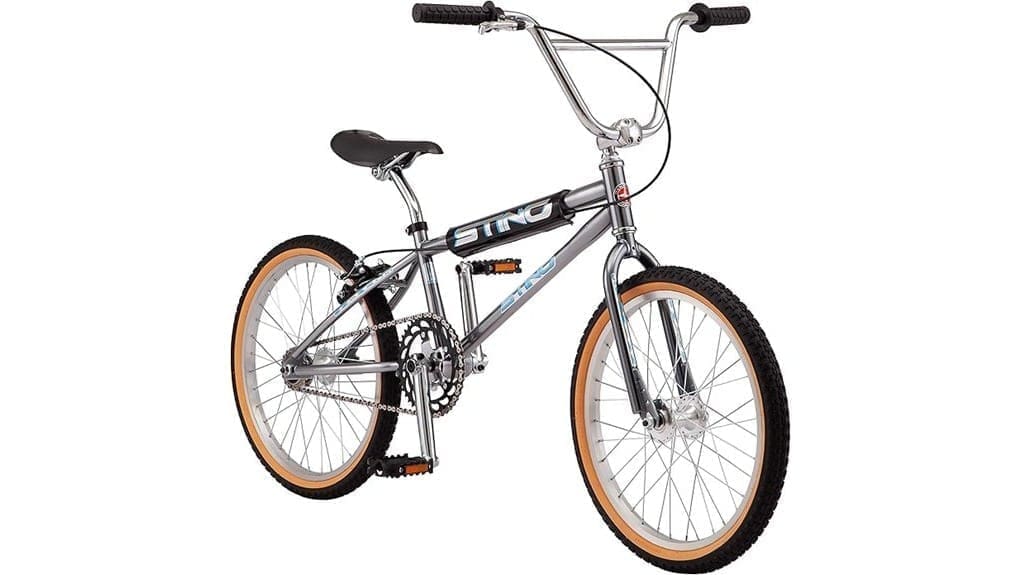
You’ll find both the Schwinn Sting Pro and Predator Team give kid-friendly BMX performance with hi-ten steel frames, single-speed drivetrains, and front/rear caliper brakes that stop reliably. Choose a 20″ Sting Pro for nimble handling or a 24″ Predator Team for more room and confidence as riders grow; finishes include bold paint or chrome for a vintage look. Assembly is simple and warranties are limited lifetime; keep an eye on rims and corrosion for long-term use, and continue for full specs and test notes.
Some Key Takeaways
- Both Sting Pro and Predator Team are kid-focused, vintage-styled BMXs with hi-ten steel frames and single-speed drivetrains.
- Choose wheel size: 20″ for most kids (~8+), 24″ for taller youths seeking stability and clearance.
- Both bikes use front/rear caliper brakes and gumwall tires for confident stopping and mixed-surface grip.
- Ride feel: stable, forgiving steering with upright posture and compliance from hi-ten steel frames.
- Durable for casual youth use but monitor aluminum rims, steel axles, and corrosion; assembly takes 20–40 minutes.
Quick Verdict: Which BMX Is Best for Kids and Why
Choose the Sting Pro if you want a lightweight, retro-styled BMX that’s easy for kids 8+ to handle, and pick the Predator Team if you prefer a sturdier feel with similar vintage looks; both use hi-ten steel frames, single-speed drivetrains, and reliable front/rear caliper brakes, so your decision mainly hinges on wheel size (20″ vs 24″), finish preference (including chrome), and whether your child prioritizes nimble maneuverability or a slightly larger ride for growing riders. You’ll value retro aesthetics and simple upkeep: follow basic maintenance tips like regular brake checks, chain lubrication, and bolt torque inspections to keep freedom intact. Consider also pairing either bike with appropriate dirt jump gear to enhance safety and performance.
Side-by-Side Specs: Frame, Wheels, Tires, Brakes, and Components
While both the Sting Pro and Predator Team share a retro single-speed BMX layout, you’ll notice key differences in components and sizing that affect ride feel and maintenance. You get hi-ten steel frames with a high-shine steel finish; that keeps costs down and offers classic resilience. Wheel choices (20″ or 24″) shift handling and clearance; aluminum rims differ in rim profile, influencing stiffness and weight. Gumwall tire compound balances grip on dirt and pavement without flashy tread. Both models use front/rear caliper brakes, rattrap pedals, and steel axles—Axle durability is adequate for casual riding and light tricks. These bikes fit well within a lineup catering to riders who prefer full suspension mountain bike gear aesthetics alongside simple BMX functionality.
Real-World Ride Test: Handling, Braking, and Comfort for Ages 8
Testing the Sting Pro and Predator Team on neighborhood streets and a packed-dirt track shows they handle predictably for entry-level BMX. You’ll notice stable steering that rewards modest inputs; balance feedback is clear through the handlebars, helping young riders learn corrections. Braking is straightforward: front and rear calipers stop confidently at moderate speeds, giving you control without surprise. Riding comfort aligns with simple kid ergonomics — upright posture, reachable grips, and forgiving Hi-Ten steel compliance on chatter. Tires grip mixed surfaces well, and the single-speed drivetrain keeps focus on skill. Overall, these bikes free youngsters to explore with confidence. Consider choosing the right frame size to ensure proper fit for young riders.
Assembly, Durability, and Limited Lifetime Warranty Details
Because the Sting Pro and Predator Team arrive mostly preassembled, you’ll spend minimal time on setup: attach the front wheel, handlebars, seat, and pedals, tighten a few bolts, and adjust the brakes before riding. Actual assembly time averages 20–40 minutes for a solo adult. Durability testing shows the hi-ten steel frame and steel axles withstand normal youth use, though aluminum rims and gumwall tires need routine checks. Watch for early signs of steel corrosion if stored outdoors; keep the finish clean. The limited lifetime warranty covers defects in materials and workmanship but has clear warranty limitations, so register and read the terms. Many riders find a dedicated bike repair stand useful for maintenance and adjustments.
Buying Guide: Size, Color (Including Chrome), Price Range, and Where to Buy
When choosing between the Sting Pro and Predator Team, focus first on wheel size and fit—20-inch models suit most kids around age 8 and up, while 24-inch frames better accommodate taller youths or those shifting from larger bikes. Pick color using color psychology: bold hues feel energetic; chrome reads nostalgic and can hide minor scratches. Weigh price against materials and warranty; these models sit in an affordable midrange, offering value for casual riding and tricks. Check authorized dealers, major retailers, and reputable online marketplaces. Consider resale value—popular colors and well-maintained chrome usually retain worth better. Tandem bikes and accessories can enhance shared riding experiences, so also consider tandem bike gear when planning rides.
Some Questions Answered
Are Replacement Parts (Chains, Sprockets) Specific or Standard BMX Sizes?
Yes — you’ll find chain compatibility and sprocket sizing are standard for these bikes. You can use common BMX chains and sprockets (typically 1/2″ x 1/8″ chain and standard BMX sprocket tooth counts) without special ordering. Check axle type and crank interface to match sprocket fitment, but replacements are generally interchangeable. You’ll keep freedom to upgrade or replace parts from mainstream BMX suppliers with few compatibility constraints.
Can Child Riders Perform Basic Tricks Safely on These Models?
Yes — you can perform basic tricks, but you’ll need rider supervision and proper protective gear. The single-speed, steel-frame BMX is sturdy for bunny hops, manuals and simple jumps, though heavier components limit advanced maneuvers. Inspect brakes, tires and axles before riding. Start on smooth, low-risk terrain and progress gradually. With supervision, protective gear and routine maintenance, you’ll enjoy freedom while minimizing injury and equipment damage.
Is a Kickstand Included or Compatible With the Frame?
No, a kickstand isn’t included, and kickstand compatibility is limited by the BMX frame geometry. You can add a clamp-on kickstand without major frame modification, but permanent mounts aren’t usually present on hi-ten BMX frames. You’ll want a model rated for the bike’s wheel size and intended use; clamp-on options preserve frame integrity and freedom to remove it. Check clearance and torque specs before installing to avoid damage.
Do These Bikes Come With Reflectors or Mounting Points for Lights?
No, they don’t include factory-installed reflectors or dedicated light mounts, but you can add reflective stickers and aftermarket light mounts easily. You’ll want to attach adhesive reflective stickers to the frame or rims for visibility and clamp-on or strap-on lights to the handlebars and seatpost. Use mounts rated for vibration and check clearance with gumwall tires. This keeps your bike legal and lets you ride freely after dusk.
Are There Weight Limits or Maximum Rider Weight Specified?
The manufacturer doesn’t list a specific maximum weight or rider limits for these BMX models, so you should assume standard kid/youth capacities. You’ll want to treat the hi-ten steel frame and 20″/24″ wheel setups as suitable for riders roughly 8+ years old and typical youth weights—practically up to about 150–175 lbs depending on riding style. If you need certainty, contact Schwinn customer support for an official maximum weight specification.