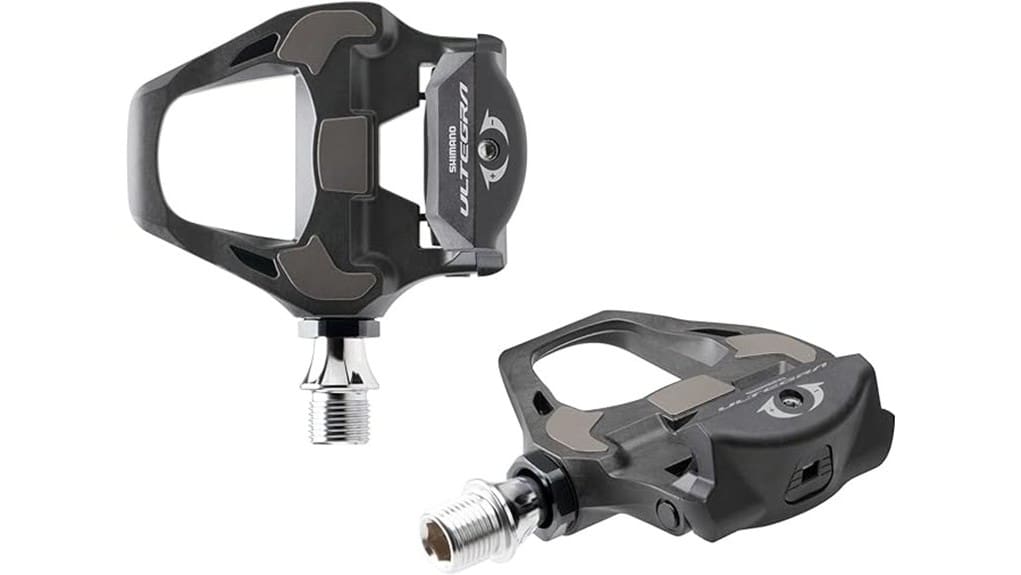
You’ll get a pro-level SPD‑SL pedal that prioritizes stiff, efficient power transfer and durable contact wear. The extra‑wide carbon composite platform and stainless wear plate give uniform load distribution and low mass, while a hardened alloy axle and precision bearings cut flex and preserve tracking. Entry and release tension are adjustable for a tailored feel, and maintenance is straightforward. If you want predictable engagement, long service life, and tuning tips, keep going for full details.
Some Key Takeaways
- Extra-wide carbon-composite platform offers pro-level stiffness and efficient power transfer with a durable stainless-steel wear plate.
- Adjustable entry and release tension allow precise, repeatable clipping feel tailored to rider preference and skill.
- Hardened alloy axle and precision bearings minimize flex and maintain alignment under sprinting and climbing loads.
- Real-world ride: stable, communicative platform with firm shoe interface and minimal torsional loss during power surges.
- Best for riders prioritizing stiffness, durability, and predictable engagement; not the lightest and requires regular maintenance.
What the PD-R8000 E1 Is and Who It’s For : Quick Overview and Key Specs
What makes the PD-R8000 E1 a pro-level choice? You get an SPD-SL road pedal engineered for efficient power transfer with an extra-wide platform and carbon composite body plus stainless steel plate. Specs are precise: optimized stack height, adjustable entry and release tension, and weight competitive for its class. Targeted at riders who want performance and freedom to push limits, it balances lightweight aesthetics with durable contact surfaces. Compatibility considerations include SPD-SL cleats and road shoe interfaces; confirm crank thread standards and intended riding style. You’ll appreciate tunable engagement and proven pro-tier geometry for sustained control and efficiency. It’s an ideal pick for cyclists focused on clipless pedal systems and improved pedaling efficiency.
How Construction and Materials Affect Stiffness, Weight, and Durability
Having covered its spec sheet and user focus, let’s look at how the PD-R8000 E1’s materials and construction define stiffness, weight, and longevity. You’ll find a carbon composite body delivering targeted carbon stiffness: it resists torsion under load while keeping mass low. A stainless steel body plate takes contact wear, providing stainless durability where cleats meet pedal. The axle and bearings use hardened alloys and precise machining to minimize flex and maintain alignment. Together these choices balance minimal weight with high structural rigidity and wear resistance, so you get efficient force transfer and long service life without excess mass. This focus on component selection mirrors how mountain bike wheels are optimized for stiffness-to-weight ratios in high-performance builds.
Real-World Performance: Power Transfer, Platform Feel, and Clipping In/Out
Feel the stiffness translate directly to the road: the PD-R8000 E1’s wide carbon-composite platform and stainless contact plate deliver uniform load distribution, so your pedal stroke maps cleanly to the drivetrain with minimal torsional loss. You’ll notice efficient power transfer under surge efforts and steady climbs; energy goes to the chain, not frame flex. The platform feel is stable yet communicative — engineered ride feedback tuning keeps vibrations informative without harshness. Pedal surface traction resists micro-slip with firm shoe interface. Clipping in is crisp and predictable; release is secure and adjustable, so you’re free to prioritize engagement or quick exits. This pedal pairs exceptionally well with high-performance road cycling shoes that focus on stiffness and fit, making it a great match for riders seeking optimal power transfer and comfort on long rides with road cycling shoes.
Adjustment, Fit, and Installation Tips to Get the Ideal Pedal Feel
The PD-R8000 E1’s tuned stiffness and adjustable engagement invite fine‑tuning at installation to get the exact pedal feel you want. Start by aligning cleat positioning for neutral knee tracking: set fore/aft to optimize float and lateral to match your natural stance. Torque pedals to Shimano spec, then mount shoes on a flat surface to confirm alignment. Use tension calibration to set entry and release—increment in small steps and test on short rides. Inspect threadlocker on spindle, check platform plate seating, and confirm free float. Record settings so you can replicate or revert as your preferences evolve. For consistent results, use a torque wrench and follow torque wrench basics when tightening pedals.
Should You Buy It? Pros, Cons, and Who Should Choose This Pedal
If you want a pro-level SPD-SL pedal that prioritizes stiffness, durability, and precise engagement, the PD-R8000 E1 is a strong choice. You’ll gain a lightweight carbon-composite platform, stainless-steel wear plate, and efficient power transfer suited to aggressive riding. Pros: extra-wide platform, adjustable entry/release, proven trickle-down tech, predictable seasonal performance. Cons: limited aesthetic variations, not the absolute lightest option, and upgrading yields marginal gains. You should choose it if you value reliability, controlled fit, and long term resale. Expect regular maintenance intervals for bearings and cleat wear to sustain performance and freedom on the road. The site specializes in recommending the best pedals for every rider, including detailed guides on pedal types to match your riding style.
Some Questions Answered
Are Replacement Cleats and Hardware Included With the Pedals?
No — replacement cleats and mounting hardware aren’t included with the pedals. You’ll need to purchase SPD‑SL replacement cleats and the associated mounting hardware separately. The pedals ship as bodies with stainless steel plates and retention mechanisms only, so plan for cleat selection (float and wear options) and bolts compatible with your shoes. This approach lets you choose cleat type and lifespan to match your riding style and desired freedom.
What Maintenance Schedule Keeps the Bearings Performing Well?
Inspect bearings monthly for play, roughness, or contamination and clean/lubricate as needed after wet rides. Every 12 months perform an annual overhaul: remove axle, degrease bearings and races, replace seals if worn, repack with fresh grease and reassemble to spec. Tighten preload and check spin smoothness. Keep cleat interface and body clean to prevent grit ingress. Follow torque specs and replace components showing wear.
Are These Pedals Compatible With Mountain Bike Shoes?
No — they’re not compatible with mountain bike shoes. You’ll need road-specific cleats and shoe fitments for SPD-SL road pedals, so mountain compatibility is effectively absent. Mountain shoes use two-bolt SPD cleats; SPD-SL uses a three-bolt pattern and larger platform. You can’t mount SPD-SL cleats on typical MTB soles without adapter plates, which most riders avoid. Choose shoes designed for road fitments to guarantee secure, efficient engagement.
Do They Come in Left/Right Specific Models or Are Pods Interchangeable?
They’re left specific and right specific; pods aren’t interchangeable between sides. You’ll install each pod on its designated crank arm to maintain correct cleat orientation and spindle threading. That preserves pedal preload, float characteristics, and engagement geometry. If you attempt pod swapability you’ll risk mismatched cleat orientation, asymmetric release tension, and premature wear. For consistent performance and rider freedom, fit left and right pods as marked.
Is There a Weight Limit or Rider Size Restriction for These Pedals?
There’s no published weight capacity or specific rider restrictions for the PD-R8000 E1; Shimano rates them by material and fatigue life rather than a strict weight limit. You can ride them confidently if you fit typical road-bike geometry and use compatible cleats; heavier riders should monitor pedal threads and crankarm torque and inspect for wear more often. For extreme loads or motor-paced use, consider stronger spindle or pro-spec alternatives.