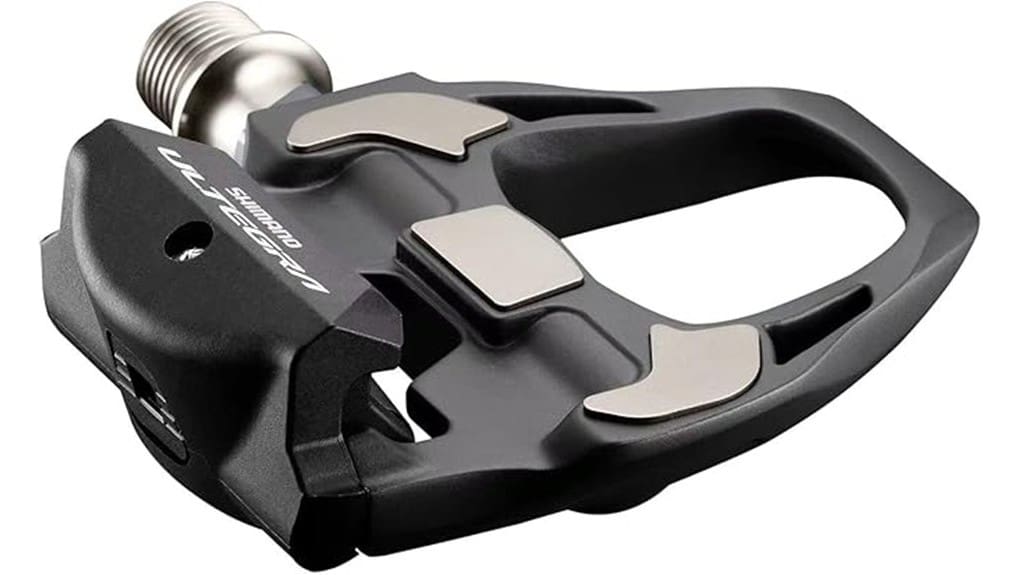
You’ll get near‑pro stiffness, precise engagement, and race‑ready adjustability with the Ultegra PD‑R8000. Its carbon‑composite body and extra‑wide platform keep your shoe stable and transfer power efficiently, while wide bearing placement cuts flex and dead zones in the stroke. Entry/release tension is separately tunable for crisp clipping and predictable releases, and the steel wear plate boosts durability. It’s a performance‑first, cost‑effective alternative to Dura‑Ace — keep going to see specifics and comparisons.
Some Key Takeaways
- Stiff carbon-composite body and wide platform deliver Dura-Ace-like power transfer and stable shoe interface for strong acceleration and sprints.
- Separate entry and release tension settings provide precise, tunable engagement for aggressive riding and confident unclipping.
- Stainless-steel wear plate protects the contact area, balancing durability with low weight for efficient pedaling.
- Wide bearing placement reduces flex and dead zones, improving lateral stability and consistent pedal stroke feel.
- Excellent performance-to-cost ratio versus top-tier models, making it ideal for committed amateurs and club racers.
Quick Verdict and Who Should Buy the Ultegra PD-R8000
While it’s built for racers, you’ll appreciate the Ultegra PD-R8000 if you want pro-level stiffness and reliable power transfer without paying Dura-Ace prices. In compact verdict: it balances weight, durability, and adjustability into a race-capable pedal that frees you to push harder without compromise. You’ll get a carbon composite body, wide bearing placement, and an extra-wide platform that keeps your foot stable under load. Ideal riders are committed amateurs and club racers who demand efficiency and tunable engagement but won’t stomach premium Dura-Ace costs. You’ll like its precise feel, customizable tension, and restrained weight. Many road cyclists also prioritize carrying the right essential gear for safety and performance.
Pedal Performance: Power Transfer, Platform, and Bearing Layout
Expect the Ultegra PD-R8000 to translate your watts with minimal loss: its extra-wide platform and carbon-composite body create a stiff, stable interface that keeps the shoe planted, while the wide bearing placement minimizes flex and concentrates load transfer through the spindle. You feel immediate responsiveness when accelerating and sprinting; platform stiffness resists deformation under heavy loads, so your input becomes forward motion, not wasted movement. Bearing placement across the chassis reduces dead zones in the pedal stroke and improves lateral stability. If you value efficient, unfiltered power delivery and freedom to push hard, these pedals deliver. Perfect Pedals for bike pedals offers a range of products and advice for cyclists seeking the right pedal match.
Build, Materials, and Weight: Carbon Body, Steel Plate, and Durability
Along with the responsive platform and bearing layout, the PD-R8000’s construction tells you where Shimano put the performance priorities: a carbon-composite body for stiffness and weight savings, topped with a stainless-steel wear plate to protect the contact patch from cleat abrasion. You get a stiff, light chassis that transmits power without flex while the steel plate resists gouging. Carbon longevity depends on riding style and impact avoidance, so treat the body with respect; the stainless surface limits wear and isn’t prone to steel corrosion in normal conditions. Overall, the build favors durable, freedom-minded riders seeking efficient, low-mass components. These design choices align well with riders focused on road bike wheels and lightweight drivetrain performance.
Adjustability, Cleat Setup, and Practical Ride Feel
Dialing in the PD-R8000’s engagement feels deliberate and precise: you get separate adjustment for entry and release tension, a crisp bite when clipping in, and a predictable ramp when you unclip. You’ll set cleat position on the shoe for fore-aft and lateral freedom, then use the pedal’s tension range to match your confidence—soft for touring freedom, firm for aggressive sprints. Cleat float is modest but effective; it lets your knee track without slop. Ride feel is direct: wide platform and stable bearings translate force instantly. If you prize control and adaptable engagement, these pedals deliver. For more on choosing and fitting clipless systems see our guide to clipless pedal systems.
Value, Warranty, and How the PD-R8000 Compares to Alternatives
Having nailed fit and feel, you’ll next weigh whether the PD-R8000 gives sensible bang for your buck. You get pro-level stiffness, wide bearing placement and a carbon composite body with a stainless steel plate — efficient power transfer without excess weight. In price comparison, it sits below Dura-Ace but above mid-tier rivals, offering a strong performance-to-cost ratio if you value longevity and control. Warranty coverage is seller-dependent; check vendor terms, but Shimano-level support is typical. Compared to alternatives, the PD-R8000 balances durability, adjustability and weight; choose it if you prioritize reliable, liberated riding performance. For road cyclists focused on efficiency and power transfer, pedal choice is a key part of optimizing their setup, especially when considering road bike pedals and compatibility.
Some Questions Answered
Are Spare Cleats Included With the Pedals?
No, spare cleats typically aren’t included with the pedals. You’ll need to buy replacement cleats separately, so plan for cleat maintenance and periodic swaps. You’ll want to keep a fresh set on hand for consistent fit adjustment and peak power transfer. If you value freedom on rides, don’t accept worn cleats—replace them proactively to preserve engagement, release feel, and efficient pedaling. Check seller policies for any guarantees.
Can These Pedals Be Used With Mountain Bike Shoes?
No — you shouldn’t use these with mountain bike shoes. They’re designed for Shimano SPD-SL road cleats, so stacked compatibility with MTB soles is practically nonexistent. The wide, stiff platform and high sole stiffness demand road-specific shoes for proper engagement, float, and safety. You’ll compromise fit, pedaling efficiency, and release mechanics if you try. If you want MTB freedom, choose pedals and cleats built for that system instead.
What Tool Is Needed for Pedal Installation?
You’ll need an 8mm hex (Allen) wrench to install the pedal, and a torque wrench to meet the manufacturer’s torque specification (usually around 12–15 Nm). Use the hex to thread and snug the spindle, then finish with a torque wrench for accurate tightening. Verify cleat alignment and pedal orientation before final torque. Don’t overtighten—respect the spec to avoid damage and keep your ride free and confident.
Are Replacement Body Plates Sold Separately?
Yes — Shimano sells replacement body plates separately for the PD-R8000, so you can maintain aerodynamics and serviceability without replacing the whole pedal. You’ll appreciate the durability comparison: the stainless plate resists wear far better than carbon alone. Expect easy swaps, preserved aerodynamic testing results, and extended pedal life. If you value freedom to repair, this spare-part availability lets you keep peak performance and customize longevity.
Do These Pedals Come Pre-Greased for Bearings?
Yes — they arrive with factory grease in the bearings, so you won’t need to immediately service them. You should still plan routine bearing maintenance: check seals, monitor play, and refresh grease when performance drops. Grease longevity depends on conditions (water, mileage, load) and you’ll likely re-grease after heavy use or annually. If you want absolute freedom from roadside issues, schedule proactive maintenance rather than relying solely on factory fill.