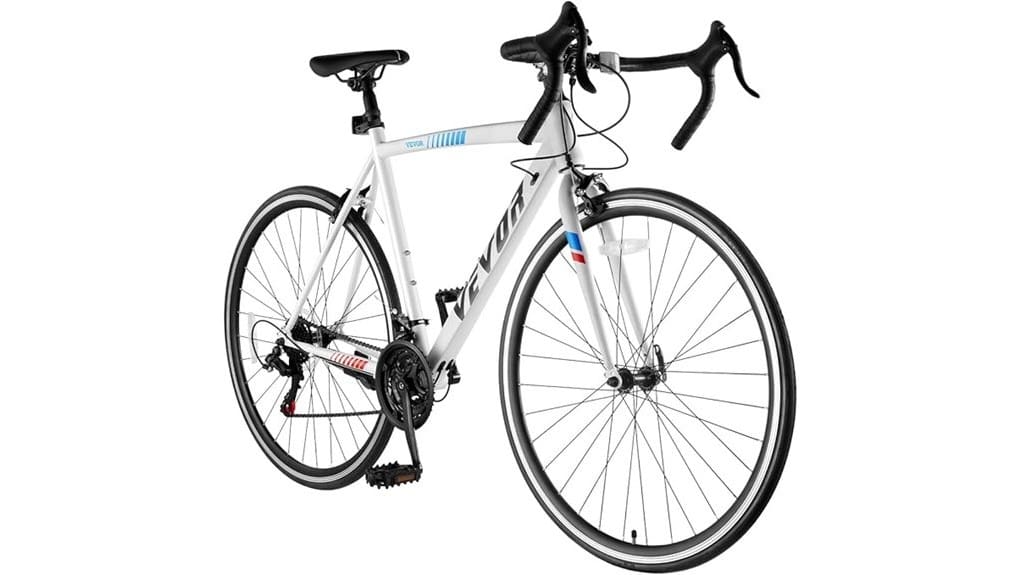
You’ll find the VEVOR 700C is a pragmatic commuter road bike that favors comfort and durability over race‑weight performance. You get a carbon steel frame and fork that absorb vibration better than aluminum, standard 700C wheels shod with 700x28C COMPASS tires, and a reliable Shimano 3×7 21‑speed drivetrain with disc brakes for predictable stopping. It’s heavier but more forgiving than racing bikes and offers straightforward assembly and maintenance — keep going to see detailed specs and tradeoffs.
Some Key Takeaways
- VEVOR’s 700C road bike uses 700x28C COMPASS tires on standard 700C wheels for predictable rollover and urban-to-road performance.
- The carbon steel frame and fork prioritize comfort and vibration damping over lightweight racing responsiveness.
- Shimano 21-speed (3×7) drivetrain delivers durable, easy-to-service gearing but with broader spacing than modern compact systems.
- Mechanical disc brakes offer confident stopping and good modulation, particularly in wet or urban conditions.
- Best for commuters and beginner-to-intermediate riders seeking durable, comfortable performance rather than race-grade speed.
Who the VEVOR 700C Road Bike Is Best For
Target commuters and beginner-to-intermediate road cyclists will find the VEVOR 700C well suited to their needs: its 700x28C COMPASS tires and 21-speed Shimano drivetrain balance speed and manageable gearing for urban riding and moderate training, while the carbon steel frame and fork prioritize comfort and stability over lightweight racing performance. You’ll appreciate the commuter friendly fit that favors endurance and control rather than marginal gains. Compared to race-focused frames, this setup tolerates rough roads and longer rides with less fatigue. Beginner cyclists get predictable handling, straightforward maintenance, and gearing range that supports progression without demanding advanced technique. Riders can complete rides more comfortably when they use the right essential accessories such as lights, locks, and fenders.
Frame, Fork, Wheels, and Tire Specs That Matter
Having established who this bike suits, let’s examine the structural and rolling components that determine ride feel and performance. You get a carbon steel frame and carbon steel front fork that prioritize carbon steel comfort and stability over minimal weight; compared to aluminum or carbon, expect more vibration damping and slightly higher mass. Wheels are standard 700C (700x28C) providing predictable rollover and acceleration. Fitted COMPASS tires target high-speed road cycling and urban commuting, balancing low rolling resistance with puncture protection. Overall, the setup favors steady, forgiving long rides and controlled handling rather than aggressive racing responsiveness. For riders choosing components, selecting the right road bike wheels can significantly impact ride quality and efficiency, especially when prioritizing wheel selection for different riding styles.
Shimano Drivetrain, Gearing, and Braking Performance
While the Shimano 21-speed setup pairs reliably with the 3×7 configuration, you’ll notice its emphasis on durability and predictable indexing rather than ultra-precise, race-grade shifts. You get consistent shift precision across the cassette; front and rear derailleurs respond with minimal fuss, helping you maintain momentum on mixed terrain. Gear range supports steady climbs and fast flats, though spacing feels broader than modern compact systems. Disc brakes deliver confident stopping power and controlled brake modulation, especially in wet descents. Overall the system favors dependable, low-maintenance performance so you can ride freely without chasing marginal gains. Consider pairing this reliable drivetrain with a cycling power meter to better track your efforts and optimize training.
Assembly, Fit, and Day‑to‑Day Ride Impressions
Although the bike arrives about 85% assembled, you’ll need to complete a few precise steps—attach the handlebar and saddle, fit the front wheel after rotating the fork 180°, install pedals with correct L/R orientation, secure the front brake, and mount reflectors—using the included essential tools. You’ll find setup straightforward if you follow torque specs and alignment checks. Fit favors riders seeking freedom: drop bars offer multiple hand positions; saddle height and fore/aft adjustments affect comfort tweaks noticeably. Day‑to‑day the steel frame soaks vibration better than aluminum; COMPASS 700x28C tires balance speed and urban traction. Consider simple storage solutions for apartment life. The site specializes in helping riders achieve the perfect bike fit through products and guidance that improve comfort and performance.
Value Verdict and Buying Recommendations
If you prioritize durability and practical performance over lightweight race geometry, the VEVOR Road Bike delivers strong value: its carbon steel frame and fork provide stable, vibration‑damping ride characteristics at a lower cost than comparable alloy or full‑carbon models. You’ll get dependable Shimano 21-speed gearing, disc brakes, and 700C wheels suited for high-speed road and urban freedom. For commuting or spirited weekend rides it’s a pragmatic choice prioritizing long term durability over podium weight. Consider resale value modest; steel frames age well but market demand favors lighter materials. Buy if you want robust, affordable performance with minimal compromise. Riders who appreciate classic materials will value the emphasis on steel bike frames as a durable, ride-comfort focused option.
Some Questions Answered
Does the Bike Include Lights or a Bell for Urban Commuting?
No, the bike doesn’t include integrated lights or a handlebar bell. You get a technically focused setup prioritizing core components—frame, drivetrain, disc brakes—so you’ll need to add lighting and a bell for safe urban commuting. Compared to models with built-in accessories, this one gives you freedom to choose aftermarket integrated lights and a handlebar bell that match your range, brightness, mounting preference and legal requirements for your riding environment.
Is a Bike Rack or Fender Mounting Compatible With the Frame?
Yes — you can fit a rear rack and mudguard compatibility is reasonable. The steel frame provides mounting points and stability compared to minimalist racing frames, so you’ll carry loads without compromising control. You’ll want a rack rated for road use and quick-release or bolt-on mounts; choose fenders sized for 700x28C tires with clearances for disc brakes. You’ll enjoy more freedom with practical touring or commuting setups.
What Is the Warranty Period and How Are Claims Handled?
Warranty duration is typically one year for frame and components, though you should confirm the vendor’s specific terms. You’ll use a standardized claim process: register purchase, document defects with photos, and submit via the seller’s portal or support email. Claims are evaluated against warranty coverage and repair, replacement, or refund options are issued. You’ll compare exclusions and timelines to confirm the warranty’s flexibility matches your freedom to ride and maintain autonomy.
Are Replacement Parts (Wheels, Derailleurs) Available From VEVOR?
Yes — you can get replacement availability for common parts; VEVOR offers parts sourcing for wheels and derailleurs through their support and parts portal. You’ll find OEM-compatible components and aftermarket options, though selection is narrower than specialist brands. Compare lead times and warranty support: VEVOR’s supply is convenient and integrated, but if you want broader choices and performance upgrades you may prefer larger aftermarket vendors for freedom in customization.
Can This Bike Be Adjusted for Riders Under 5’4″ or Over 6’2″?
Yes. You can adjust the bike for riders under 5’4″ or over 6’2″ by modifying saddle height and evaluating frame geometry; smaller riders may need maximum seatpost insertion and lower saddle height, while taller riders require ample seatpost extension and possibly a longer stem or different frame size. Comparatively, comfort and safe fit depend on reach, stack, and saddle height range; consider professional bike fitting or larger/smaller frame options.