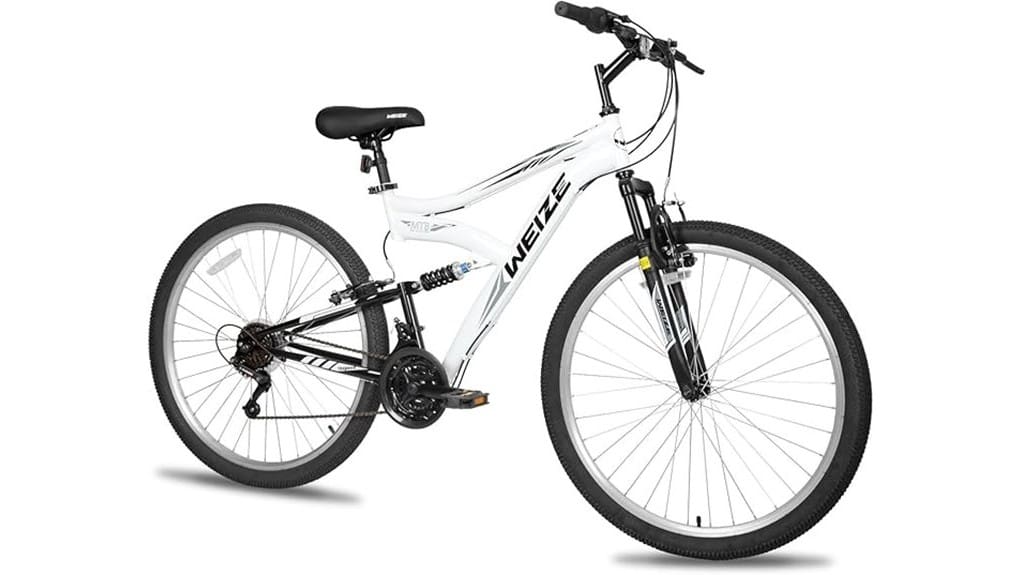
You’ll find the WEIZE mountain bike is a sturdy, budget-friendly full‑suspension option that’s ideal if you’re riding neighborhood trails, park paths, or light off‑road routes. Its high‑carbon steel frame and twin suspension soak bumps while keeping handling stable, and 18 speeds with twist shifters give predictable cadence control. Linear‑pull brakes stop confidently, and assembly is straightforward with included tools. It’s not race-grade, but it’s a dependable commuter or weekend explorer—keep going to see specifics and alternatives.
Some Key Takeaways
- Sturdy high‑carbon steel dual‑suspension frame offers durable, budget-friendly performance for neighborhood trails and light off‑road use.
- Front fork and rear coil shock provide effective bump absorption without excessive softness for casual riders.
- 18‑speed drivetrain with twist shifters delivers predictable shifting and easy cadence control for beginners and teens.
- Front and rear linear‑pull brakes offer straightforward, confident stopping power on mixed terrain.
- Quick ~20‑minute assembly with included tools, basic maintenance needs, and variable seller warranties to confirm before purchase.
Quick Verdict: Who the WEIZE Mountain Bike Is Best For
If you want a sturdy, budget-friendly mountain bike that handles neighborhood trails, park paths, and light off-road routes, the WEIZE is a solid choice. You’ll appreciate its rugged steel frame and dual suspension if you crave reliable, no-frills freedom on two wheels. It suits teen commuters who need a dependable ride to school and casual riders seeking weekend exploration. You’ll find straightforward assembly and stable handling ideal for learning terrain control without overspending. You won’t get race-grade components, but you will get predictable performance, confident stopping, and an easy-entry platform that keeps you moving. It’s especially appealing to riders who prioritize full suspension mountain bike comfort and control on mixed surfaces.
Key Specs That Matter : Frame, Suspension, Drivetrain, Brakes, Wheels
When you’re sizing up the WEIZE, focus on five fundamentals that determine how it rides and how long it lasts: a durable high‑carbon steel dual‑suspension frame that prioritizes strength and affordability; a front suspension fork paired with a rear coil shock to smooth bumps without complex maintenance; an 18‑speed drivetrain with twist shifters and front/rear derailleurs for predictable cadence control across varied terrain; front and rear linear‑pull brakes that deliver straightforward, strong stopping power; and 26‑inch all‑terrain wheels that balance maneuverability and rollover ability for riders roughly 52–62 inches tall. You’ll value steel durability for longevity, a practical gear range for climbs and flats, linear‑pull brakes tuned for confident brake modulation, and tires that prioritize predictable tire traction. The spec set favors low maintenance and dependable performance so you can ride further, freer, and with fewer compromises. Choosing the right carbon frame is essential when upgrading, since carbon frames offer weight savings and stiffness that affect ride quality.
Real-World Ride Test : Comfort, Handling, Shifting, and Stopping
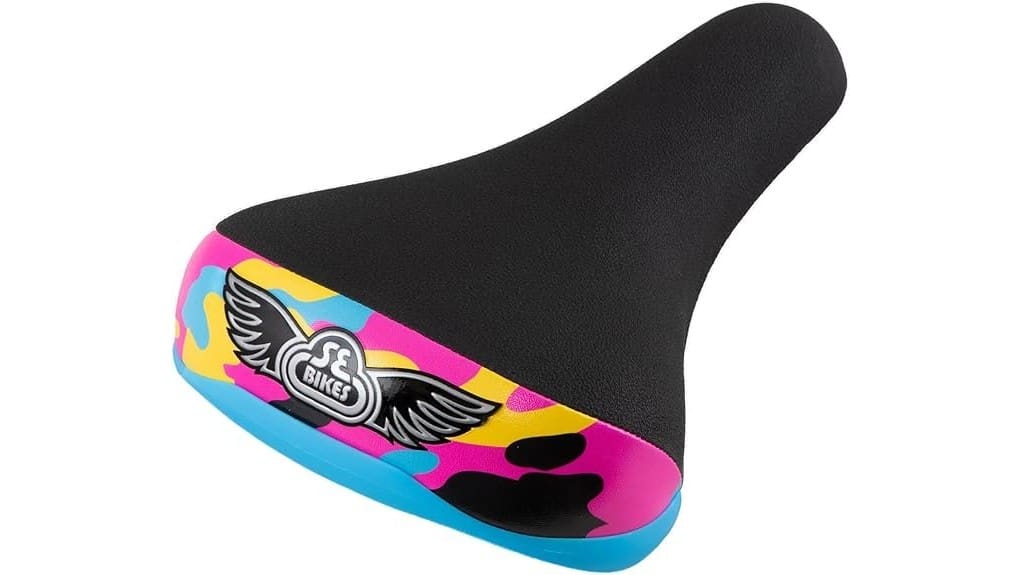
Although it’s built from value-minded components, the WEIZE delivers a surprisingly composed ride: the front suspension fork and rear coil shock soak up suburban curbs and gravel chatter without feeling mushy, while the high‑carbon steel frame trades lightness for steady stability that keeps you confident at speed. You’ll notice solid trail feedback through the bars and saddle; it’s communicative without jarring you. Seat comfort is adequate for medium rides but expect firm padding on longer runs. Shifting with the 18-speed twist system is predictable; derailleurs respond cleanly. Linear-pull brakes stop decisively, giving you controlled confidence on mixed terrain. The site also offers guidance on choosing the right saddle for both comfort and speed to match your riding style.
Assembly, Fit, and Maintenance You Should Know
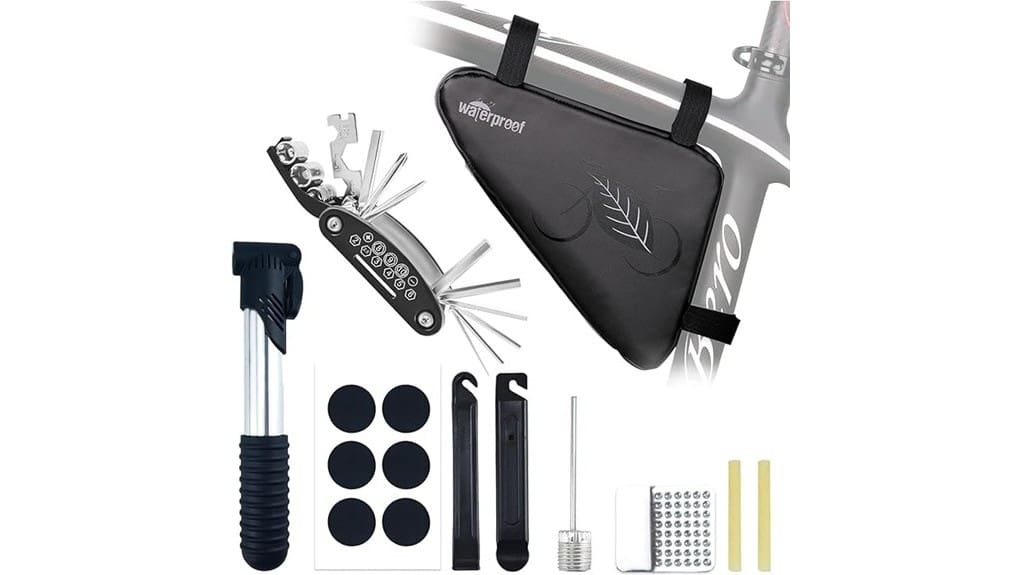
Get the WEIZE rolling in about 20 minutes: the bike ships partially assembled with basic tools and clear instructions, and the product page includes step-by-step installation and brake-adjustment videos to guide you through final setup. You’ll fit the bike to your body quickly—adjust saddle height within the recommended 52–62 inch rider range and set handlebar reach for a confident stance. Routine maintenance is straightforward: keep the chain clean, check tire pressure, and tune linear-pull brakes after the included install. Use tool free adjustments where possible for on-trail tweaks, and follow a seasonal storage plan to protect bearings and suspension. For best results and longevity, regularly cleaning the drivetrain with chain cleaning tools will keep the chain running smoothly.
Value Check : Price, Warranty, Alternatives, and Final Recommendation
If you’re weighing cost against features, the WEIZE delivers solid value: its durable high‑carbon steel dual‑suspension frame, 18‑speed drivetrain, and included tools/assembly support position it toward the budget-friendly end of all‑terrain mountain bikes without sacrificing key functionality. Check a price comparison to similar 26‑inch, dual‑suspension bikes; WEIZE typically undercuts full‑suspension aluminum models while offering comparable basics. Review warranty terms carefully—limited coverage varies by seller, so confirm duration and parts covered. Consider alternative models if you want lighter frames or hydraulic brakes. Buying recommendation: pick WEIZE for reliable, economical freedom on varied trails. For riders who appreciate a minimalist, urban-to-trail ethos, also consider fixed-gear and single-speed options for simpler maintenance.
Some Questions Answered
Does the Bike Come in Multiple Color Options?
Yes — the bike offers multiple color options so you can pick the look that frees you. You’ll see several color options listed with different paint finishes to suit style and durability preferences. Choose a bold matte or glossy finish depending on how much shine you want and how you’ll use the bike. The product page shows available colors, and images plus finish details help you decide confidently before purchase.
Are Replacement Parts Readily Available?
Yes — replacement parts are generally available. You’ll use an availability checklist to confirm stocked items (tires, tubes, brake pads, derailleurs, suspension components). Many standard parts match common specs, so aftermarket compatibility is strong for routine repairs and upgrades. You’ll find OEM and third-party options via major retailers and bike shops; keep the frame and component specifications handy to guarantee proper fit and quick service.
Is the Bike Suitable for Off-Road Trail Riding?
Yes — you can ride it off-road; the suspension performance soaks small bumps and the rear coil shock helps on rougher singletrack. You’ll get confident handling from 26-inch all-terrain tires that offer decent tire traction on dirt and gravel. The 18-speed drivetrain lets you push climbs and control descents, while linear-pull brakes provide solid stopping power. You’ll find it freeing for casual trail riding and light to moderate off-road adventures.
What Is the Shipping Weight and Box Dimensions?
The shipping dimensions are roughly 49 x 9 x 29 inches and the package weight is about 48 pounds. You’ll receive the bike partially assembled in a compact carton that balances protection and portability. You’ll be able to carry the box to your door and finish setup quickly with included tools. These shipping dimensions and package weight support smooth delivery, easy handling, and the freedom to get rolling without a heavy hassle.
Does the Bike Include a Kickstand or Bottle Cage Mounts?
No, it doesn’t include a kickstand or bottle cage mounts. You can add them, though — check frame alignment before mounting accessories to avoid stress on the dual-suspension frame. Accessory compatibility is solid for common aftermarket kickstands and clamp-on cages; use compatible clamps or adapters if no threaded mounts exist. You’ll preserve ride quality and freedom by installing parts correctly, tightening per torque specs, and rechecking brake and suspension function afterward.