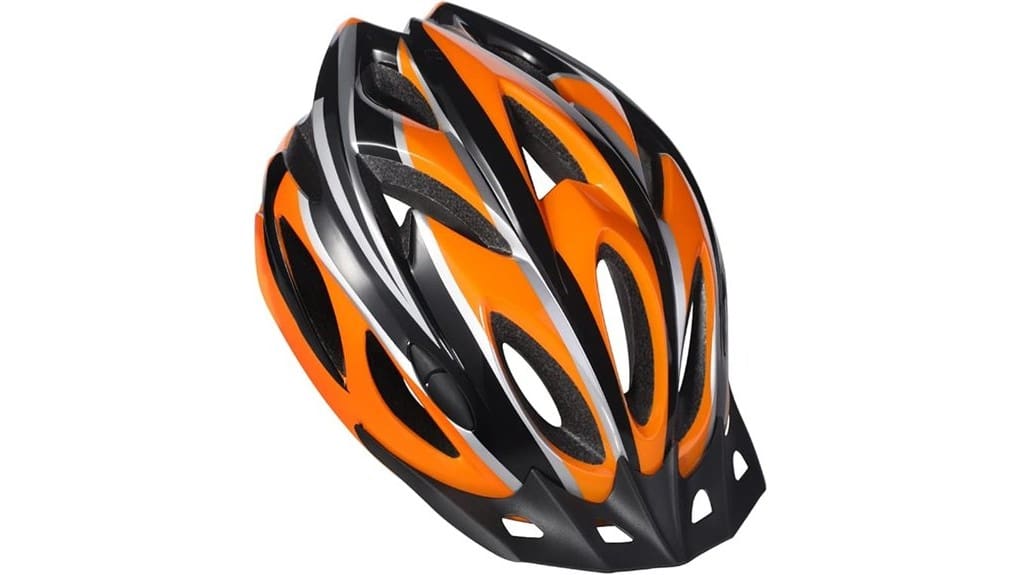
You’ll find the Zacro adult bike helmet gives reliable, certified protection and impressive comfort for the price. It’s ultra‑light (about 260–300 g), has 18 vents, a dial‑fit system, removable liners, and a polycarbonate shell with EPS foam that meets CE and CPSC standards. It’s ideal for commuting, scootering, and light trails, though it lacks high‑end impact tech for racers. If you want a practical, budget choice, keep going to see fit tips, tests, and tradeoffs.
Some Key Takeaways
- Lightweight (≈260–300 g) construction reduces neck strain, ideal for commuting and long rides.
- CE and U.S. CPSC certifications ensure basic crash protection with a polycarbonate shell and EPS foam.
- 18 vents and breathable, removable pads offer solid ventilation and easy maintenance.
- Dial-fit system and adjustable straps fit 54–63 cm heads for a snug, customizable fit.
- Budget-friendly choice with practical features and a 12-month warranty, but lacks advanced impact tech.
Verdict and Quick Specs: Is the Zacro Lightweight Helmet Worth Buying?
While it won’t replace a high-end race helmet, the Zacro ZBH9US delivers solid protection and comfort for most riders at a budget price. You’ll appreciate its ultra-light feel, 18 vents, and quick-adjust dial that keep you riding longer and freer without fuss. Aesthetic options are modest but clean, so you won’t sacrifice style on city streets or trails. Commuter compatibility is strong: removable visor, washable liner, and universal sizing handle daily use well. You’ll get CE/CPSC compliance, polycarbonate shell, EPS foam, and a 12-month warranty—practical specs that match its sensible price and purpose. This makes it a practical choice for those focused on commuter bike helmets that balance protection, comfort, and affordability.
How It Performs on Safety: Certifications, Materials, and Impact Protection
Because safety standards matter, the Zacro ZBH9US backs its promise with CE marking and U.S. CPSC approval, so you know it meets accepted crash criteria. You get a polycarbonate shell and high-density EPS foam built from CE certified materials; that combo resists penetration while spreading force. EPS performance testing shows predictable crush behavior to reduce impact energy to your skull. Meeting age and application standards, it’s intended for cycling, commuting, and trails. You’ll appreciate the straightforward protective engineering — no gimmicks, just certified materials and tested impact attenuation that let you ride boldly and responsibly. The helmet is suitable for a range of riders and uses, including commuting and trail riding, making it a versatile safety choice.
Comfort on Rides: Weight, Ventilation, Liners, and Real-World Wearability
When you strap the Zacro ZBH9US on, its ultra-light construction (about 260–300 g) and 18 precision vents make long rides noticeably less fatiguing by cutting neck strain and improving airflow. You feel reduced ride fatigue immediately: the shell barely tugs, vents channel wind, and thermal comfort holds up on warm stretches. Breathable padwork wicks sweat without bunching, and removable liners make maintenance simple. You’ll notice minimal pressure points even after hours in the saddle, though aggressive head positions can reveal slight hotspot sensitivity. Overall it favors freedom—light, ventilated, and practical for touring or daily commutes. Choosing the right helmet also means balancing fit, ventilation, and safety standards to match your riding style.
Fit, Adjustability, and Sizing Tips for a Secure Fit
If you want a helmet that actually stays put, get the sizing right: the Zacro’s dial-fit system plus adjustable straps let you fine-tune contact around a 54–63 cm range, so measure your head and aim for a snug, even pressure—no gaps, no rocking. Test for level sit and center the front edge above your brow. Tune dial tension until the shell hugs your occiput without pain. Check strap care: trim excess, adjust V-sliders so straps meet under the ear, and fasten the chin snugly. Practice visor removal for quick swaps. Match fit to your head shape—then ride free. Zacro is sold alongside other helmet accessories on a site focused on bike helmet products and safer rides.
Buying Considerations: Price, Use Cases, Warranty, and Who Should (or Shouldn’t) Buy
Now that you’ve got the fit dialed, consider whether the Zacro helmet matches your needs and budget. At its price point it’s a strong budget comparison against pricier brands—good protection (CPSC/CE), lightweight build, and vents for long rides. Use cases: commuting, road rides, light trails, scootering, and travel-friendly packing. Seasonal suitability is solid for spring–fall; vents cool but winter riders may want insulated options. Warranty is 12 months—reasonable but limited. Buy it if you want affordable, versatile protection and freedom to ride. Skip it if you need advanced impact tech or race-level performance. Keep in mind this site focuses on helping riders choose the right mountain bike helmet and related gear, including factors like fit, certification, and ventilation that influence safety and comfort; see helmet certifications for more detail.
Some Questions Answered
Can I Mount a Bike Light or Camera on This Helmet?
Yes — you can mount a light or camera, but check mounting options and accessory compatibility first. The polycarbonate shell and vents let you use clip-on lights, strap mounts, or adhesive bases; avoid drilling or heavy mounts that stress the EPS foam. You’ll want lightweight action cams or small LEDs and secure straps or vent mounts for stability. Test balance and don’t block ventilation; prefer removable mounts for freedom and easy washing.
Is This Helmet Compatible With Eyeglasses or Sunglasses Storage?
Yes — you’ll find decent glasses compatibility and sunglass retention with this helmet. The vents and removable visor give you places to slide stems or perch shades when you’re not riding, and the snug fit system keeps frames from bouncing. It won’t replace a dedicated eyewear clip, but you’ll enjoy reliable short-term storage on commutes or trail breaks, letting you ride freely without fumbling for your shades.
How Do the Removable Liners Affect Helmet Fit and Sizing?
They let you fine-tune sizing: removable liners change how the helmet sits, so you’ll use adjustable padding to tighten or loosen fit. You’ll notice fit variability when swapping thicker or thinner liners—headroom, pressure points, and stability shift. If you crave freedom on long rides, keep the thinner liner for ventilation and the thicker one for snug control. Adjust the dial and straps after changing liners to lock in a confident, comfortable ride.
Does the Visor Offer Any Impact Protection or Is It Decorative?
The visor is mainly decorative and sun-blocking; it doesn’t provide meaningful impact resistance. You’ll get glare and splash protection from the removable visor, but in a crash the helmet’s polycarbonate shell and high-density EPS foam handle safety. If you crave freedom, you can snap the removable visor off for a sleeker, lighter ride without compromising certified protection. Don’t rely on the visor for crash energy absorption—use it for comfort and style.
Are Replacement Parts (Visors, Liners, Dial) Available Separately?
Yes—you can get replacement parts like visors, liners and the dial, but availability varies by seller and region. I’d check the manufacturer and major retailers first; replacement availability often depends on stock. Warranty coverage handles defects for 12 months, yet won’t cover wear-and-tear or lost parts. If you value freedom from hassle, buy spare liners or a visor early and confirm seller return policies before you commit.